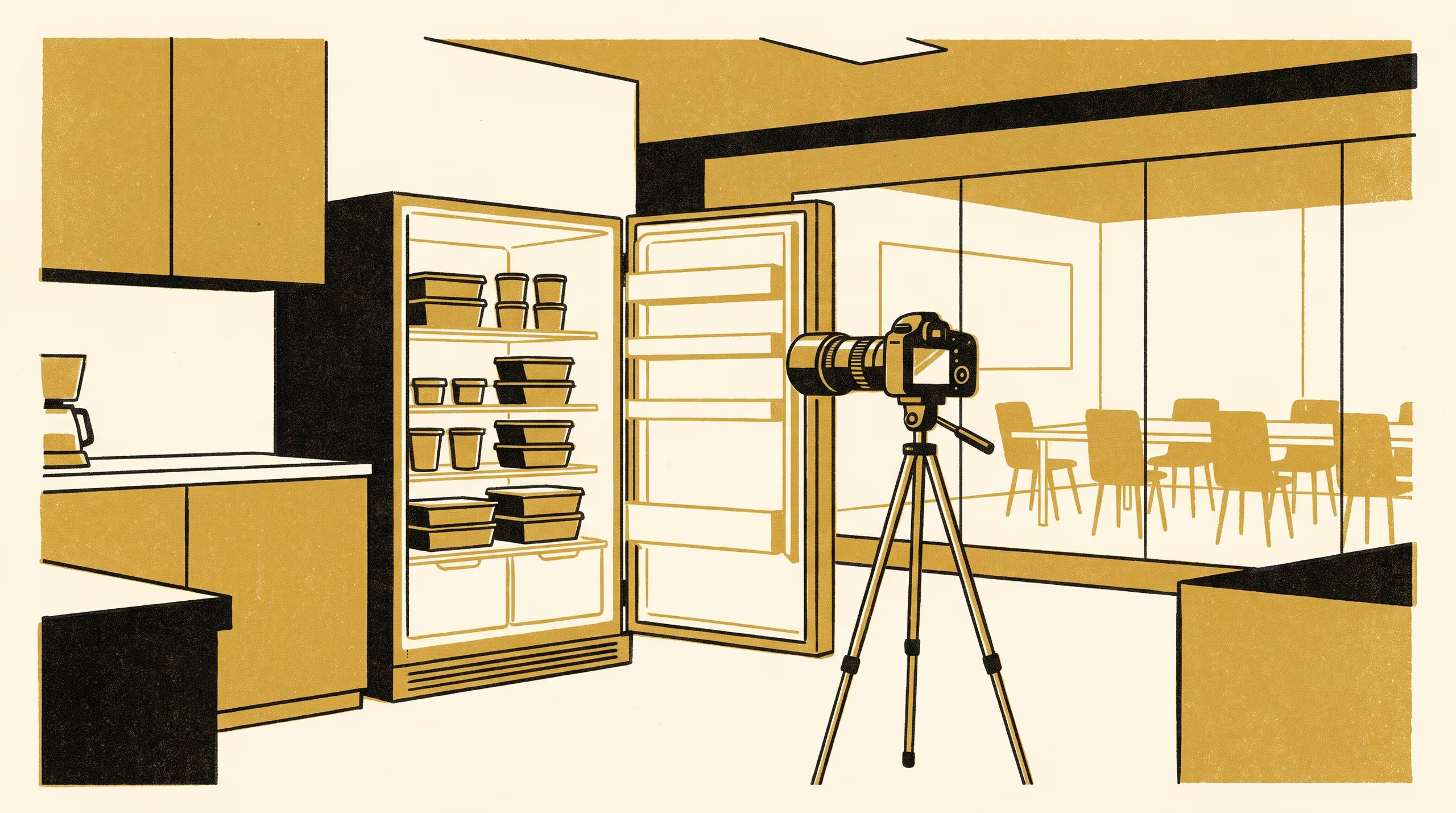
A School of Continuous Improvement pilot scores three shared office fridges for legibility and finds no association with the floor's own meeting-room no-show rate.
A 14-week Adaptive Metrics Lab pilot scores three shared fridges against the floor's own meeting-room no-show record, week by week
Osei Vandermeer keeps a folder of institutional photographs nobody else reads twice: fortnightly kitchenette shots, taken for hygiene sign-off and then filed. The Research Fellow’s newest project asks whether that folder was quietly measuring something else the whole time, and reports, after fourteen weeks and two independent raters, that it probably was not.
The pilot scored three communal fridges on a five-point legibility scale — how clearly labelled, dated, and sorted their contents stayed week to week — and set the resulting index against the floor’s own meeting-room attendance record, drawn from the room-booking system’s check-in beacon. The two measures were tracked in parallel and compared only once both series had closed.
The fridge cooperated completely. It just didn’t have anything to say about who was in the room.
— Dr Osei Vandermeer, Research Fellow and Convenor, Review Cadence Observatory
The legibility index declined steadily across the trial; the no-show rate did not move with it in either direction. Dr Bram Ntuli, the paper’s co-author and Convenor of Improvement Grand Rounds, said the pilot would get a session of its own on the seminar series’ next program, “less because it settled anything, and more because it settled it so cleanly.”
For a lab that has spent a decade building indices, the University suggests, publishing the ones that don’t hold up is where its own credibility in the ones that do gets made.
The full poster is available from the University’s research repository under an open licence, doi:10.5555/slop.soisfz.