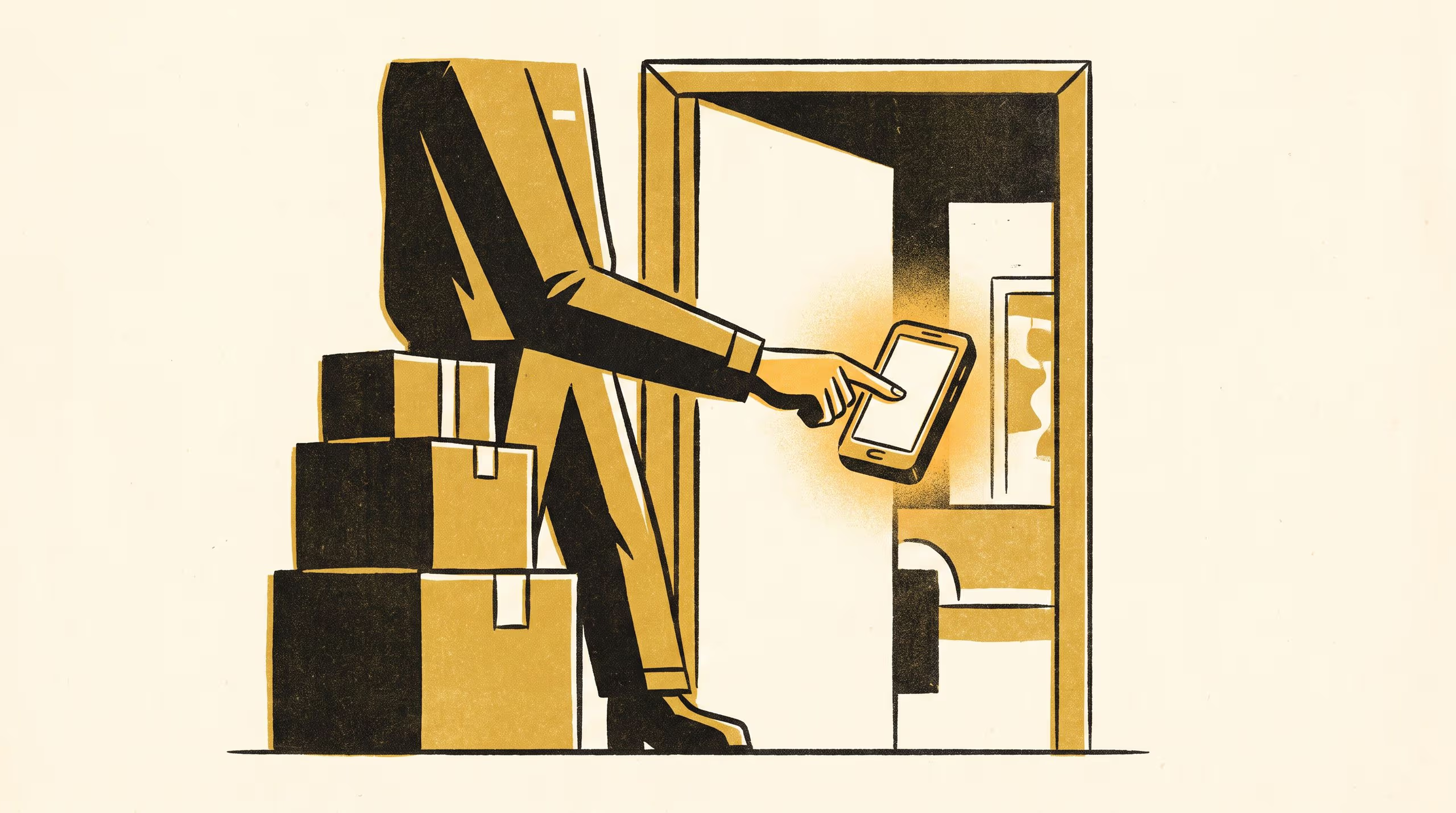
A School of Emergent Priorities research poster tests whether a courier's captured signature ever matches a person's own from one delivery to the next, and what the receiving office does when a dispute turns on one that doesn't.
A nine-month study finds a courier-pad signature no more like a person's own last one than a stranger's, and the receiving office still calls it a match.
A signature captured on a courier’s handheld pad carries almost nothing of the hand that made it. Comparing recipients against their own prior captures, School of Emergent Priorities researchers find no more resemblance there than between two entirely different people’s signatures taken on the same device.
The project scored nine months of deliveries across four regional courier operators, setting each recipient’s captured signature against their own earlier captures, against other recipients’, and against the specimen signature held on file. None of the comparisons cleared the threshold the receiving office’s own dispute process treats as a match, including the comparisons recipients made against themselves. The finding extends the School’s growing account of what an institution’s evidentiary furniture actually verifies once someone finally checks.
A signature was never meant to prove identity so much as to mark that a moment happened. We’re interested in what an institution keeps doing with it once that distinction stops mattering to the process.
— Dr Osei Vandermeer, Research Fellow and Convenor, Review Cadence Observatory
“The pattern held up whichever operator, whichever recipient, and whichever side of a dispute we looked at,” said Senior Lecturer Fenna Okoro, Convenor of the Horizon Register. “That kind of consistency is usually the more interesting result.”
The full poster is available from the University’s research repository under an open licence, doi:10.5555/slop.cxudpp.