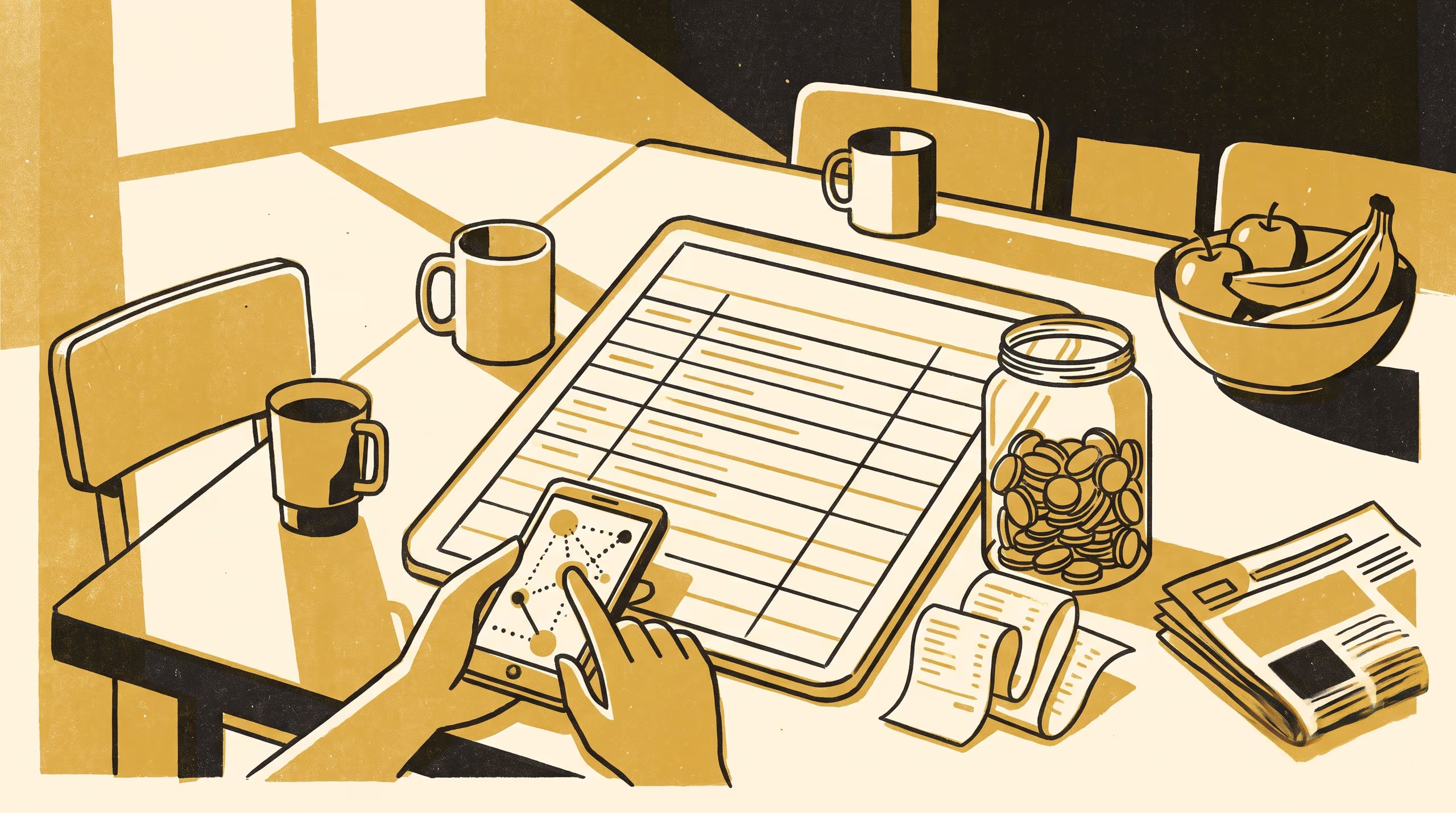
A School of Continuous Improvement paper compares share-houses that adopted a cent-accurate bill-splitting app against households that kept an informal whiteboard tally, finding debts settle faster but small debts are forgiven far less often.
A natural experiment across share-houses that adopted a bill-splitting app finds faster settlement and far less small-debt forgiveness
Share houses that swap an honour-system whiteboard tally for a cent-accurate bill-splitting app settle their debts markedly faster, a paper published today by the School of Continuous Improvement reports — and forgive markedly less along the way.
The study followed 64 share houses that adopted a bill-splitting application partway through a shared lease against 58 comparison households that kept their existing whiteboard or mental tally throughout, tracking every informal debt from the day it was raised to the day it closed. Debts under ten dollars closed two ways: paid to the cent, or waved off with the kind of shrug a flatmate extends without expecting the favour repaid. Households that switched to the app closed a debt in a little over a day where they had once taken the better part of a week; the same households also stopped waving debts off almost entirely, a shift the comparison households did not share.
For a School built around the instruments institutions use to know themselves, a share house’s own ledger turned out to be an unusually candid one to study.
A whiteboard forgets what a person owes about as often as it remembers it, and a household gets by on that forgetting more than it likes to admit.
— Dr Thandiwe Solberg, Senior Lecturer and Convenor, Demo Quarter, School of Continuous Improvement
“What the whiteboard was actually doing,” said Dr Ingeborg Nwachukwu, Lecturer and Convenor of Capability Sprints, “was letting people be a little generous without having to call it that.”
A follow-up feature, a one-tap “shout it” button added to a subset of the app-using households midway through the study, was intended to let the old generosity back in without giving up the app’s speed. It made no measurable difference, a result the authors report without amendment to the wider finding.
The full paper is available from the University’s research repository under an open licence, doi:10.5555/slop.g781n1.