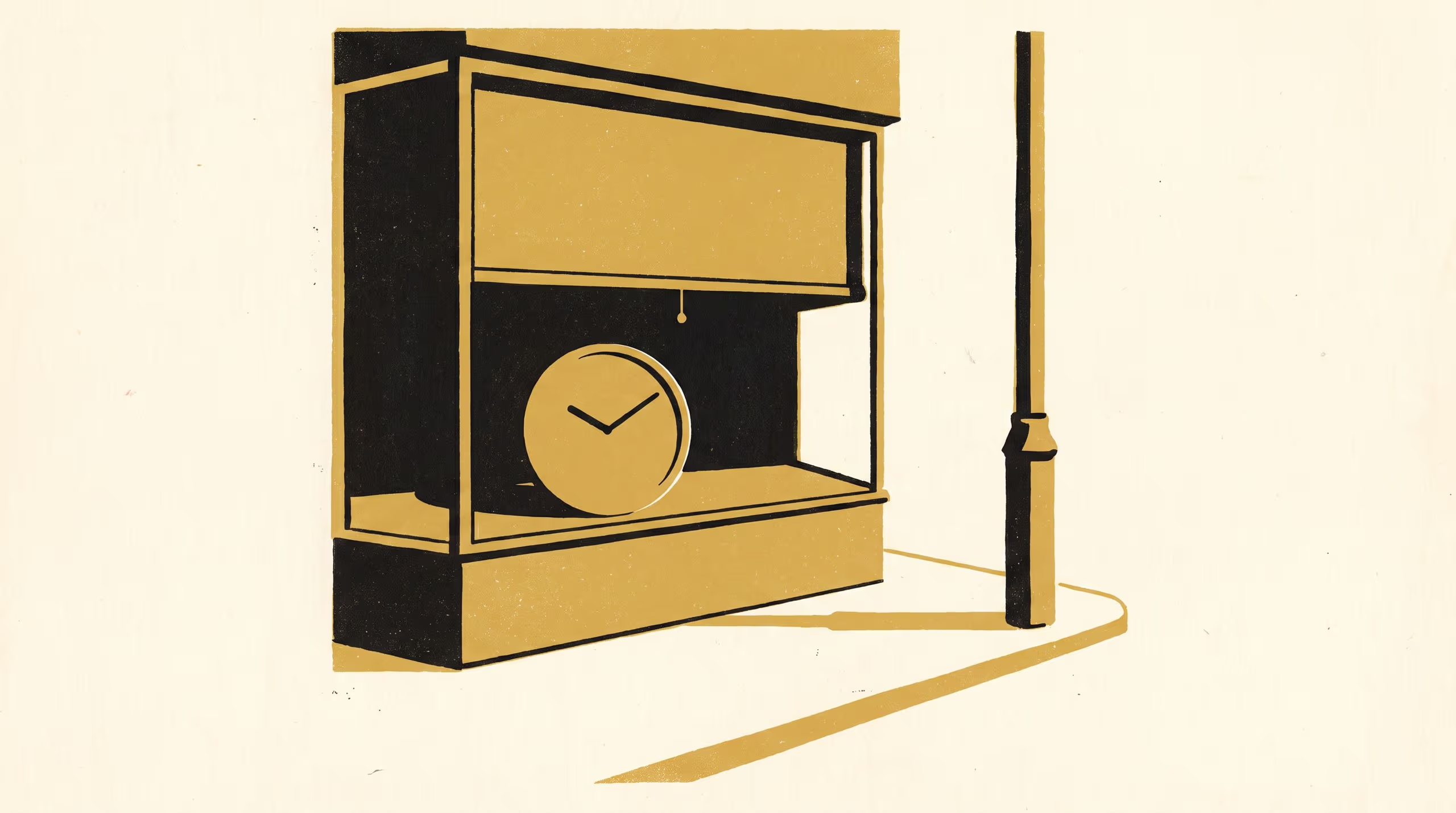
A School of Emergent Priorities ethnography audits 268 shopfront "back at" clock signs over eleven weeks, finding most never move and many still sit at the position they shipped with.
An eleven-week street audit finds a third of the signs still sitting at the factory default, and a reminder postcard doesn't change that
Most people assume a “back at” sign is being looked after by somebody. Across the strips we audited, for the wide majority of them, nobody had touched it in eleven weeks.
— Dr Marek Solheim, Lecturer and Deputy Convenor, Horizon Register
That quote is also, more or less, the whole paper. A School of Emergent Priorities team spent eleven weeks walking six shopfront strips, logging every analogue “back at ___” clock sign they could find and returning weekly to see whether its hands had moved. Of 268 signs, 91.4 per cent showed the same displayed time at the final visit as at the first, and more than a third sat at the exact position the leading product line ships with in its packaging — never reset by an owner at all.
The University reads the finding as part of its longer-running interest in commitments an institution never gets around to formally retiring. “A sign like this doesn’t get renewed and it doesn’t get cancelled,” said Dr Anneke Tolan, Senior Research Fellow with the School. “It just keeps running until somebody sells the shop.” The School counts the result among the steadier confirmations of an agenda it has quietly pursued for several years now.
Interviews with 38 proprietors found inheriting the sign from a previous tenant the most common reason given for keeping it, ahead of any claim that it still serves a purpose. A follow-up postcard prompting a subset of owners to notice their sign’s stalled hands changed nothing measurable in the following month.
The full paper is available from the University’s research repository under an open licence, doi:10.5555/slop.r207x0.