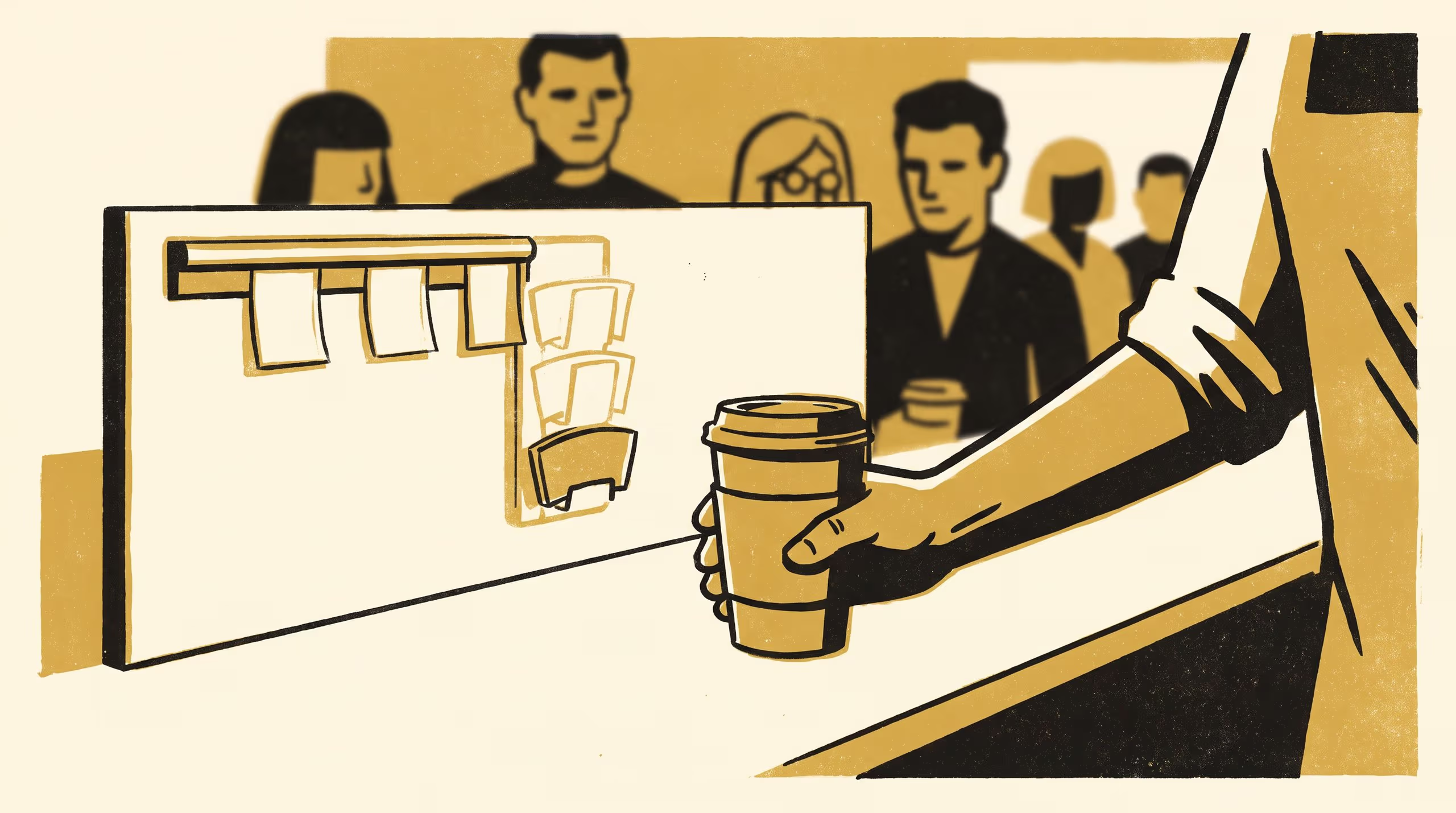
A School of Continuous Improvement research poster audits recognition of a regular's usual order across 22 café sites before and after a rebrand, finding component-level recall holds while the unprompted "usual" call collapses.
A 22-site audit finds a regular's order recalled steadily component by component, except the unprompted "usual" call, which drops from 93% to 61%
Ask a café regular what keeps them coming back and they will point to the barista’s memory, not the menu board. A research poster released today by the School of Continuous Improvement tests that faith against an actual rebrand, auditing 22 sites and 236 regulars across the seven weeks either side of a signage, cup-sleeve and till-skin overhaul.
What the Rebrand Took With It, by Dr Thandiwe Solberg, Dr Renke Sabel and Dr Joost Nwosu, scores a regular’s order component by component — drink, size, temperature, milk, extras — and separately as the single unprompted call staff make before anyone speaks. Most components held their ground. The unprompted call did not, falling from 93 to 61 per cent, a pattern the team reads as recognition leaning harder on the counter’s old props than anyone serving behind it would have guessed.
The order held together for most of what makes it an order. It was the part regulars call “the usual” that a rebrand quietly put back up for negotiation, and that is the part we would like the next rollout to notice.
— Dr Thandiwe Solberg, Senior Lecturer and Convenor, Demo Quarter, School of Continuous Improvement
“The instrument doesn’t ask a café to keep its old signage,” said Dr Renke Sabel, Senior Lecturer and Convenor of the Indicator Commons. “It asks the institution to notice which prop the recognition was leaning on before it takes the prop away.” The poster extends the School’s running account of how quickly an institution’s own props get credited with a loyalty they never earned on their own.
The full poster is available from the University’s research repository under an open licence, doi:10.5555/slop.pw3uc0.