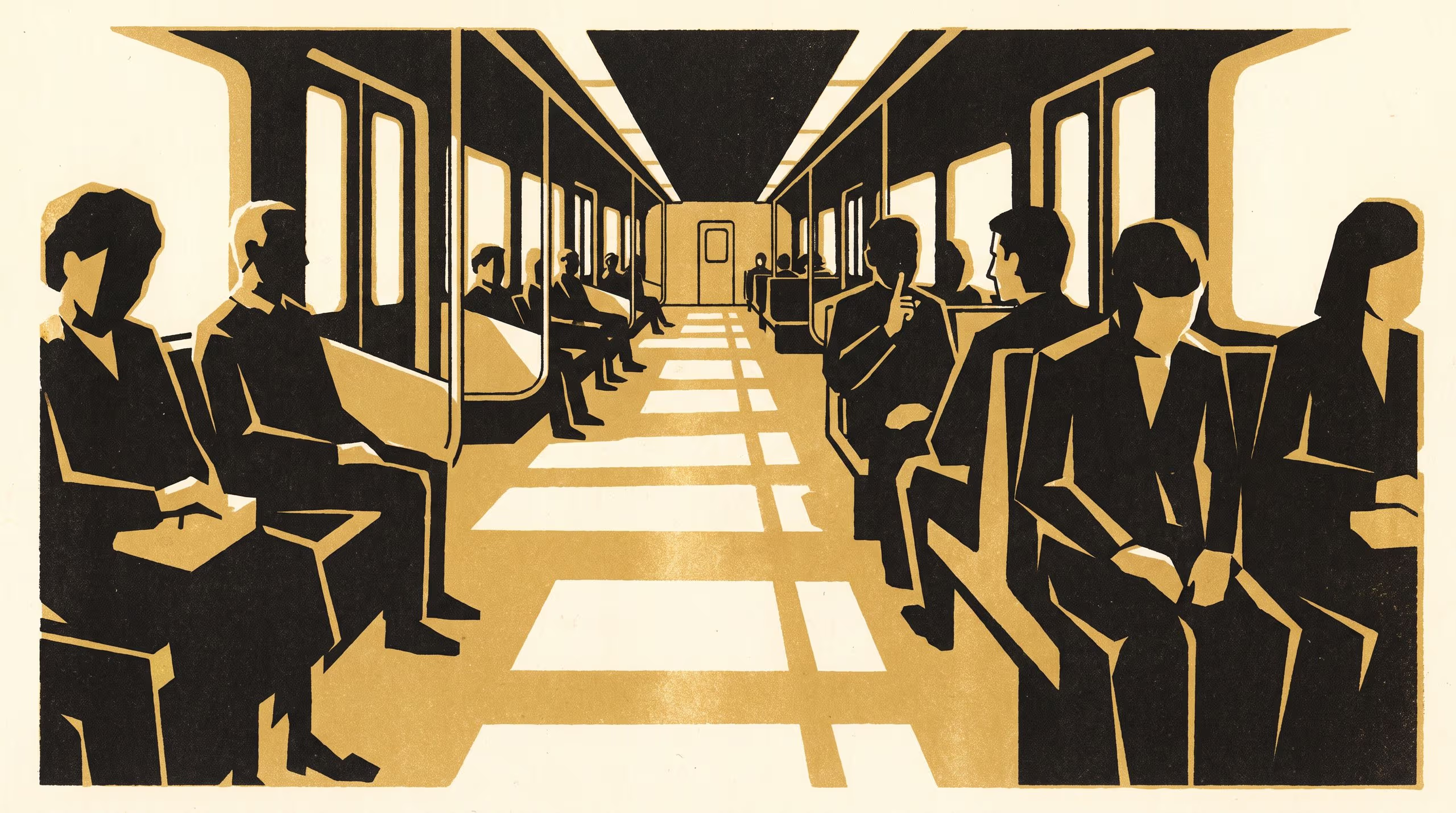
A School of Emergent Priorities research poster rides three commuter lines for seven months, coding 187 self-appointed quiet-carriage shush interventions to grounded-theory saturation and testing inter-rater agreement on what counts as one.
A seven-month ethnography codes 187 shush interventions to saturation and checks whether independent observers agree on what counts as one
The School of Emergent Priorities has spent the past year cataloguing who fills a gap the rulebook leaves open. Its newest research poster turns to the commuter train’s quiet carriage, where a printed sign asks for silence and nobody is rostered to keep it.
Senior Research Fellow Dr Anneke Tolan and Dr Dagny Okafor, from the School of Continuous Improvement, rode three commuter lines for seven months, coding every instance of a passenger stepping into the warden’s role — a look, a raised finger, a murmured word — until new rides stopped turning up anything the existing categories couldn’t already hold. A second coder checked every interaction independently, and a third settled the cases where the first two disagreed.
Nobody is issued a badge for this. Whoever holds the carriage’s silence together is improvising a role the timetable never wrote down.
— Dr Anneke Tolan, Senior Research Fellow
The poster is an early instalment in what the School describes as a broader look at who quietly does an institution’s unstaffed jobs. Independent coders agreed strongly on what counted as an intervention overall, and disagreed most over the quietest category of all: the look, unaccompanied by any further gesture or word. “That is exactly where most of the enforcement is happening,” said Dr Okafor. “It is not a comfortable place for a coding scheme to be weakest.”
The full poster is available from the University’s research repository under an open licence, doi:10.5555/slop.hfqfxn.