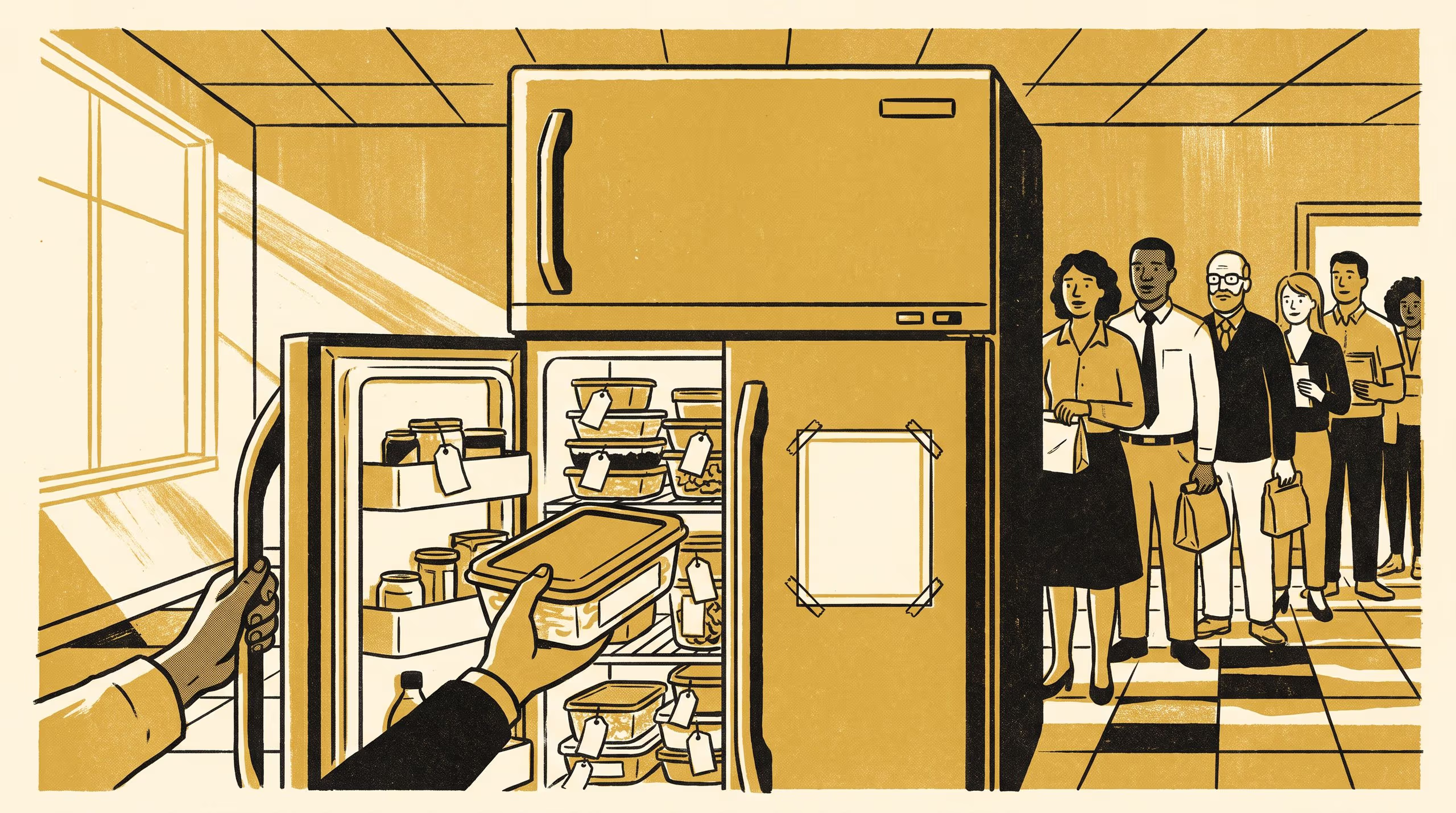
A School of Continuous Improvement paper matches 40 office kitchens on a laminated etiquette sign against a time-stamped photographic register, finding the sign's early effect on labelled-lunch disappearances fades substantially within eight weeks.
A 40-kitchen quasi-experiment finds a laminated sign cuts fridge losses by more than half in week one, but the gap narrows to a tenth of baseline within two months
For ten weeks, a research assistant walked into forty office kitchens each morning and photographed the fridge. A paper released today by the School of Continuous Improvement built the resulting time-stamped record to answer a question the School’s Adaptive Metrics Lab had heard raised, unresolved, at every floor meeting that has ever discussed a missing lunch: does the laminated sign asking staff to label their food and leave what isn’t theirs actually do anything.
The paper’s answer arrives in two parts. Twenty of the forty kitchens received the sign; the other twenty stayed unsigned as matched controls. Across the study’s first week, signed kitchens logged a disappearance rate well under half that of their unsigned pairs. By the eighth week, that gap had closed to a fraction of its opening size, and it kept closing from there. A second test, comparing a politely worded sign against a firmly worded one, found no difference between the two at any point in the study.
A sign is cheap to install and, we now know, cheap to stop working. What was harder to anticipate is how little the wording seemed to matter once it was up.
— Lecturer Marit Osayande, School of Continuous Improvement
The finding sits inside a broader School programme on low-cost governance instruments — interventions an organisation reaches for precisely because they need no budget line or committee. Associate Professor Casimir Beng, Lead of the Adaptive Metrics Lab, said the study extends that programme somewhere the Lab had not yet formally measured. “We keep finding instruments that work on installation day and are never revisited again,” he said.
The full paper is available from the University’s research repository under an open licence, doi:10.5555/slop.037d4k.