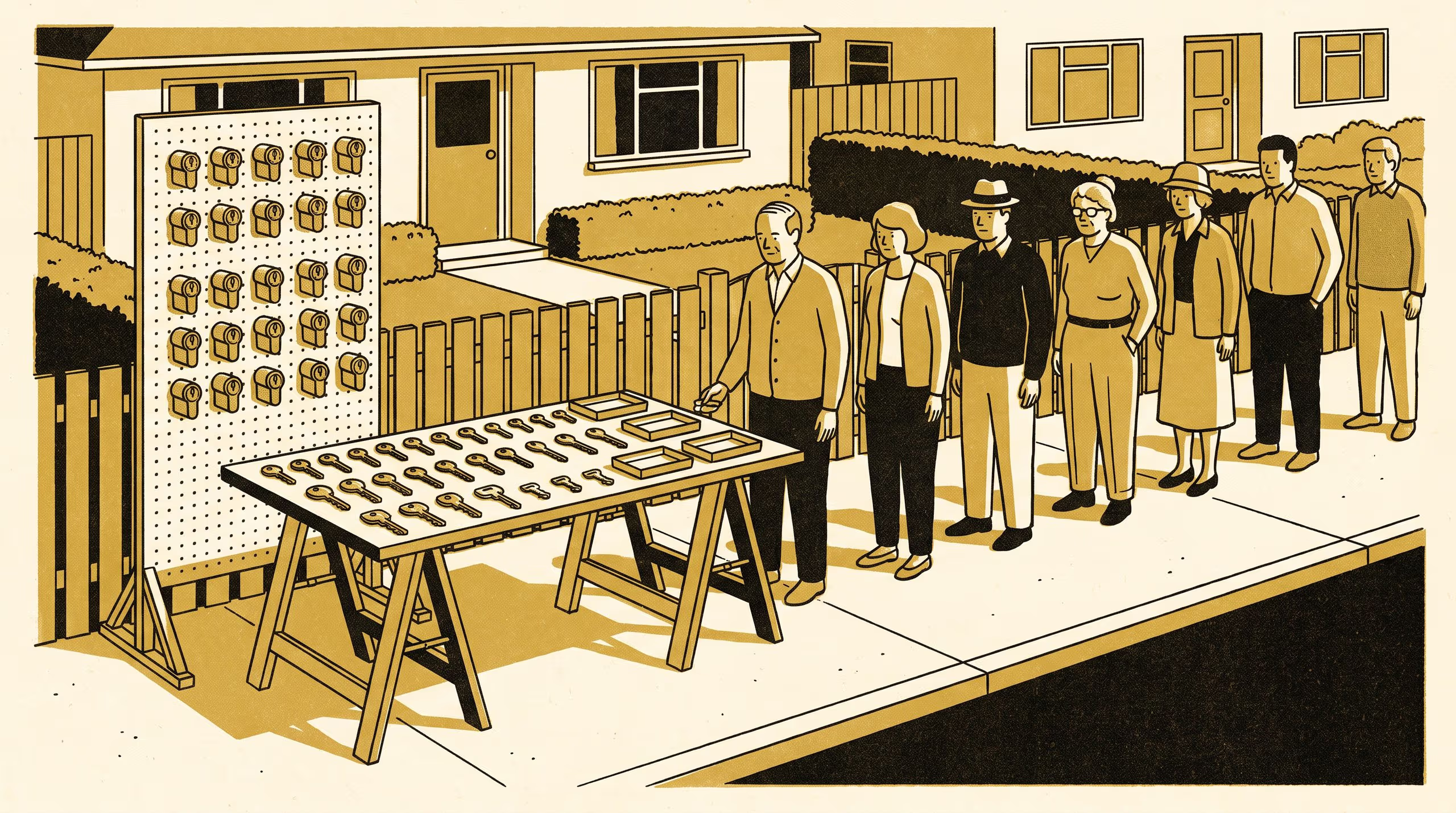
A School of Emergent Priorities paper reconciles 111 held spare keys against the 74 their issuing households could name, finding a majority of circulating keys unknown to the doors they open and an amnesty that re-lent keys before the trestle table was folded.
A two-sided custody census reconciles the spare keys households hold against the keys their neighbours remember lending, then observes the street's first key amnesty
Asked to list every key that opens their front door, no household on one suburban street managed a complete answer, and the median household could name fewer than half. A paper released today by the School of Emergent Priorities reports the census that established this, and the key amnesty the street’s residents’ association convened once the numbers were in.
Who Can Open Your Front Door?, by Dr Lindiwe Achterberg, Dr Marek Solheim and Professor Verity Marris, harmonises doorstep interviews across 21 households into a street-wide custody graph, reconciling the 74 keys households believed were in circulation against the 111 their neighbours could actually produce. The work extends the University’s sustained attention to the arrangements everyday life administers without paperwork, and anchors the School’s anticipatory-capability agenda at the scale of a single front door.
A street that agrees to count its keys is offering the University something rare, and the School has tried to be a careful guest. What the residents do with the count is, properly, a matter for the street.
— Dr Lindiwe Achterberg, Lecturer, School of Emergent Priorities
On amnesty morning, 32 keys crossed the trestle table; seven were re-lent before it was folded away. “Institutions are fluent in beginnings, and endings are where the record thins,” Dr Solheim observed. “The amnesty gave us a morning to watch a street try to write one.”
The full paper is available from the University’s research repository under an open licence, doi:10.5555/slop.vd9dmj.