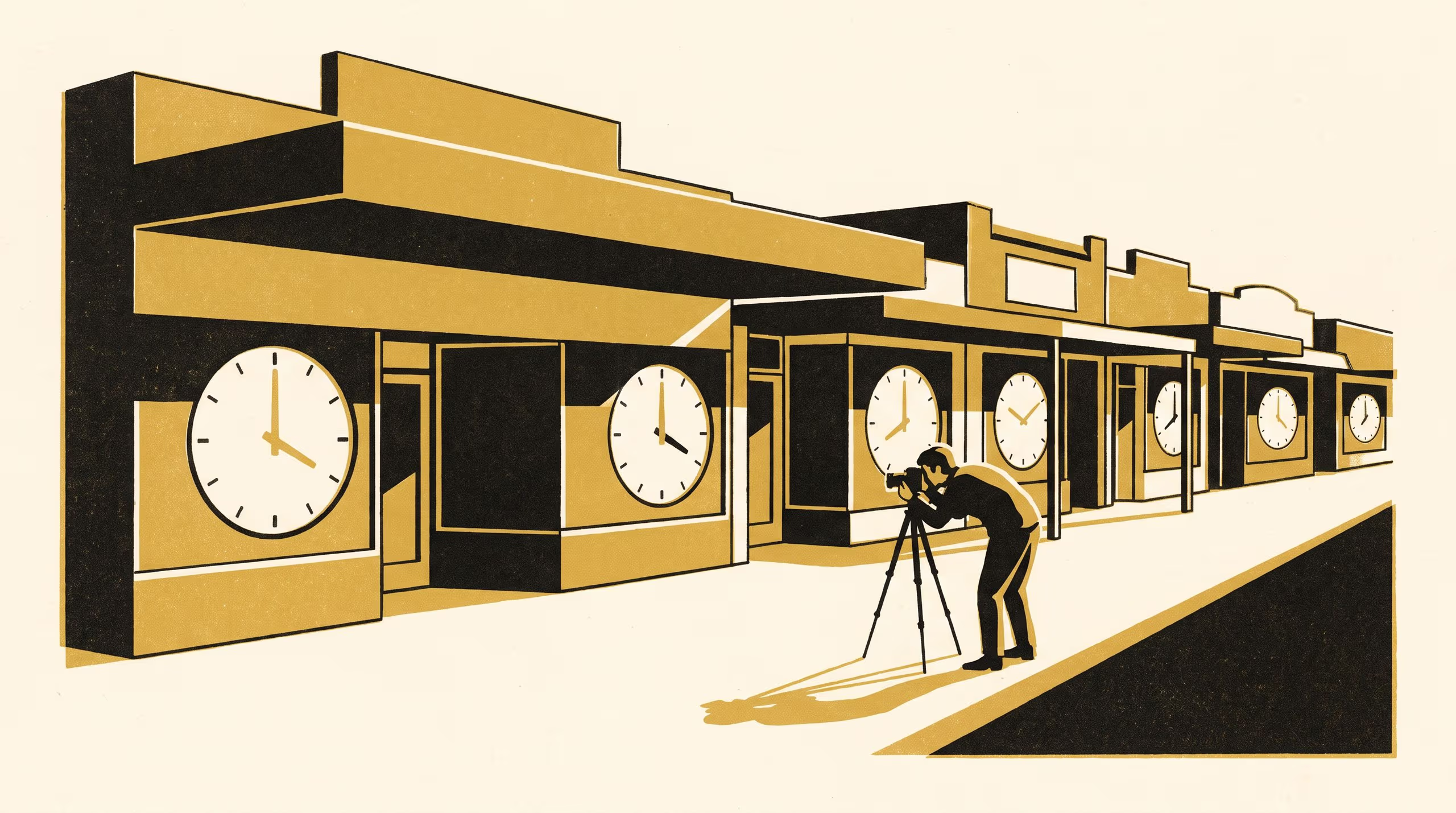
A School of Emergent Priorities paper follows 187 public-facing clock faces through the twenty-six weeks between daylight-saving changeovers, finding a third of the initially wrong faces corrected only by the return of daylight saving itself.
Twenty-six weeks of daily photographs find half the changeover's wrong clocks never reset by hand, and a streetscape audit that registers only the ones that stop
At twenty to ten every morning for half a year, the same four suburban shopping strips were photographed clock by clock. A paper released today by the School of Emergent Priorities reports what those 33,742 face-readings add up to: on the first day after the autumn changeover, 83 of the strips’ 187 public-facing clock faces showed the old hour, and by the following spring nearly a third of them still did — corrected in the end not by any hand, but by the changeover coming back around.
Time to Correction, by Dr Fenna Okoro, Dr Ingrid Vasseur and Dr Petra Umbile, harmonises daily photography with competing-risks modelling into an account of who corrects a clock, who removes one, and who waits. Analogue faces were reset at nearly twice the rate of digital ones, and the strips’ quarterly presentation audits — which keep a defect category for a stopped clock but none for a wrong one — were found to move only the stopped ones. The paper extends the School’s long project on the readings a street takes on trust.
The changeover arrives on schedule whether or not anyone is ready for it, and there is something in that the School is still learning from. We are grateful to the four strips for leaving their clocks exactly as they were.
— Dr Fenna Okoro, Senior Lecturer and Convenor, Horizon Register
Dr Petra Umbile, Postdoctoral Fellow, noted that the panel “asked of the high street nothing it was not already displaying”.
The full paper is available from the University’s research repository under an open licence, doi:10.5555/slop.xw2mv8.