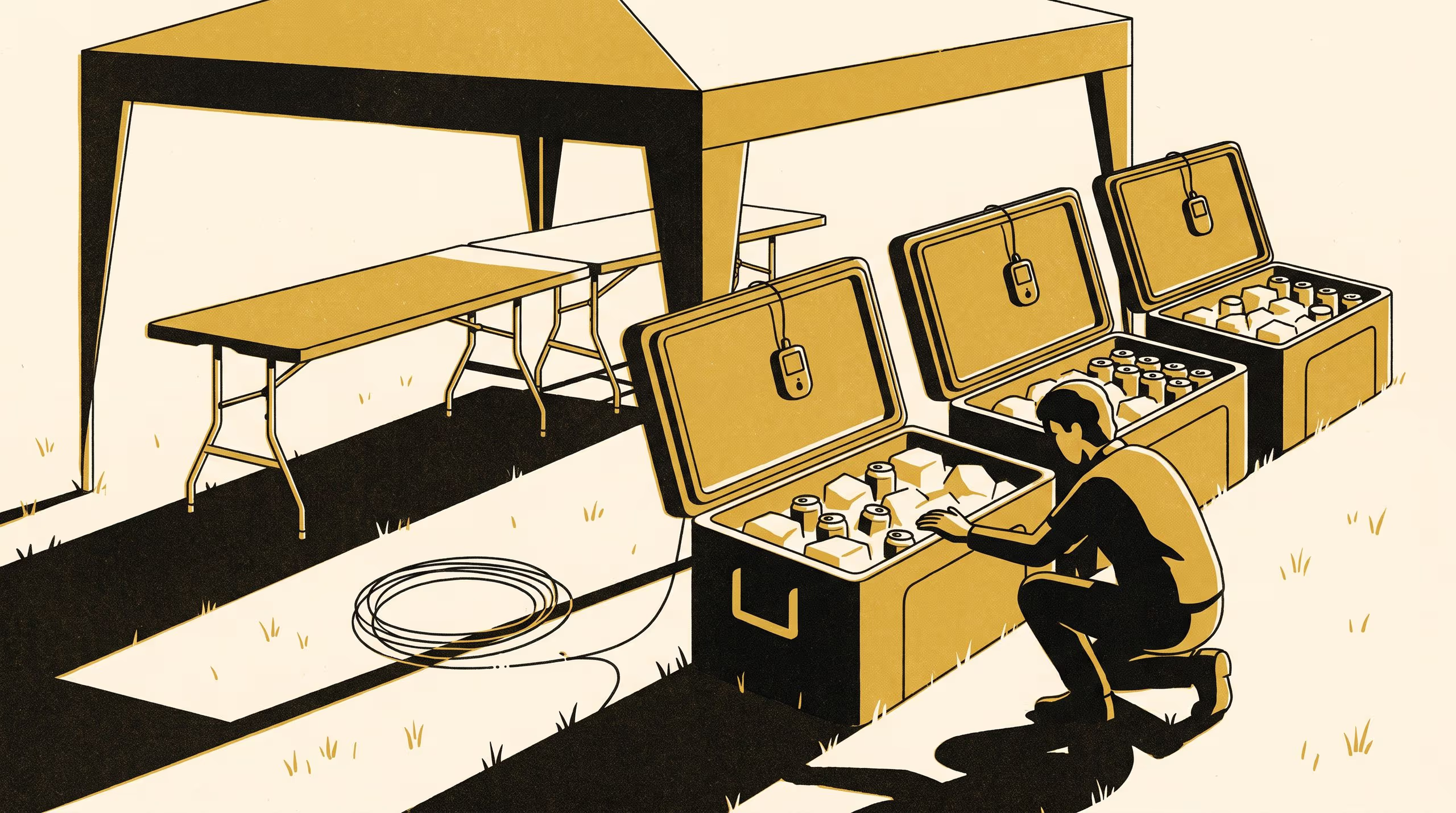
School of Continuous Improvement researchers matched 96 pairs of logged eskies and found overnight pre-chilling worth eleven minutes of cold-hold, well inside the margin of indifference lodged before anyone looked at the data.
One summer, 214 instrumented eskies across 96 community events, and a set-up step now recorded and attested anyway
The instruction is the same at every trestle table in the country: chill the esky the night before. Overnight Pre-Chilling Does Not Extend Cold-Hold in Portable Eskies, a paper released today by the School of Continuous Improvement, is the first attempt to check it where the eskies actually stand.
We set out to settle something everybody already knew, and came back with a much smaller number than anyone expected. The School has spent a while since asking itself why that was the surprising part.
— Dr Osei Vandermeer, Research Fellow and Convenor, Review Cadence Observatory
Over a single summer, 214 eskies at sports-club sidelines, weekend markets, working bees and hall functions carried a logger through set-up and pack-down, building an evidentiary base of 1,964 esky-hours. Containers chilled overnight were matched against those packed straight from the shed on the conditions that govern a summer morning: heat, shade, ice load, and how often the lid comes up. The matched difference in cold-hold came to eleven minutes, inside the margin of indifference the team lodged before data access. Ice mass and lid discipline carried the rest.
The Indicator Commons has since ratified a Cold-Hold Set-Up Declaration for volunteer-run events, under which the pre-chill step is recorded and attested at set-up. “A practice that turns out to be worth measuring is worth carrying forward on the record,” said Dr Torun Ezeigwe, Senior Lecturer and Director of the Master of Applied Measurement. The University regards the work as a mature contribution to the everyday settings its measurement agenda is built to reach.
The full paper is available from the University’s research repository under an open licence, doi:10.5555/slop.ubvdcc.