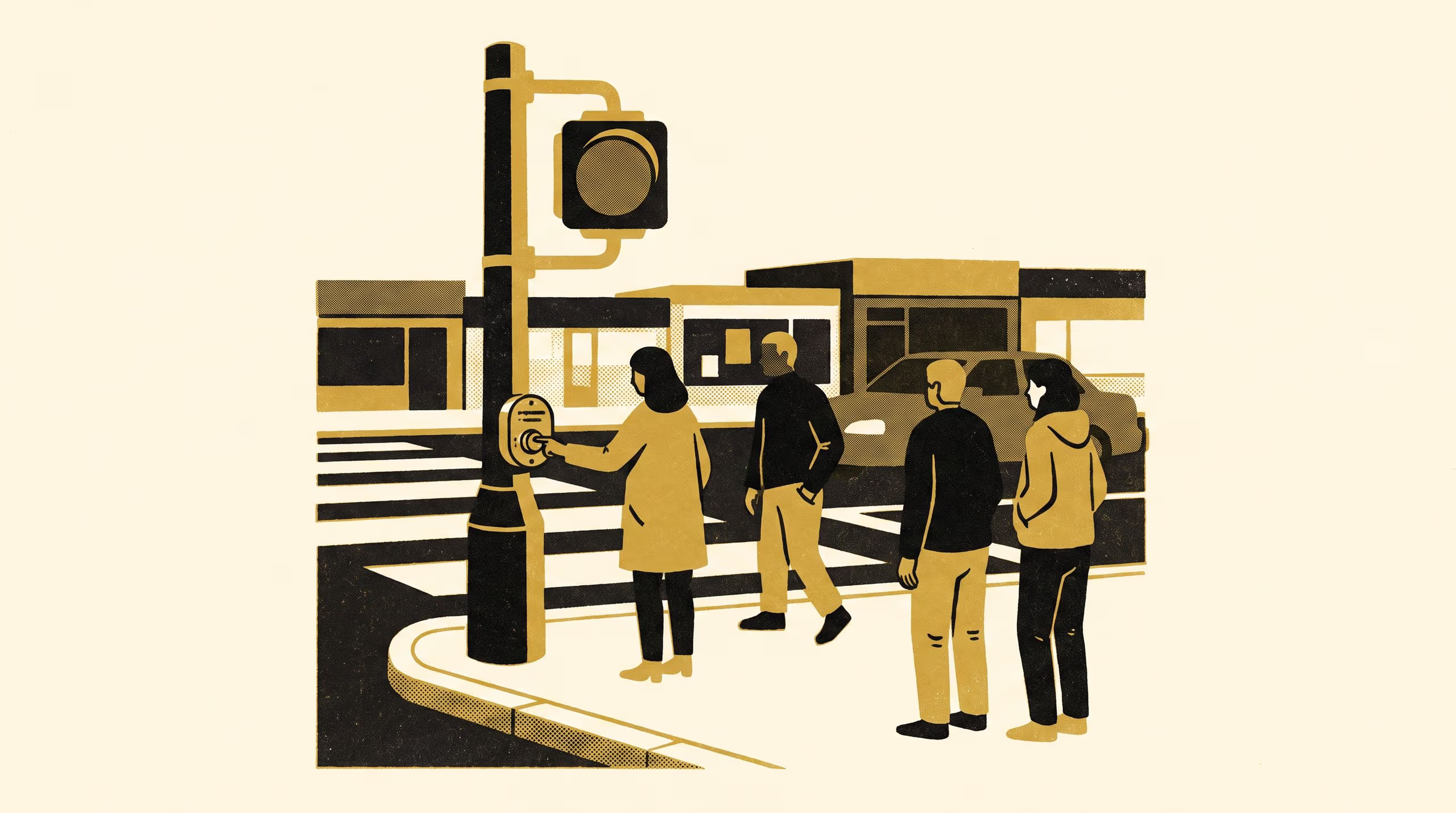
School of Emergent Priorities researchers code 11,482 arrivals at 38 push-button crossings and find that the controller call record a road authority ranks its renewal sites on retains fewer than a third of them.
A nine-category taxonomy applied to 11,482 kerb arrivals at 38 suburban push-button crossings, and the renewal ranking assembled from the calls they produce
The list that decides which pedestrian crossings get rebuilt is ordered on a number that cannot count past one. One Call Per Cycle, published today by the School of Emergent Priorities, sets a signal controller’s own record of pedestrian demand against a count of the people who actually arrived at the kerb, and reports that the record holds 31.9 per cent of them. A phase accepts a single call however many are waiting, so the compression is heaviest where the waiting is: at the school-zone sites in the afternoon band, one logged call stands for a mean of 6.4 arrivals.
The instrument is doing exactly what it was built to do. What we would like to see settled is what the network wants counted, because that is a different decision and nobody has had to make it yet.
— Associate Professor Kwame Lindqvist, Director of the Master of Priority Studies
The work pairs 214 hours of kerbside observation with a matched extract of the controller’s own call log, and organises what it finds into a nine-part scheme covering delegation, redundancy, reassurance and the several ways an arrival reaches a crossing without ever registering as one. A companion intercept survey of 612 pedestrians found the belief that pressing brings the walk phase sooner holding steady whether or not the button was connected.
“Nine categories is more than anybody wants, and we did try four,” said Dr Marek Solheim, Lecturer and Deputy Convenor of the Horizon Register. “The four-category version returns the same answer, which we take as the scheme earning its keep rather than failing to.”
The University welcomes the study into its anticipatory-capability agenda, where an indicator inherited for one purpose tends to be asked to serve several. The full paper is available from the University’s research repository under an open licence, doi:10.5555/slop.x58j8t.