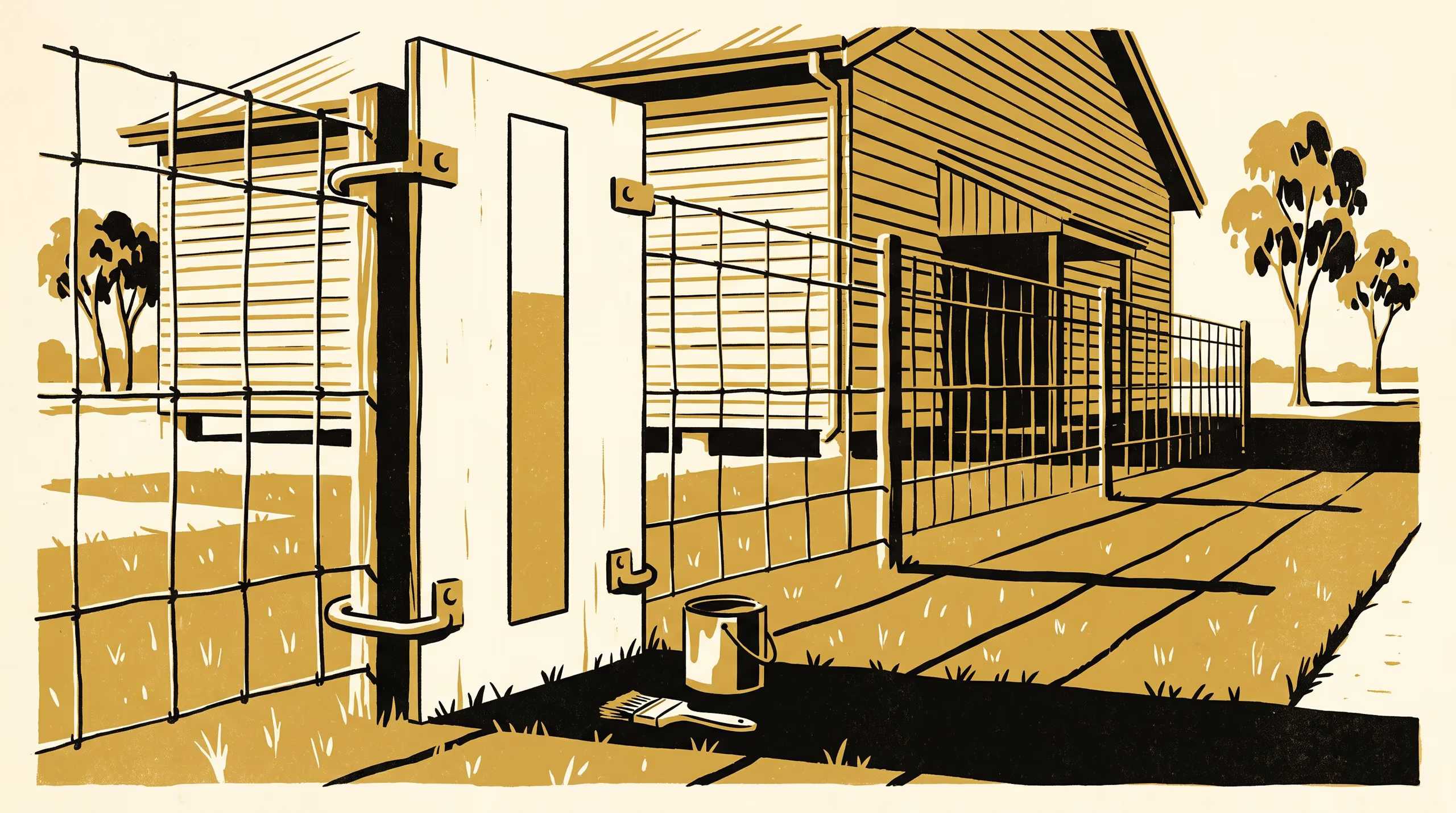
School of Continuous Improvement researchers reconstruct eleven years of painted fundraising thermometers outside community facilities, and find the displayed total outruns the banked one in more than three-quarters of campaigns because no committee has ever painted a bar back down.
Across 214 community campaigns in one regional shire, the painted total a grant scheme certifies turns out to be fixed by the date of the final coat
There is no brush stroke for a cheque that bounces. The Bar Only Goes Up, published today by the School of Continuous Improvement, follows what that absence does to the paperwork of a shire’s community facilities scheme, where a matched contribution is released against a dated photograph of the plywood thermometer bolted to the fence outside the hall being funded.
The team reconstructed dated repaint histories for 214 campaigns at 96 facilities from 4,706 board photographs held in milestone files, committee newsletters and association archives, pairing each history with the audited returns behind it and treating the repaint as an event in its own right. The hazard of a further repaint falls by a factor of five once the scheme’s threshold has been cleared on the board. The median campaign records its last repaint nineteen months before it closes, and at close the painted level exceeds banked receipts in 78 per cent of cases.
We have spent a good while telling other people that their instruments carry assumptions. This one carries a direction, and it took us longer than it should have to stand in front of a board and see that.
— Dr Sten Okwuosa, Senior Research Fellow and Convenor, Impact Pathway Atlas
Associate Professor Casimir Beng, Lead of the Adaptive Metrics Lab, said the work sat comfortably within the School’s interest in the apparatus of certification: “The question worth carrying away is what a display is for, once the thing it was built to unlock has been unlocked.”
The School counts the paper among the plainest demonstrations of the measurement discipline it wants associated with its name. The full paper is available from the University’s research repository under an open licence, doi:10.5555/slop.a1s6a7.