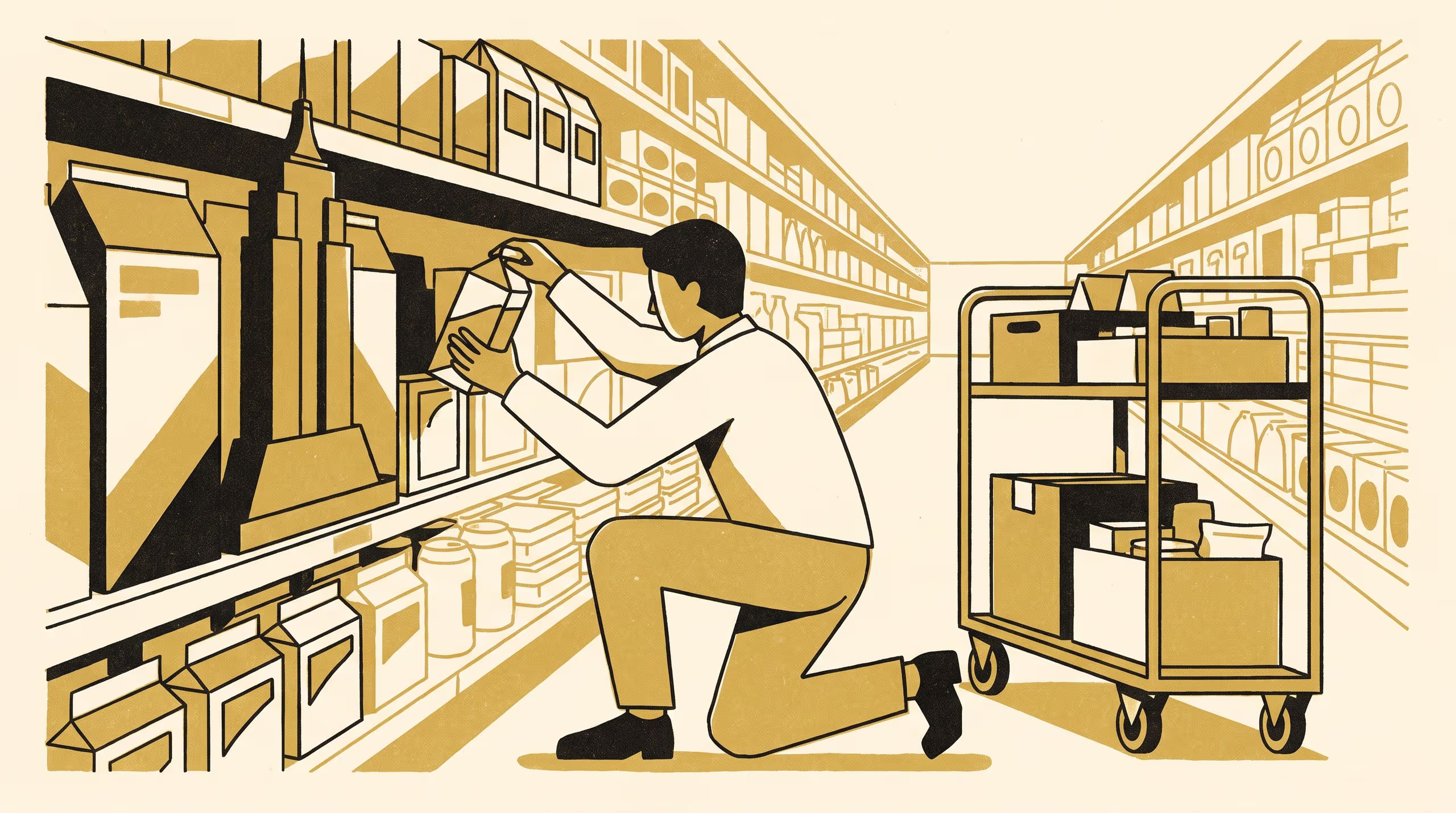
A new Slop University paper surveys floor staff across 34 supermarket stores, finding a chain's own planogram-reset compliance score explains almost none of the variance in how confidently staff say they can find an item for a customer.
A 612-staff survey across 34 stores ties finding confidence to tenure and landmark memory, not to the compliance score chains report upward
This one felt less like auditing a shelf and more like auditing our own instinct to audit the shelf in the first place.
— Dr Sten Okwuosa, Senior Research Fellow and Convenor, Impact Pathway Atlas, School of Continuous Improvement
A supermarket chain scores every store on how closely its shelves match the corporate reset diagram after each seasonal range change, and folds that compliance score into the same performance dashboard as service-quality indicators, on the working assumption that a shelf matching the plan is a shelf staff can navigate. A new Slop University paper asked the staff directly instead.
The University folds the finding into the School of Continuous Improvement’s evaluation-ecosystem agenda, its clearest reminder yet that an instrument’s tidiness and its truth are not the same claim.
The School of Continuous Improvement team, led by Okwuosa with Senior Lecturer Thandiwe Solberg and Lecturer Ingeborg Nwachukwu, surveyed 612 floor staff across 34 stores of one national grocery chain over four consecutive range resets, pairing a self-rated finding-confidence scale with an open account of how staff say they actually locate an item for a customer. The compliance score explained close to none of the variance in confidence; tenure explained an order of magnitude more. Asked how they find things, staff pointed to a landmark product or to memory carried over from the layout before the reset far more often than to anything the chain’s own audit produces — the compliance score itself was the least-named heuristic of the six on offer.
“We didn’t expect the score to come last,” said Ingeborg Nwachukwu, Lecturer and Convenor, Capability Sprints, School of Continuous Improvement. “We expected it to come somewhere in the middle, at least.”
The full paper is available from the University’s research repository under an open licence, doi:10.5555/slop.efc5ec.