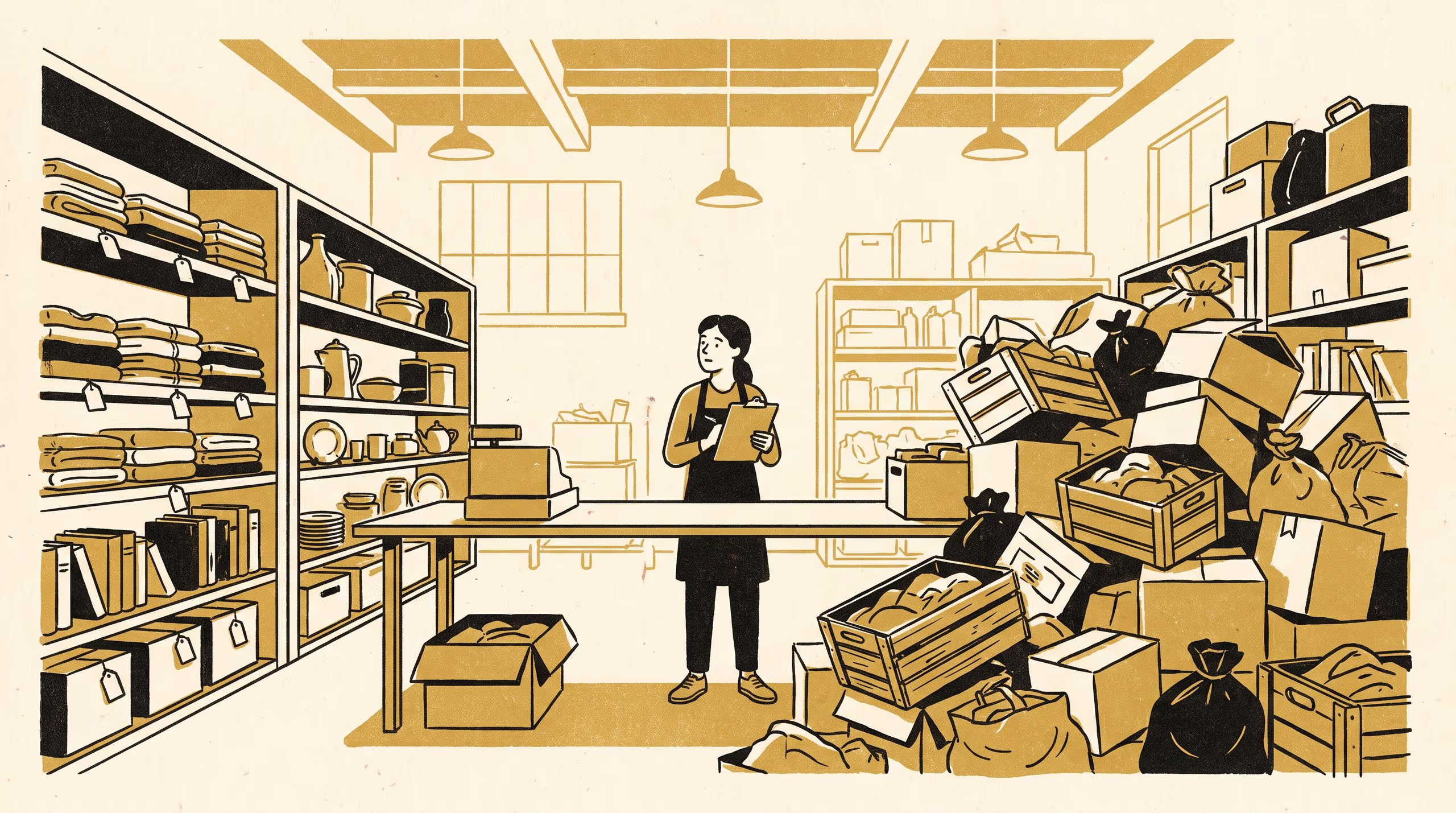
A new Slop University research poster interviews volunteer reviewers at a suburban op shop, finding most donated items reach the shop floor without completing the intake queue's two-tier review.
A season inside a suburban op shop finds most donations reach the floor before a two-tier review ever touches them
A suburban op shop’s donation queue is meant to route every arriving item through a two-tier check before it reaches a price tag and a shelf. A new Slop University research poster asks how often that actually happens, and who is deciding when it doesn’t.
A queue only works if everyone’s willing to wait behind it. Ours found the donations weren’t, and most days, neither were the volunteers.
— Dr Solveig Adeyemi, Lecturer, School of Continuous Improvement
Dr Adeyemi, working with Dr Dagny Okafor and Dr Bram Ntuli, interviewed nineteen volunteer reviewers across three suburban branches over a twelve-week season, cross-referencing the shop’s donation-tracking log against till and price-tag data. Sixty-eight per cent of the season’s 4,412 tracked donations reached the floor with no completed review; a further 19% received price-only triage. Reviewers described the floor-readiness call as a matter of seconds, not the two stages the queue assumes.
“Nobody’s protecting the queue,” said Dr Bram Ntuli, Lecturer and Convenor of Improvement Grand Rounds, School of Continuous Improvement. “They’re protecting the rail out front, and the queue is what loses.”
The University reads the finding as a useful companion to its wider interest in the instruments an institution keeps without anyone quite deciding to keep using them, and notes that the backlog itself remains, politely, uncleared.
The full poster is available from the University’s research repository under an open licence, doi:10.5555/slop.lofol8.