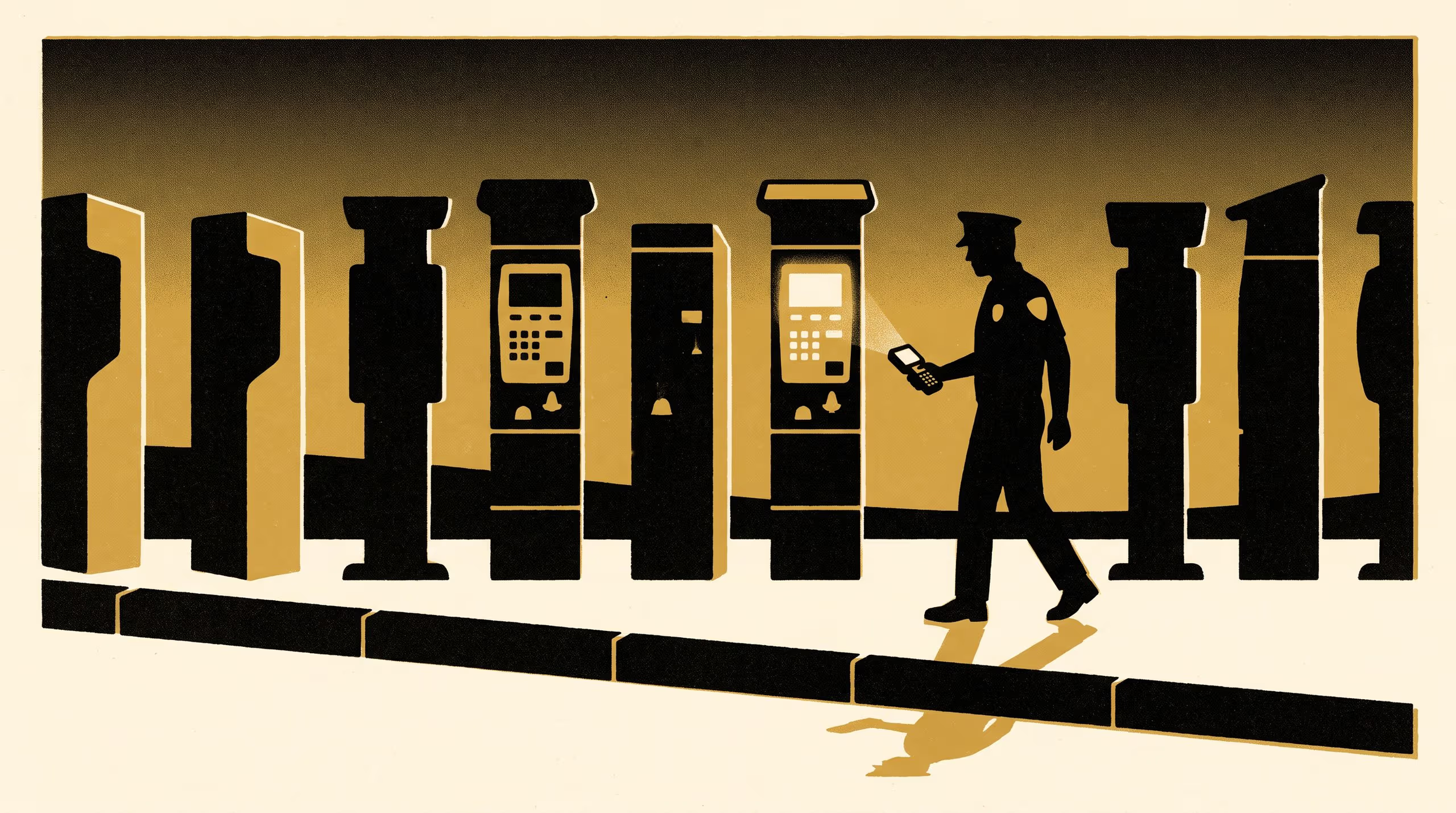
A new Slop University poster audits four on-street parking pay-station models along the same council blocks, finding fine rates converge within weeks of standardising a mixed fleet to one grace-period setting.
A natural experiment across 212 metered bays finds fine rates converge once a mixed-model block is set to a single grace period
Two cars can overstay by the same four minutes on the same block, and only one of them gets a ticket. That isn’t a mystery. It’s a firmware setting.
— Senior Lecturer Fenna Okoro, Convenor, Horizon Register, School of Emergent Priorities
Slop University has published a new research poster auditing four models of on-street parking pay station deployed across nineteen council blocks, finding that the grace period a machine allows before a compliance officer can issue an infringement is set entirely by the machine, not by the street it happens to stand on.
The University treats the finding as a small, clean addition to its anticipatory-capability agenda, which has spent several cycles now on settings nobody remembers choosing and few think to compare until someone finally lines the machines up side by side.
The team, led by Okoro with Senior Lecturer Ingrid Vasseur and Lecturer Marek Solheim, drew on twenty-six weeks of compliance-officer patrol records across the nineteen blocks, covering four different pay-station makes, then watched what happened when one mixed block was switched to a single grace-period setting partway through. Overstay-to-fine timing had drifted by machine for the whole first half of the study; within three weeks of the switch, the standardised block’s fine rate looked like every other block’s.
“We’d like to know how many other things on a council’s books are actually four systems wearing one sign,” said Senior Lecturer Ingrid Vasseur, School of Emergent Priorities.
The full poster is available from the University’s research repository under an open licence, doi:10.5555/slop.mmtzop.