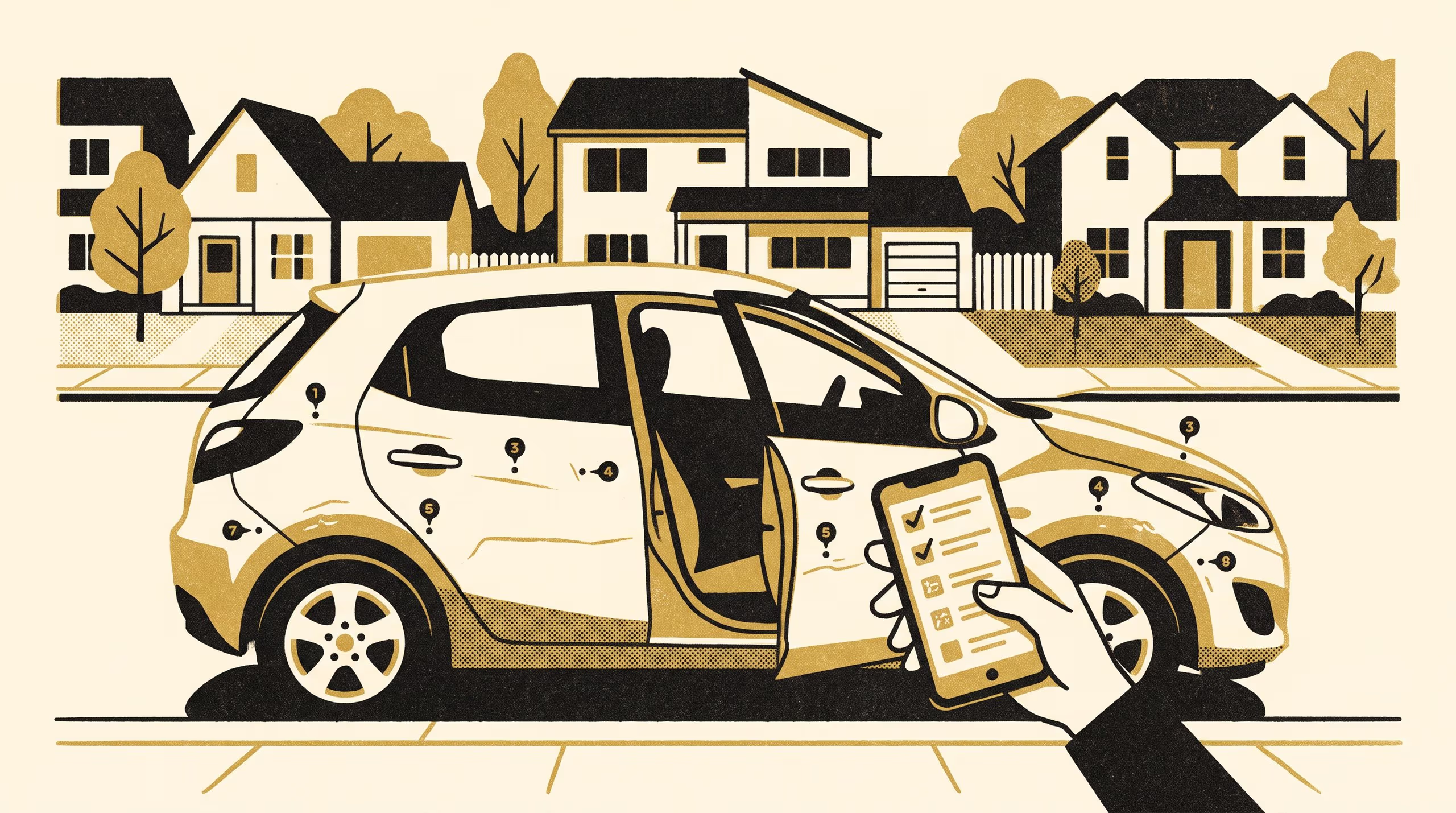
A new Slop University research poster tests 164 car-share rentals, finding that renters who tick fastest through the app's pre-trip damage checklist recall existing scratches and dents far less accurately in a live phone quiz at drop-off, and dispute damage charges roughly three times as often.
A live phone quiz at drop-off across 164 rentals finds checklist speed predicts what a renter can recall, and who disputes a damage charge
A fast tick on a car-share checklist doesn’t mean the renter noticed the dent, a new Slop University research poster finds. Renters who moved quickest through a peer-to-peer platform’s pre-trip damage acknowledgement recalled far less about the vehicle’s existing scratches and dents when asked, unprompted, on a phone call at drop-off.
Researchers from the School of Emergent Priorities logged checklist completion time across 164 rentals at three metro depots, sorting renters into fast, medium, and slow terciles before ringing each one at drop-off to ask them to locate two of the damage points the checklist had listed. Recall accuracy climbed steadily from the fastest tercile to the slowest, and the fastest group also disputed a damage charge at roughly three times the slowest group’s rate.
The result extends the School’s running interest in how quickly a compliance gesture can outpace the thing it was built to confirm, and adds a live-recall method to a research line that has mostly worked from documents alone.
What we didn’t expect was how comfortably “acknowledged” has been standing in for “understood” the whole time we’ve been counting it as the same thing.
— Dr Anouk Mensah, School of Emergent Priorities
Associate Professor Renke Sabel, of the School of Continuous Improvement, who studies how rarely an adopted indicator is ever formally retired, welcomed the finding as “exactly the kind of question the Indicator Commons exists to keep asking about instruments we’ve stopped examining.”
The full poster is available from the University’s research repository under an open licence, doi:10.5555/slop.e1mluq.