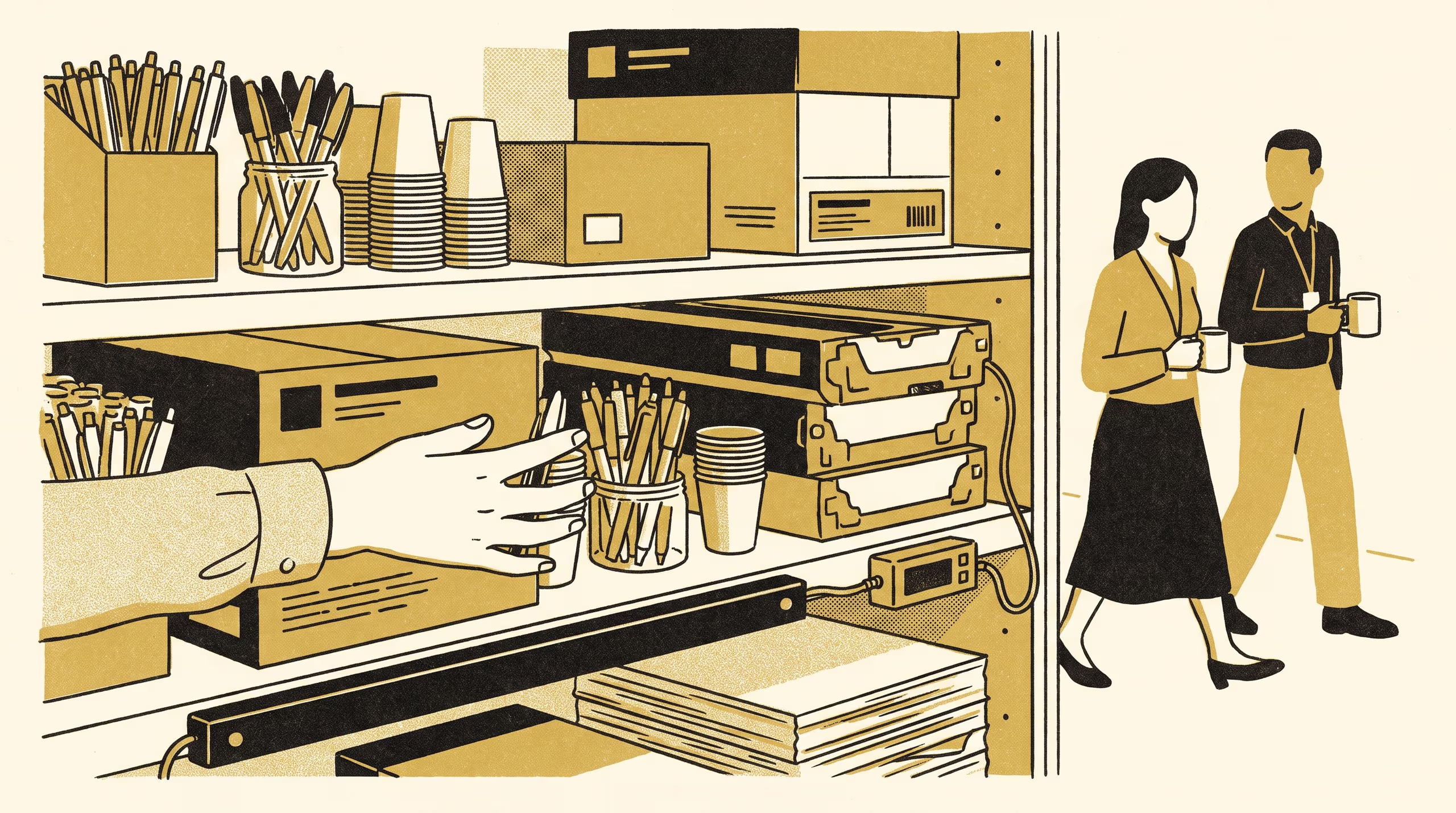
A new Slop University paper interviews 47 staff across twelve break rooms to find they route around an auto-reordering supply shelf once its weekly consumption report begins setting the department's stationery budget.
Across twelve break rooms, staff route around an auto-reordering shelf once its report starts setting the budget
A break-room supply shelf that reorders its own pens and toner is ordinary infrastructure until its weekly tally starts doing something else: setting next quarter’s stationery line. The School of Continuous Improvement went looking for what staff do once that second job becomes obvious.
A shelf that reorders your pens is a convenience. A shelf whose weekly tally sets next quarter’s budget is something else entirely, and our participants understood that shift before facilities did.
— Dr Torun Ezeigwe, Senior Lecturer and Director, Master of Applied Measurement
Why We Turn It Off, deposited today through the Office of Research Outputs, draws on forty-seven interviews across twelve sites of a single facilities partner, half of them already answering to a shelf-set budget line. The team catalogues five ways staff quietly manage the shelf’s own account of what it dispenses, from a pre-positioned personal stash to a straightforward request that the tally be reset by hand. A parallel firmware fix, aimed at the sensor’s own accuracy, changed how often the shelf misfired without changing how often staff intervened.
Dr Fenna Okoro, Senior Lecturer and Convenor of the Horizon Register, welcomed the finding from across the University’s other school, calling it “a use nobody logged as a risk when the shelf went in, which is exactly the kind of entry the Register exists to catch after the fact.”
The findings join what the School regards as a fairly unglamorous but essential archive: the places where a convenience quietly becomes a control.
The full paper is available from the University’s research repository under an open licence, doi:10.5555/slop.jga0gs.