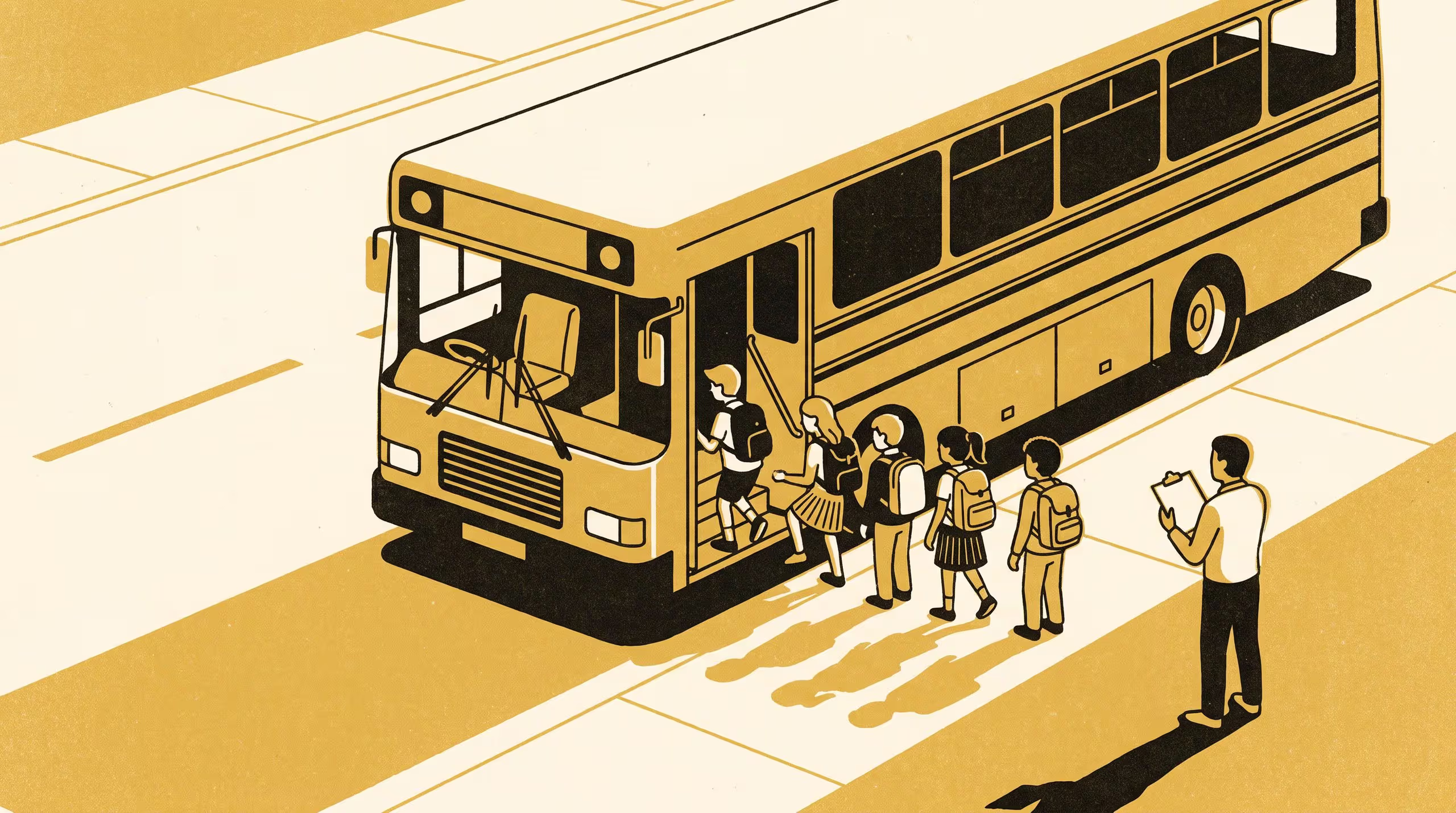
A new Slop University paper rides 214 contracted school bus runs and finds that five of the seven kinds of driver substitution it observed leave no mark on the sign-on record the network's continuity score is computed from.
An observer aboard 214 contracted runs recorded 96 substitutions, of which 59 are invisible to the score that weights contract renewal
A school bus contract in this network is renewed partly on how often the nominated driver signed on. Nothing in it asks who was at the wheel.
The Regular, or Whoever Was Available, released today by the School of Continuous Improvement, put an observer on 214 scheduled afternoon runs across 38 contracted routes over a school term. The observer recorded 96 driver substitutions and sorted them into seven kinds. Two of the seven reach the sign-on record. The other five do not, which leaves 59 of the 96 events outside anything the continuity score can see. A route whose nominated driver signs on every afternoon and hands the vehicle over at the gate every afternoon scores full marks.
The School has a long habit of asking what a number is computed from, and a much shorter one of asking who was standing there when it happened. Ten weeks on a bus has left me thinking the second question is the one we have been under-resourcing.
— Dr Dagny Okafor, Lecturer and Convenor, Evaluation of Evaluation
Sampling covered every route and every weekday. Alongside the substitutions, the observer logged four things visible from a seat on the bus: departure against the scheduled window, set-downs against the nominated stop list, driver intervention during boarding, and caregiver contacts reaching the depot within two days. Runs the score records as continuous and runs it records as non-continuous separate on none of the four by more than 0.7 percentage points.
Associate Professor Casimir Beng, Lead of the Adaptive Metrics Lab, put the authority’s response at the centre of what happens next. “They have moved the score to a fortnightly computation,” he said. “We will be interested to see what a more frequent reading of the same record turns up.”
Putting an observer on a vehicle for a term is not a cheap way to check a contract clause, and the University expects to be asked why it did. The paper carries support from the Indicator Stewardship Seed Fund.
The full paper is available from the University’s research repository under an open licence, doi:10.5555/slop.0fv9gk.