A new Slop University paper codes 61,884 free-text descriptions from 4,312 rental entry condition reports and finds 30.6 per cent of them unassignable to any line of the property group's bond-deduction schedule.
A nine-category frame applied to 61,884 free-text descriptions finds the largest has no line among the six a bond is settled against
Nearly a third of what tenants write on a rental entry condition report has nowhere to go.
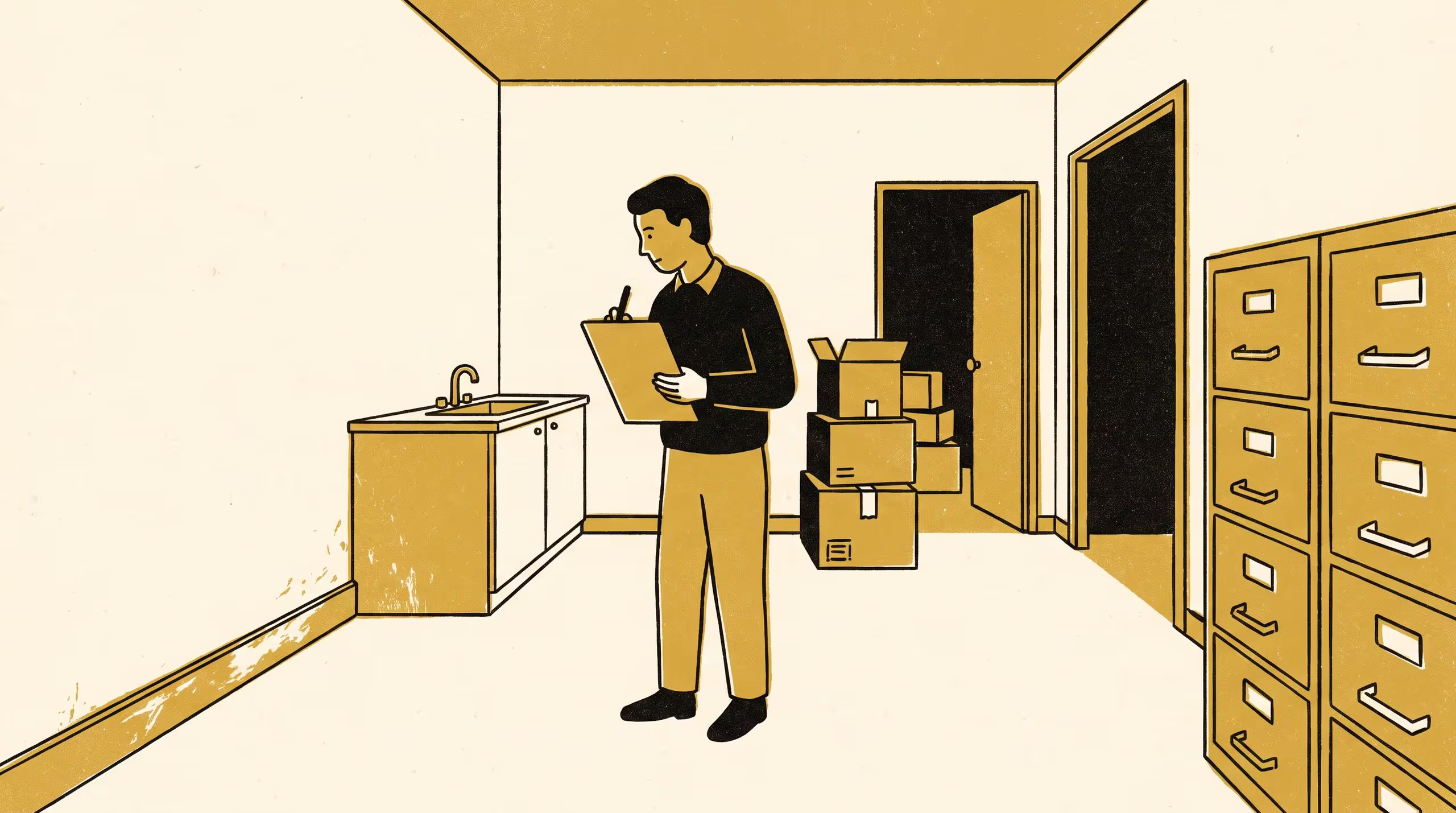
Was Like That When We Moved In, added today to the University’s research repository, applies a nine-category coding frame to 61,884 free-text descriptions drawn from 4,312 entry condition reports lodged with a single property-management group over six years. The largest category, at 28.4 per cent, records the state of an item by pointing somewhere other than the item: a previous occupant, the age of a fitting, the condition in which the keys arrived. Asked to place the nine categories on the six-line schedule the group settles bonds against, a panel of the group’s own staff left that category almost entirely unassigned.
Somebody sat in an empty room and wrote down what they thought would matter later. Our contribution is to say what they wrote, and to notice that the form had no field for it.
— Dr Thandiwe Solberg, Senior Lecturer and Convenor, Demo Quarter
The work carries the School of Continuous Improvement’s evaluation-ecosystem agenda into the documentary layer, harmonising corpus coding with a crosswalk exercise conducted inside the organisation whose instrument is under study. Partway through the study period the group replaced its free-text field with a drop-down built from the same six lines; the attributed share of recorded content fell from 27.9 to 4.6 per cent while the volume of content rose.
“A category that survives six years of paperwork and then thins out in a fortnight is worth a look at both ends,” said Dr Marek Solheim, Lecturer in the School of Emergent Priorities. The University regards the release as a substantive addition to its work on the instruments through which institutions receive an account.
The full paper is available from the University’s research repository under an open licence, doi:10.5555/slop.8ezzbp.