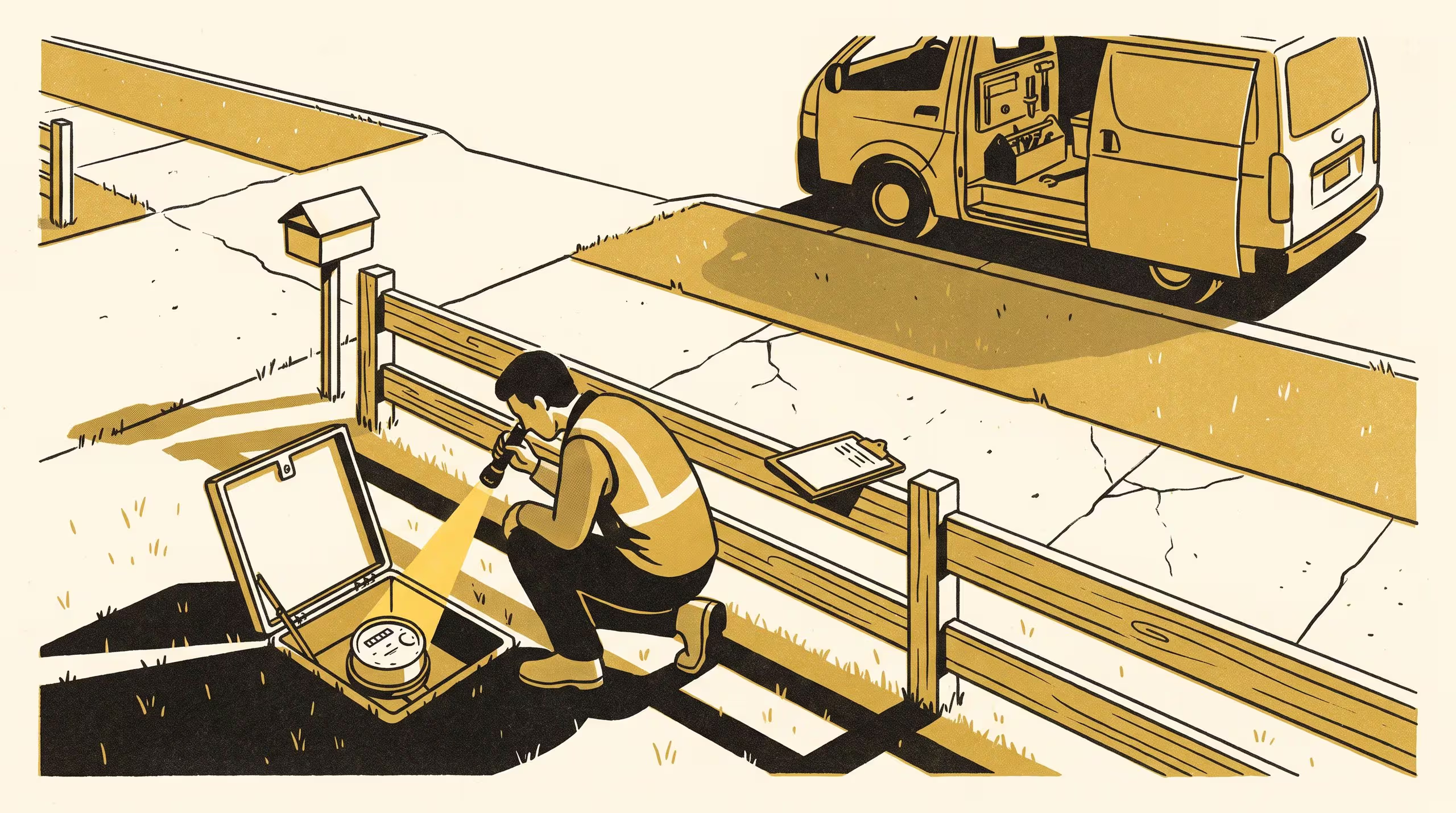
A new Slop University paper walks 96 water meter readers through a standardised twenty-installation route and finds a utility's 99.4 per cent read-completeness rate carries no information about their accuracy, with an equivalence test supporting the absence of an association.
A pre-registered probe across 14 depots and 96 readers finds depot read-completeness unrelated to what a reader can do at the pit
Slop University set out to test something a metropolitan water utility already believed it knew, and found the evidence for it absent.
The Number Arrives Either Way, released today through the Office of Research Outputs, examines the read-completeness rate a utility publishes each quarter: the proportion of billing-cycle reads obtained without estimation, now standing at 99.4 per cent. The figure is used to size the field-reading crew and to schedule refresher training. Across fourteen depots and all 96 of the utility’s field readers, the School of Emergent Priorities team finds it carries no information about whether a reader sent to a meter can read the one in front of them.
We are pleased to be able to report an absence with some confidence. Findings of this kind sit close to the centre of what the School does, and they tend to be the ones that stay useful longest.
— Dr Runa Adegoke, Senior Lecturer and Convenor of the Strategic Drift Survey
The work harmonises an administrative reporting stream with a standardised capability instrument, walking every reader across the network through the same route of pre-characterised installations and holding the result against the depot figure the organisation acts on. Dr Ingeborg Nwachukwu, Lecturer and Convenor of Capability Sprints in the School of Continuous Improvement, described the study as “the sort of question a capability agenda has to keep putting to itself”.
The University counts a well-reported null among the results it is most willing to stand behind. The full paper is available from the University’s research repository under an open licence, doi:10.5555/slop.idvq3t.