A new Slop University paper codes 19,847 instruction units from notes left for stand-in pet carers and finds the providers' care-plan completeness score measures form completion rather than care planning.
A taxonomy of 1,164 kitchen instruction notes finds the largest category, when to escalate, addressed by none of the form's six fields
Every household that books a pet sitter writes two documents. The University has now read both.
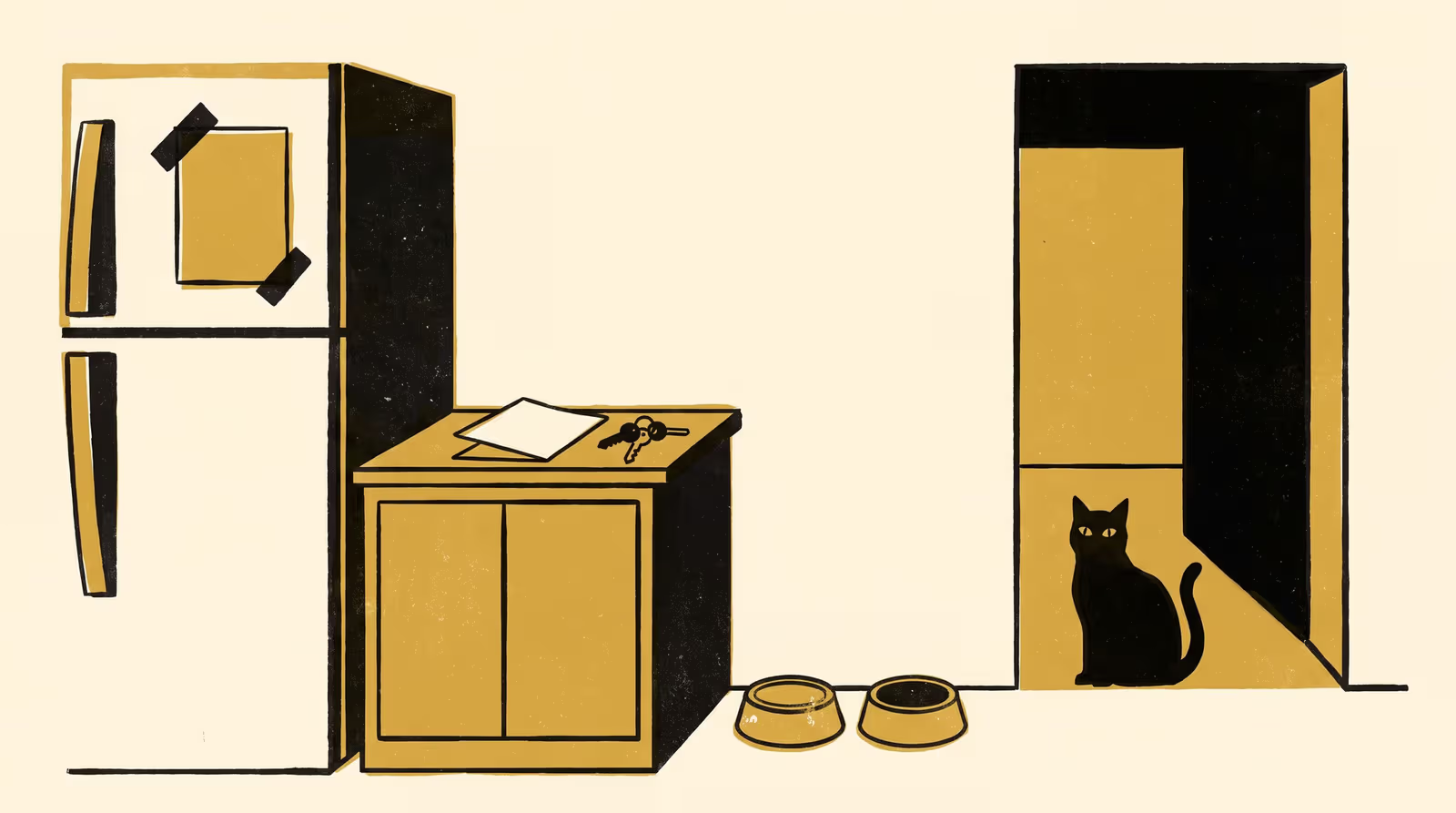
The Fridge Holds What the Form Does Not, published today by the School of Emergent Priorities, is a taxonomy of the second one: the note on the bench or the fridge door, addressed to whoever will be in the house. Carers photographed 1,164 of them at handover across three metropolitan agencies and one neighbourhood care exchange, and two coders worked the resulting 19,847 instructions into nine categories at substantial agreement. The largest category is escalation — the conditions under which a household wants to hear from the carer. None of the six fields on the providers’ booking form asks for it.
The households are not withholding anything. They are writing it down with real care, in the one document nobody collects, and then filling in a form that scores full marks without it.
— Dr Petra Umbile, Postdoctoral Fellow, School of Emergent Priorities
Care-plan completeness, the figure the providers report against, is the share of those fields filled, and it sat near its ceiling throughout. Notes attached to the highest-scoring bookings carry no more instruction than notes attached to the lowest. “A measure at 0.94 is telling you the form is easy to finish,” said Dr Marek Solheim, Lecturer. “It is not telling you anything about the animal.”
The work extends the School’s programme on how an institution’s categories decide what counts as a record, and the University regards it as an instance of that programme reaching a document written in almost every kitchen. The paper declines to recommend a longer form.
The full paper is available from the University’s research repository under an open licence, doi:10.5555/slop.q7mzab.