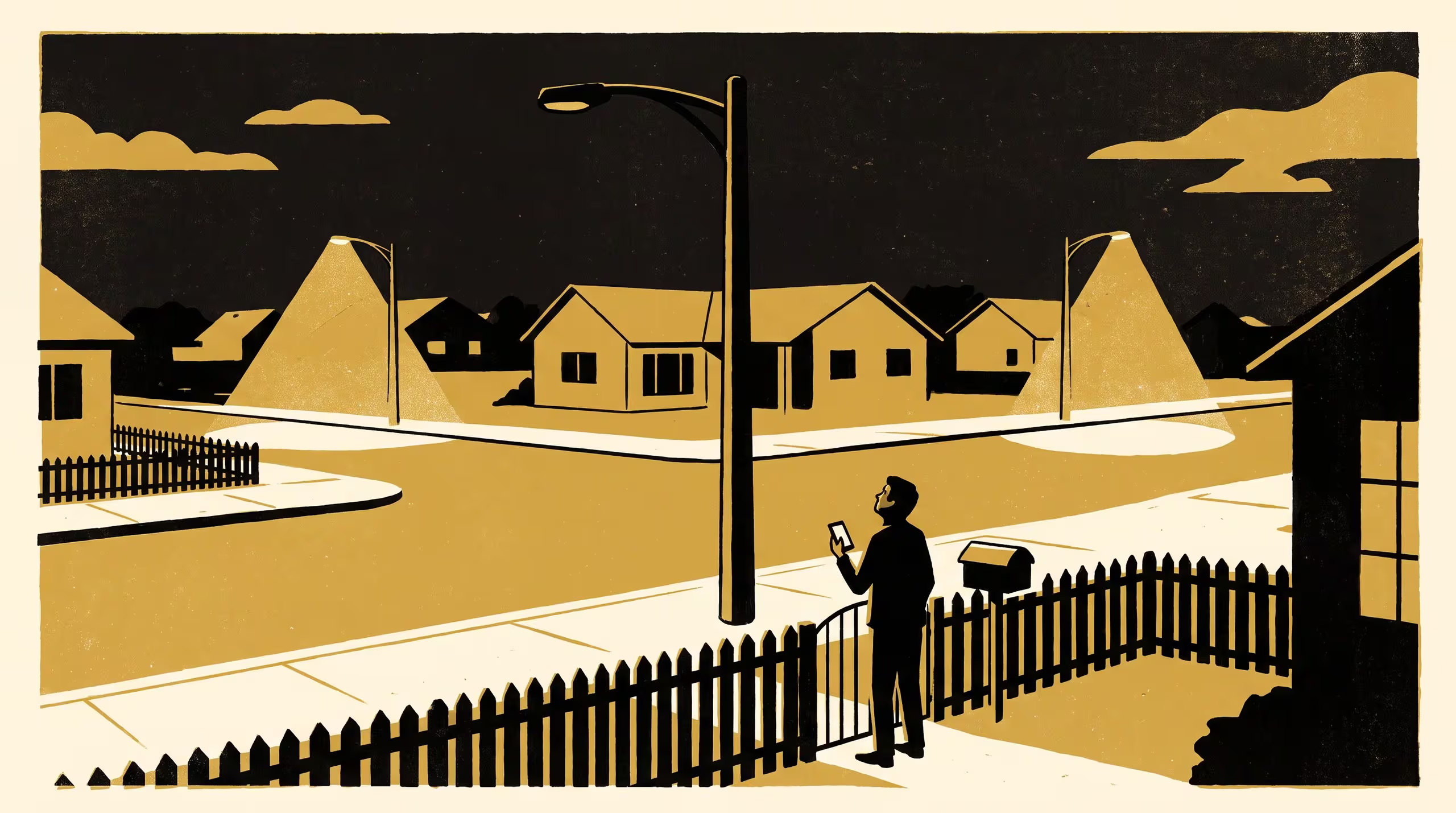
A new Slop University research poster estimates the unlit streetlights across 62 residential streets from three incomplete records, finding an estimated 44.2 per cent of dark lamps on no list at all.
A three-list estimate across 62 residential streets puts 486 lamps dark against the 271 any record names, while the rectification rate counts only what was reported
Three incomplete records of the same suburb are enough to estimate what all three missed. A research poster released today by the School of Emergent Priorities points that arithmetic at streetlights.
Over fourteen weeks the team assembled three independent enumerations of unlit lamps across 62 residential streets: the faults residents lodged, the lamps a contractor’s night-drive audit flagged, and a walking survey run blind to both. Modelling the overlap between them estimates the lamps that reached none.
The lists between them name 271 dark lamps. The model puts the population at 486, on an interval running 402 to 612 — somewhat over two in five unlit lamps on no record at all. In the quietest fifth of streets the lists found 31 of an estimated 112.
Every list an institution holds was made by someone deciding to make it. Measuring the distance between what a record says and what it was ever in a position to say is where this School has been heading.
— Dr Runa Adegoke, Senior Lecturer and Convenor, Strategic Drift Survey
The council publishes a rectification rate of 96.1 per cent within ten business days; its denominator is the 208 reports received. The contractor’s audit route is prioritised by the previous quarter’s report density, so the streets least likely to reach a list are also the least likely to be driven.
“A rate can be accurate and still be answering a question nobody asked,” said Dr Lindiwe Achterberg, Lecturer in the School of Emergent Priorities. “Where that leaves the reporting is not for us to settle this week.”
The University puts the work forward as one of its schools lending an established method to a question nobody had pointed it at.
The full poster is available from the University’s research repository under an open licence, doi:10.5555/slop.69l72s.