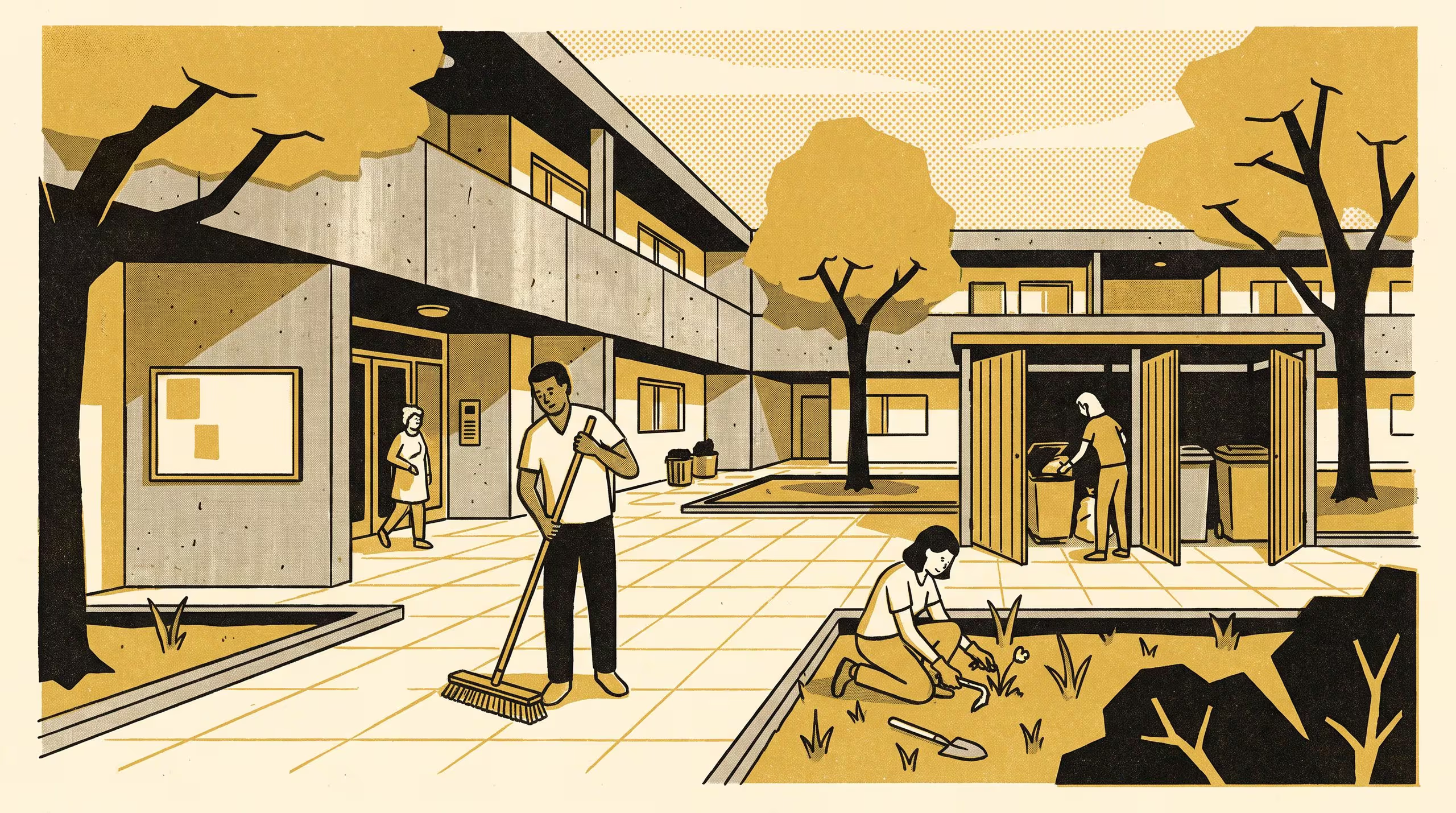
A new Slop University paper tries to repeat an earlier finding that a household chore wheel's appeals process fixes the record without fixing the chore, this time at the scale of an apartment block's working bee, and reports the opposite pattern.
A public working-bee board doesn't raise record accuracy the way a household chore wheel's appeals process once did — it raises how much gets done instead
Slop University doesn’t often ask whether one of its own findings holds up somewhere else. A new paper reports what happened when it did: a mechanism that fixed a household’s chore-wheel paperwork without touching the chore itself was rebuilt for an apartment block’s working bee, and this time it left the paperwork alone.
Senior Lecturer Dr Ronja Oyelaran and Associate Professor Kwame Lindqvist, both of the School of Emergent Priorities, working with Lecturer Dr Marit Osayande of the School of Continuous Improvement, fitted 24 apartment buildings’ working bees with a public check-off board, standing in for the appeals process an earlier household study had credited with tightening its own record. Eighteen matched buildings kept circulating their task list privately, by committee email, as before.
We built the board expecting to see the same thing twice. Instead we learned what a household’s finding was quietly borrowing from the people living in it.
— Senior Lecturer Dr Ronja Oyelaran, School of Emergent Priorities
Across four working-bee cycles, the board left the gap between a tick and an independent facilities audit unchanged in both arms. What moved instead was the audited work itself: buildings running the public board finished more of it, a margin that widened as the deployment went on.
“A household already has somewhere to raise a complaint about a chore,” said Dr Osayande. “A building mostly doesn’t. Ours just started supplying an audience.”
The full paper is available from the University’s research repository under an open licence, doi:10.5555/slop.we5s9m.