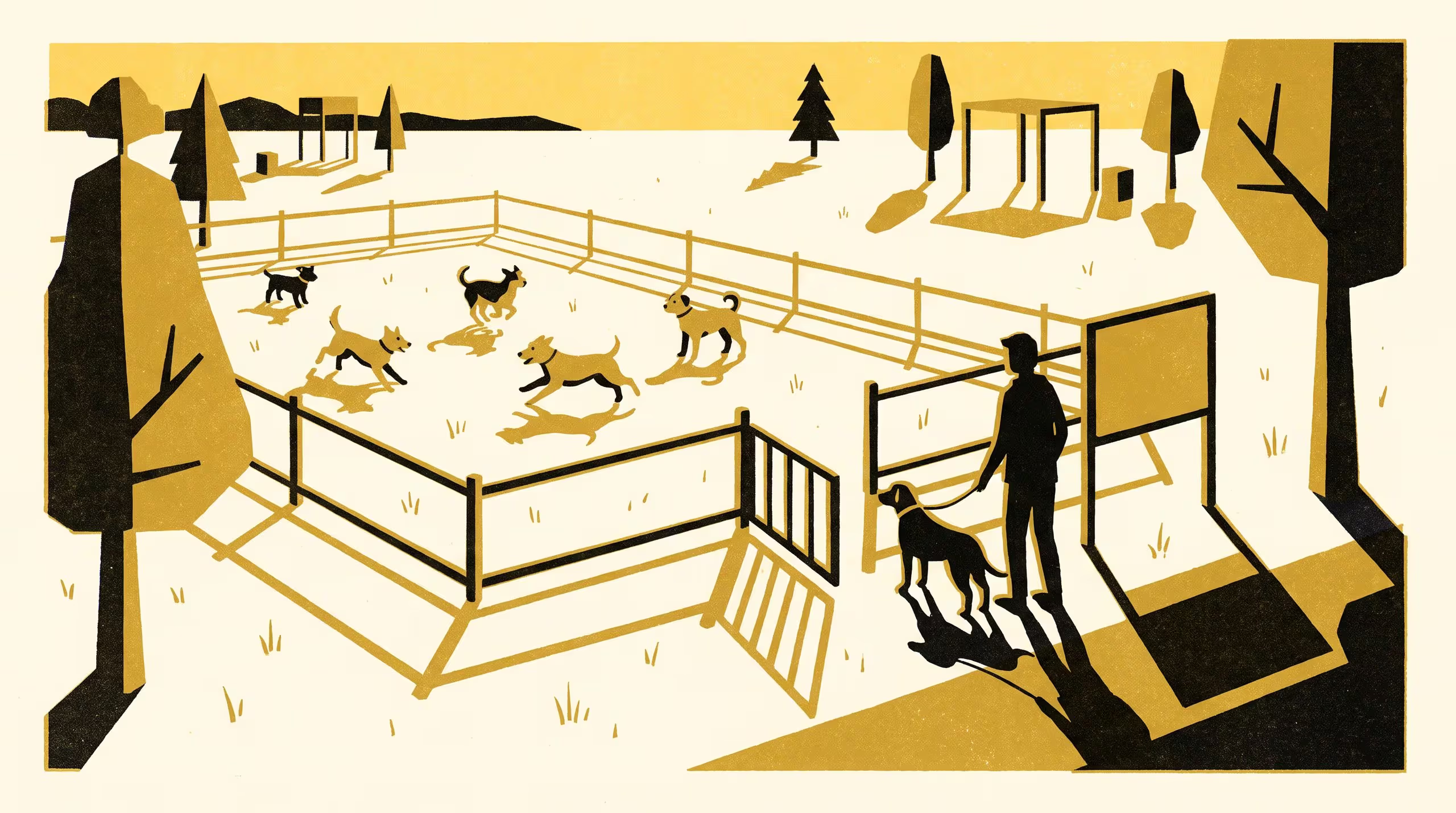
A new Slop University paper interviews dog-park regulars about their own and each other's off-leash compliance, and finds the same posted rule narrated in two very different vocabularies depending on whose dog is being discussed.
An interview study at a single off-leash reserve finds users explaining their own compliance with situational detail, and everyone else's with a single recurring word --- disregard
A council sign at a suburban dog reserve states its off-leash hours plainly enough that nobody, in principle, should need to interpret it. Slop University’s newest paper set out to check whether anybody actually reads it that way.
Associate Professor Casimir Beng, Lead of the Adaptive Metrics Lab, and Lecturer Dr Solveig Adeyemi interviewed 52 reserve regulars, asking each to account for their own dog’s leash status and, in the same sitting, to size up a visible stranger’s. Coded side by side, the two kinds of account barely resembled each other: participants explained their own dogs with situational detail — just arrived, just needed a run — and explained everyone else’s with a single, recurring verdict: disregard.
Ask someone about their own dog and you get a story. Ask about the dog three metres away and you get a verdict. The sign hadn’t changed in the time it took to ask the second question.
— Associate Professor Casimir Beng, Lead, Adaptive Metrics Lab, School of Continuous Improvement
Dr Adeyemi said the pattern held even when coders were kept blind to whose dog was whose: “the scheme travelled perfectly. It was only the label people reached for that moved.”
The School of Continuous Improvement reads the finding as a caution against any measurement that leans on what people say about a rule, rather than what the rule actually gets people to do.
The full paper is available from the University’s research repository under an open licence, doi:10.5555/slop.mca8ps.