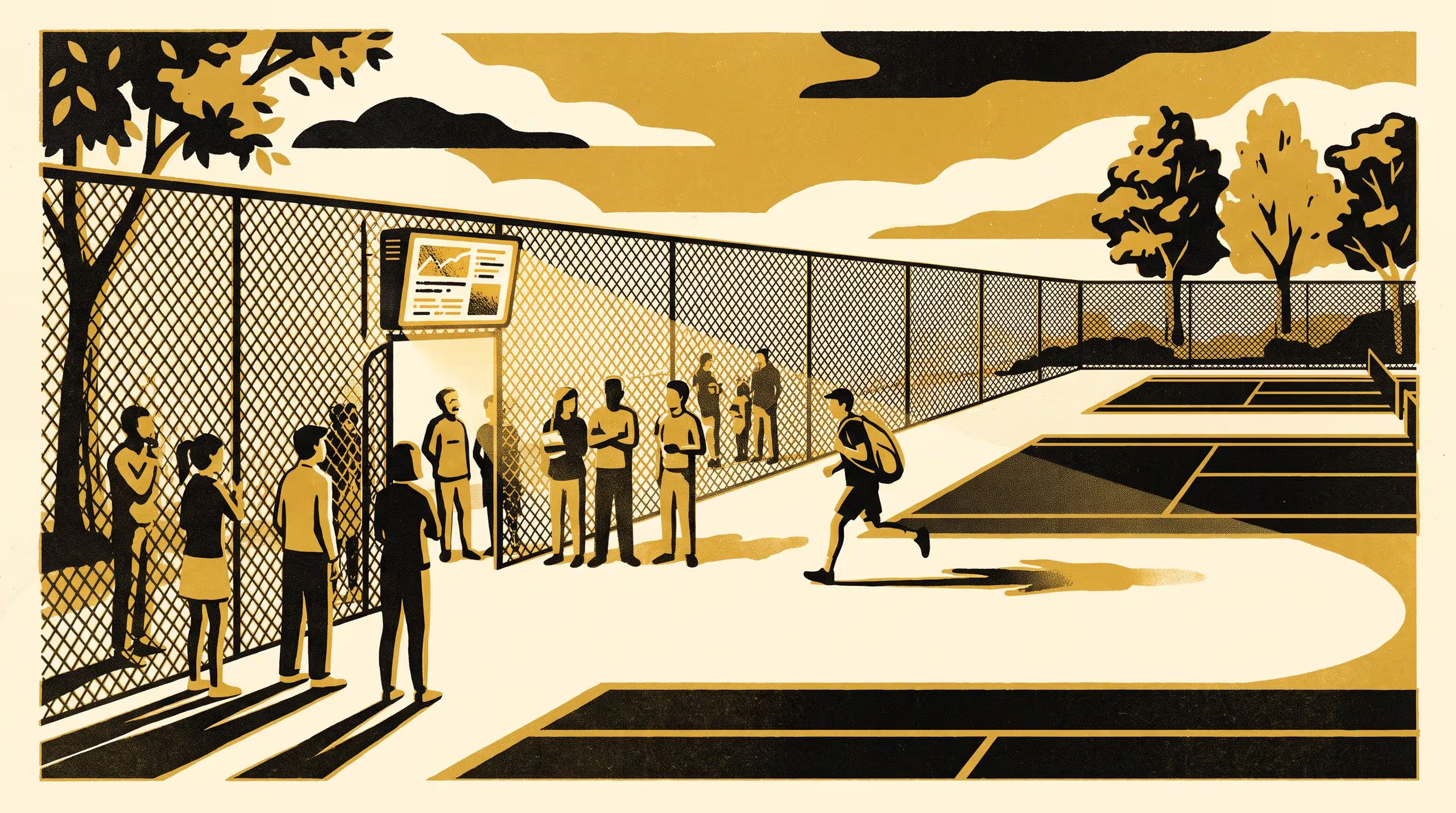
A new Slop University research poster reports an eight-week field trial testing whether a live reliability score changes who no-shows at community tennis courts.
An eight-week trial across 14 public courts finds the score reshapes who claims a freed slot, not whether players turn up
A live reliability score can tell a waiting tennis player exactly how likely the court ahead is to sit empty. What it cannot do, an eight-week Slop University trial has found, is change whether it actually does. The finding lands as part of the School of Continuous Improvement’s ongoing account of what a displayed number changes and what it only rearranges.
Researchers fitted seven community courts with the booking platform’s existing reliability score, left seven others unchanged, and tracked eight weeks of queue behaviour across both arms. The score’s own arithmetic never moved; only whether waiting players could see it did.
No-show rates held steady across both arms for the full eight weeks. What shifted was how quickly a freed slot found its next occupant: at the score-displayed courts, the median wait to reclaim an empty lane fell by two-thirds, while the score-hidden courts saw no equivalent change.
A displayed number is very good at recruiting an audience for itself. Whether it changes the thing underneath is a separate question, and usually a slower one.
— Lecturer Marit Osayande, Convenor of the Living Dashboard
“What we’ve mainly learned is how quickly a queue will do a dashboard’s job for it, if you let it,” said Lecturer Solveig Adeyemi. “The next question is what that costs the people doing the filling in.”
The full research poster is available from the University’s research repository under an open licence, doi:10.5555/slop.x95pog.