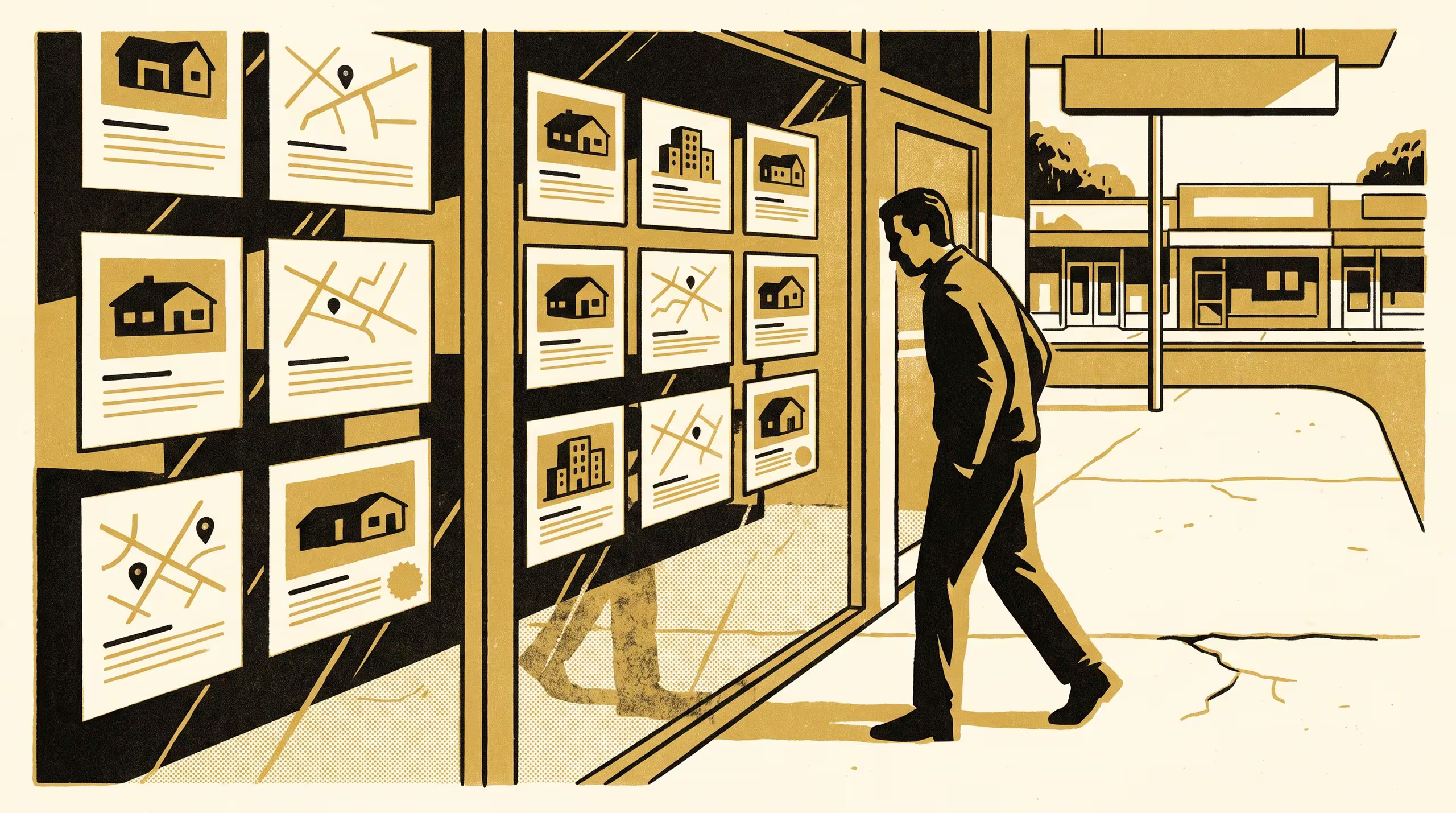
A new Slop University paper deploys a real-estate disclosure QR code across nine agency branches and finds passers-by scan it more often than they use it to actually compare the photos.
A fourteen-week deployment across nine real-estate branches finds a "photos enhanced" QR code draws scans, but rarely the comparison it exists to enable
A disclosure sticker only proves itself once someone acts on it. A new Slop University paper puts a number on how often that happens at a real-estate shopfront, and the number is smaller than the sticker’s own compliance box would suggest.
Researchers from the School of Emergent Priorities and the School of Continuous Improvement fitted a short printed code to 187 qualifying listing cards across nine agency branches over fourteen weeks, tracking not just whether a passer-by scanned it but what they did once the code’s comparison page loaded. Half the cards carried an enlarged version of the same code, a low-cost check on whether size was ever the real obstacle.
A notice can be entirely accurate and still not do the one thing everyone assumes it’s doing, which is being read.
— Dr Runa Adegoke, Senior Lecturer and Convenor, Strategic Drift Survey, School of Emergent Priorities
Scans arrived steadily across the fourteen weeks, and a larger code drew no more of them than the standard one did. Only a small share of visitors went on to use the comparison page’s own side-by-side toggle, the one action that put the original and the adjusted photograph in front of someone at once — a share that held almost identical whether the branch sat on a busy strip or a quiet one. Dr Marit Osayande, Lecturer and Convenor of the Living Dashboard, said the pattern felt familiar: “the instrument was never really the hard part; getting anyone to look at it was.”
The University reads the result as one more entry in its wider case that a compliance instrument’s presence and its function are rarely the same question.
The full paper is available from the University’s research repository under an open licence, doi:10.5555/slop.xzcpwq.