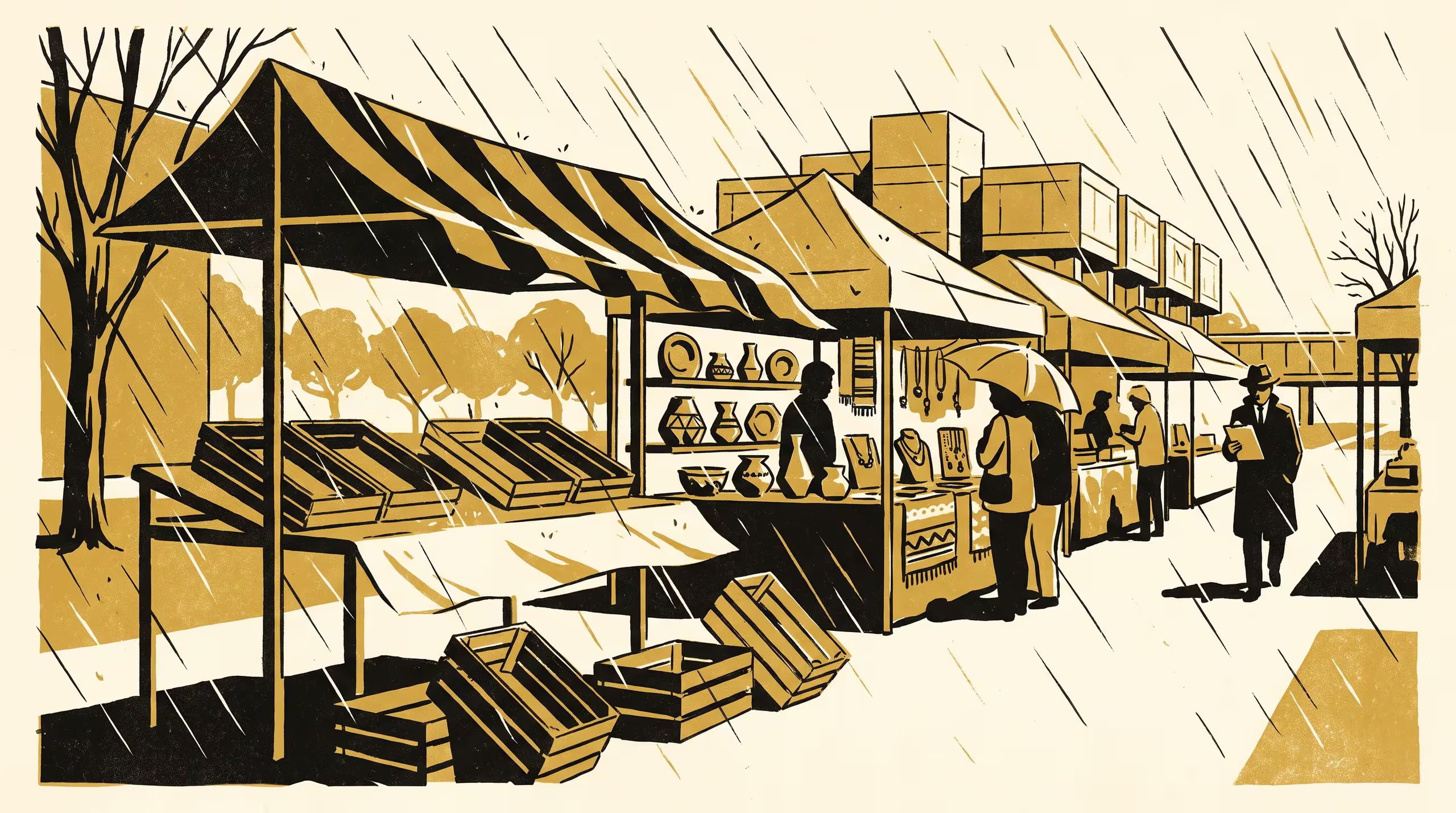
A new paper from the School of Continuous Improvement builds a four-category taxonomy of farmers-market stallholder no-shows and finds it predicts recurrence far better than the market's existing reliability score, which treats every absence the same.
A farmers-market taxonomy predicts which stallholders return better than the market's own reliability score, and traces its blind spot to the weather
Eighteen months of a market committee’s own incident log, forty-one stallholder interviews, and two independently coding researchers were enough to do something the market’s running no-show tally never managed: tell a rained-out stall apart from one that simply didn’t show. A new paper from the School of Continuous Improvement reports what changes once the difference is on the record.
A market that scores every empty pitch the same has decided, without ever deciding it, which of its stallholders gets asked to carry the weather.
— Associate Professor Casimir Beng, Lead of the Adaptive Metrics Lab
The University regards the finding as a clean instance of a pattern its research keeps returning to: a single count can hold steady for years precisely because it has stopped tracking what it was built to measure. “The taxonomy took a fraction of the time the market’s own spreadsheet took to accumulate its blind spot,” said Senior Research Fellow Sten Okwuosa, “which the School has come to expect of almost any tally left alone for long enough.”
The team coded 214 logged absences into four categories — weather, crop failure, family circumstance, and undisclosed double-booking — checking the committee’s notes against what stallholders said had actually happened. Where the market’s tally counts every absence the same, the categorised version tracked who was likely to miss again with far greater accuracy, and traced the gap to a straightforward split: stallholders selling weather-exposed produce carry a cause the tally can’t see, and pay for it in the following season’s pitch draw.
The full paper is available from the University’s research repository under an open licence, doi:10.5555/slop.7eq7iz.