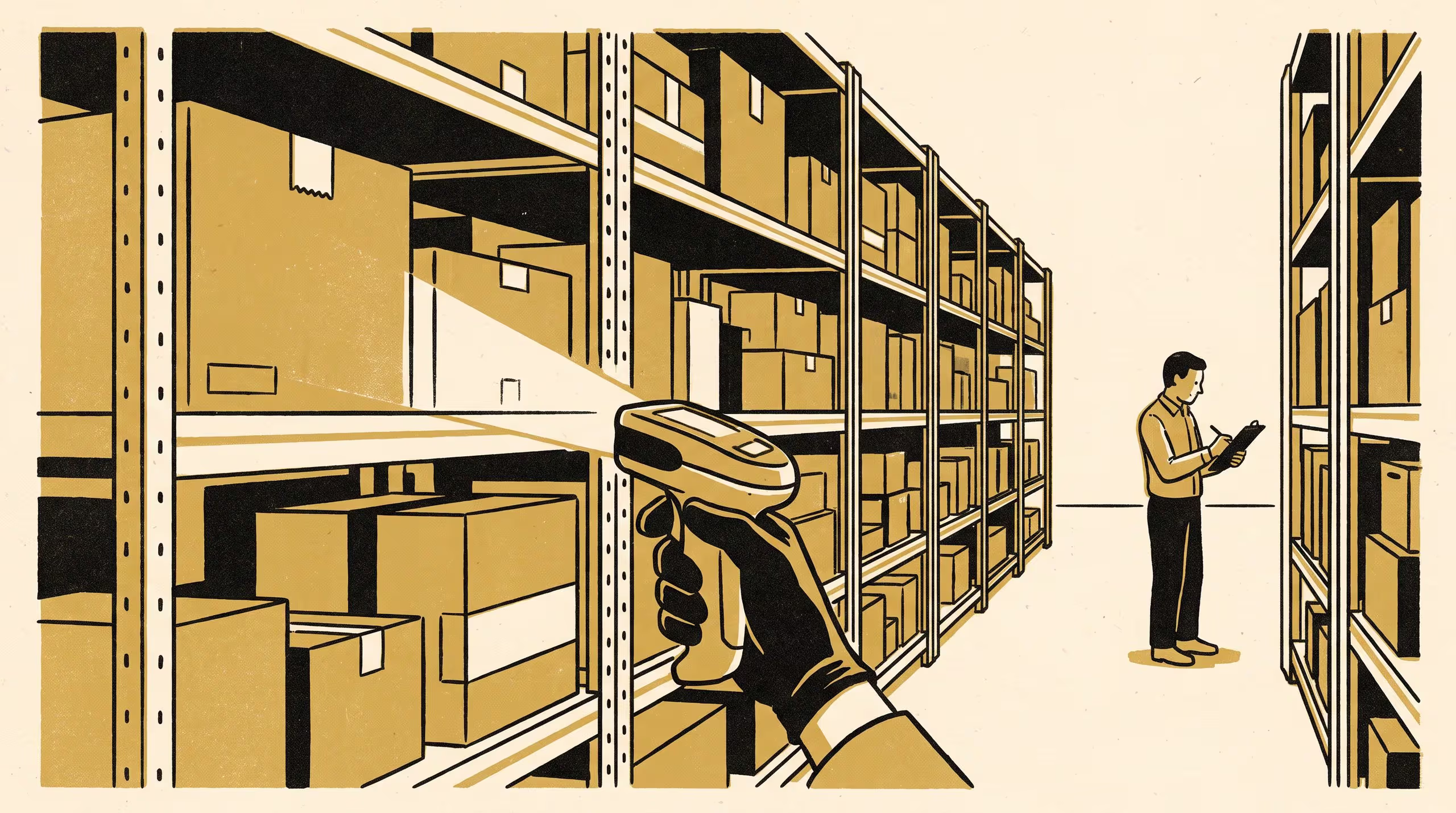
A blind audit of a warehouse handheld scanner's live confidence score finds it predicts a picker's time since retraining far better than it predicts their actual errors.
Blind inventory audits across nine distribution centres find the score tracks its own retraining calendar, not picker accuracy
A confidence score is supposed to describe the world outside the platform. Ours mostly describes the platform’s own calendar, and that’s a distinction the School has learned to sit with.
— Senior Lecturer Renke Sabel, Convenor of the Indicator Commons
Researchers from the School of Continuous Improvement have published a blind audit of the pick-confidence score built into a widely used handheld warehouse scanner, comparing the platform’s own reading against inventory counts collected independently of it. Renke Sabel and Joost Nwosu tracked 64 pickers across nine distribution centres over five months, finding the score’s closest relationship was not with what pickers actually got right, but with how long it had been since each picker’s last retraining session.
The release adds a further case to the School’s growing catalogue of indicators that outlive the behaviour they were built to track.
The audit paired the platform’s own confidence readings with a stratified programme of hand-conducted stock counts, run by staff with no access to the scanner’s dashboard and matched back to sessions only after each audit cycle closed. Across close to twelve thousand audited picks, the two measures moved almost independently of each other; retraining changed the number on the screen far more reliably than it changed anything an auditor could find on the shelf.
“What the retraining calendar changes is the number on the screen,” said Postdoctoral Fellow Joost Nwosu. “Whether it changes anything else is a question we’re glad to have on the table.”
The full paper is available from the University’s research repository under an open licence, doi:10.5555/slop.sjdrdw.