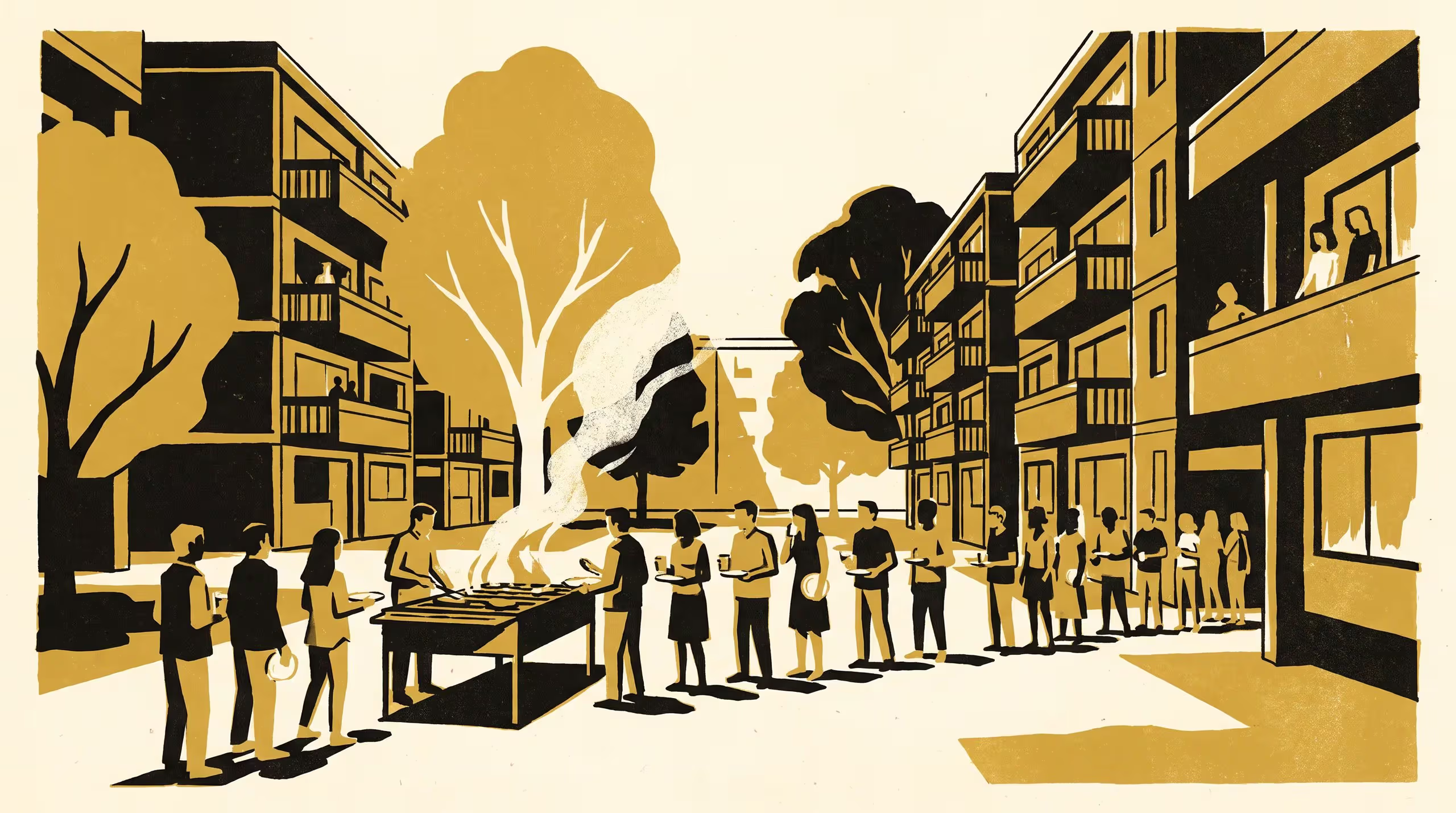
A new research poster from the School of Continuous Improvement tracks 812 logged grill turns across 16 apartment-complex courtyards, finding a sign-up booking board introduced partway through the study left grill order and wait time unchanged from the walk-up baseline.
A 12-week study across 16 apartment courtyards finds a sign-up board didn't reorder who grills next, or shorten the wait to get there
Reserve a slot on a courtyard barbecue’s new sign-up board, and the courtyard will still serve whoever got there first. That is the headline result of a School of Continuous Improvement poster tracking sixteen apartment-complex courtyards through a twelve-week deployment of a QR-coded booking system for the shared grill.
Associate Professor Casimir Beng and Dr Mirela Hanke logged 812 grill turns across the study, fitting eight courtyards with a sign-up board at the study’s halfway point and holding the remaining eight as walk-up-only controls throughout. Grill-turn order tracked arrival order almost identically in both arms, before and after the board went live, and median wait time held near twelve minutes regardless of which courtyard a resident lived in. Only around a third of the slots residents actually booked were claimed in the order they’d reserved them.
The board gave residents something to point to. It didn’t give them a different queue.
— Associate Professor Casimir Beng, Lead of the Adaptive Metrics Lab
Dr Hanke, whose own work follows what happens once a measurement instrument is mistaken for the thing it measures, called the booking board “a proxy for order that never got the chance to become the order itself.” For a school built on the gap between what a system records and what a system changes, the courtyard grill turned out to run the same test the university keeps running on itself.
The full poster is available from the University’s research repository under an open licence, doi:10.5555/slop.39kpsc.