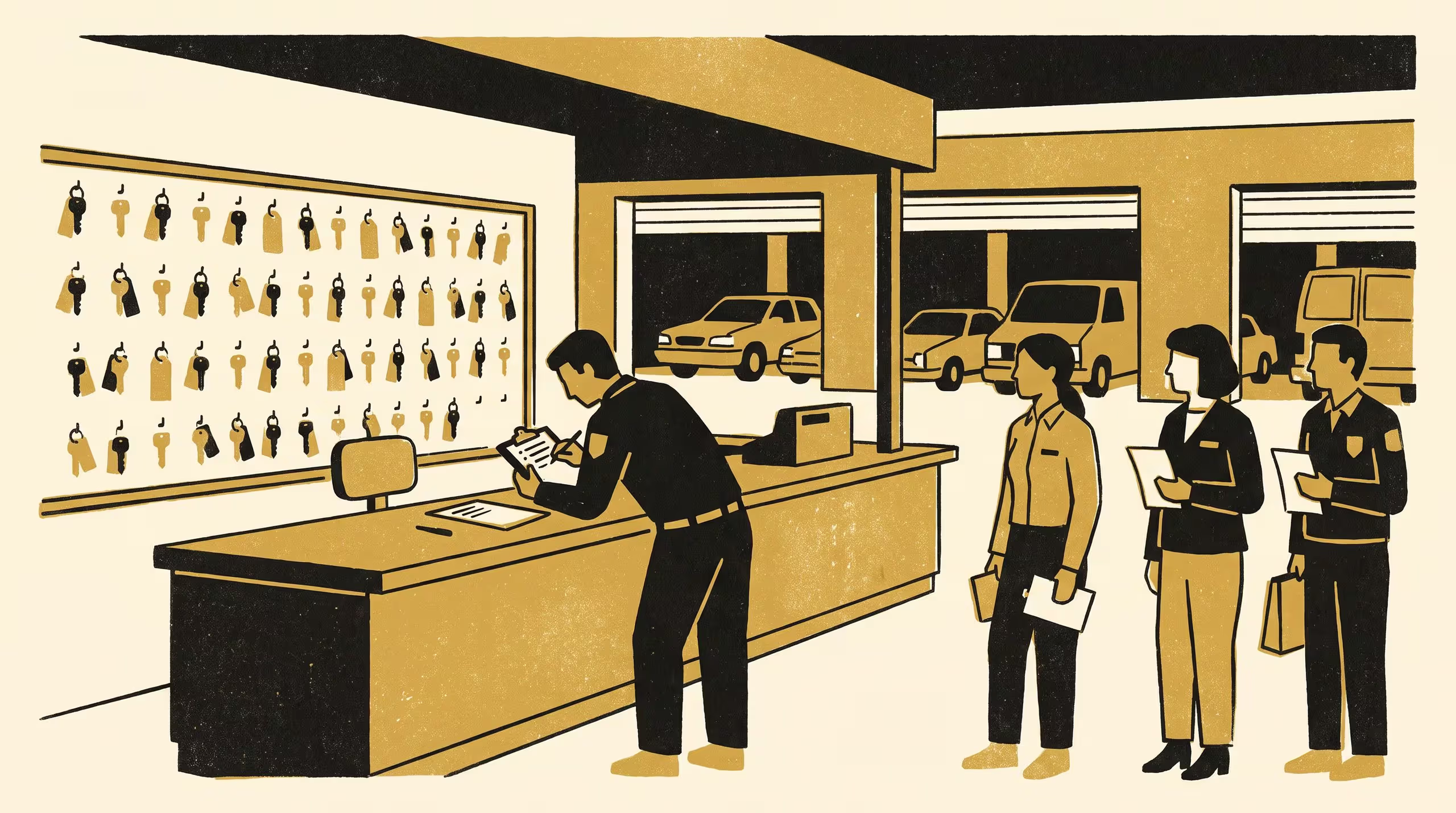
A new research poster from the School of Emergent Priorities audits 1,140 campus motor-pool bookings, finding the deposit tier a driver is actually charged tracks the desk's written risk rubric only while the key board is quiet.
A semester-long audit of 1,140 pool-vehicle bookings finds the charged deposit tier agrees with the written rubric only when the key board is quiet
The deposit a driver is charged for a Slop University motor-pool booking is meant to come from a written risk rubric — incident history, distance, vehicle class. A new research poster from the School of Emergent Priorities finds it mostly comes from how many people are standing at the key board when the tier gets set.
Researchers reconstructed the rubric’s predicted tier for 1,140 pool-vehicle bookings across a full teaching semester, then set it against the tier the motor-pool desk actually charged. Eleven staff interviews, coded thematically, supplied the second half of the picture: what the desk says it’s weighing once a queue starts to form.
The rubric is there for the quiet moments. Nobody consults a checklist with four people watching the clock.
— Dr Fenna Okoro, Senior Lecturer and Convenor, Horizon Register, School of Emergent Priorities
“The desk isn’t ignoring the rubric,” said Dr Lindiwe Achterberg, Lecturer, School of Emergent Priorities. “It’s applying it exactly as often as the queue allows.”
Charged-tier agreement with the rubric averaged 82% while the key board was quiet, falling to 34% once three or more drivers were waiting, a pattern the team found consistent across day, evening, and weekend shifts alike.
For the School of Emergent Priorities, the finding lands inside a wider preoccupation with what a rubric is actually for once the counter gets busy, and the desk says it is reviewing whether the tier could be computed before a driver ever reaches the queue.
The full poster is available from the University’s research repository under an open licence, doi:10.5555/slop.jkn6nb.