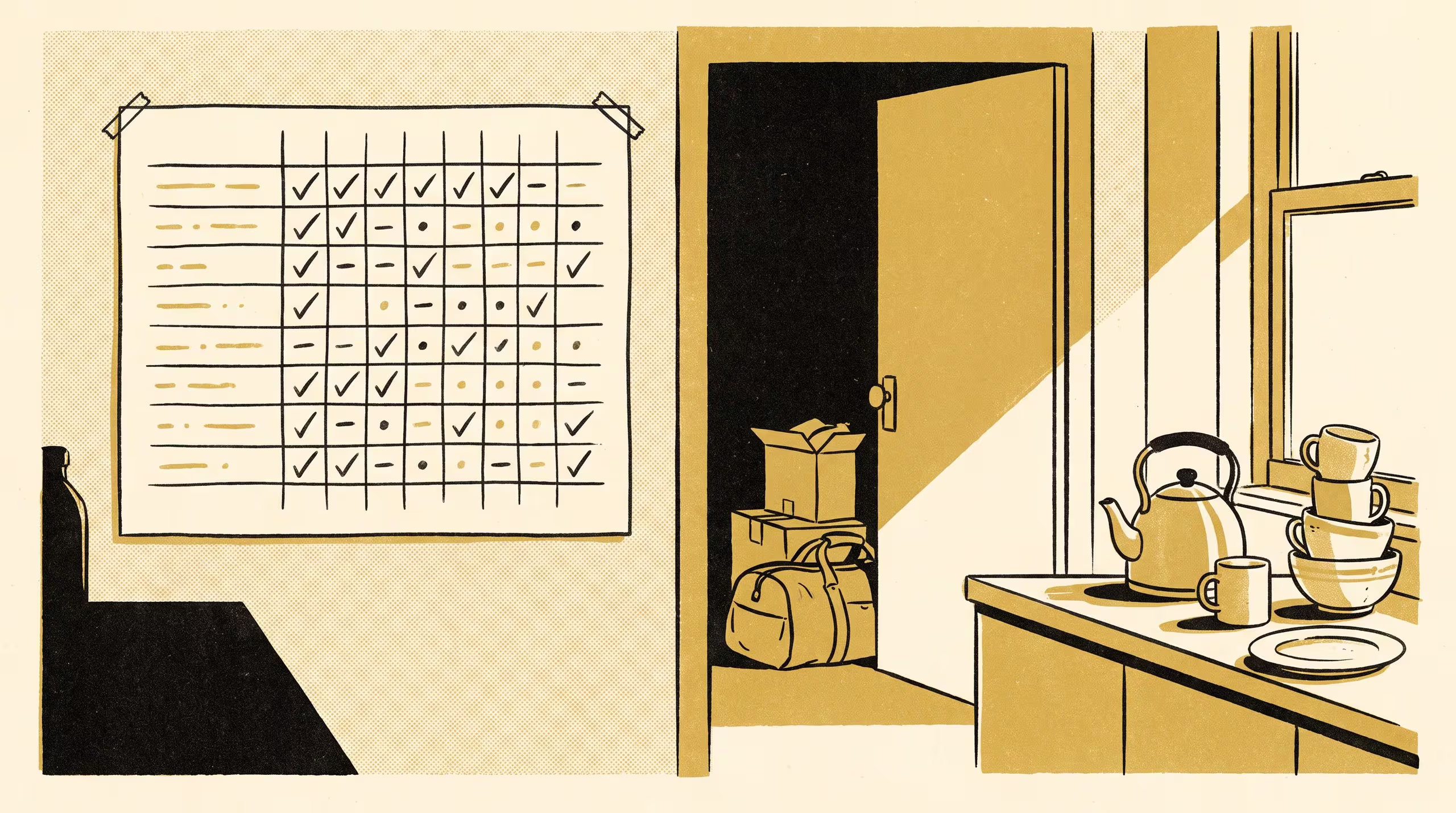
A new paper from the School of Emergent Priorities audits 38 share-house chore-roster whiteboards against tenancy records, finding the board's assignment-residency concordance collapses within three turnovers while the chores themselves keep getting done, unlogged.
A 38-house audit finds barely a fifth of a chore roster's names still live there by the third tenancy turnover
A roster that never says why it’s wrong just keeps being trusted the way it always was.
— Dr Anouk Mensah, Postdoctoral Fellow, School of Emergent Priorities
That is the finding behind a new paper from the School of Emergent Priorities, which audited 38 share-house chore-roster whiteboards against each house’s own tenancy records and found barely a fifth of a roster’s named owners still lived in the house by its third change of flatmates — while the chores themselves, somehow, kept getting done.
Dr Mensah and Dr Marek Solheim, Lecturer, recruited whiteboards through room-share and lease-transfer noticeboards across the city, cross-checking each roster’s named owner against bond-lodgement and lease-transfer records at every turnover since the board was first drawn up. Agreement between a name on the wall and who actually lived there fell from complete, by definition, at drafting, to a little over one name in five by the third turnover, with no single chore proving more likely than the others to get corrected along the way.
“People assume nobody’s redrawn it because nobody’s noticed,” said Dr Solheim. “What we kept hearing instead was that everyone had noticed, and none of them felt it was theirs to fix.” Interviews across the sample found even a household’s own stated plan to redraw the board made no measurable difference to whether it ever did.
The finding sits alongside the School’s wider interest in the record a household, or an institution, keeps of itself, and how far that record can drift before anyone treats the drift as the thing worth fixing.
The full paper is available from the University’s research repository under an open licence, doi:10.5555/slop.q4fe2g.