A new paper from the School of Continuous Improvement cross-references a sports oval's floodlight motion-sensor extension log against an independent nightly closing observation, finding a lingering player confirmed only 46% of the time.
An eleven-week validation study finds the sports oval's motion-sensing floodlight extension confirms a lingering player just 46% of the time
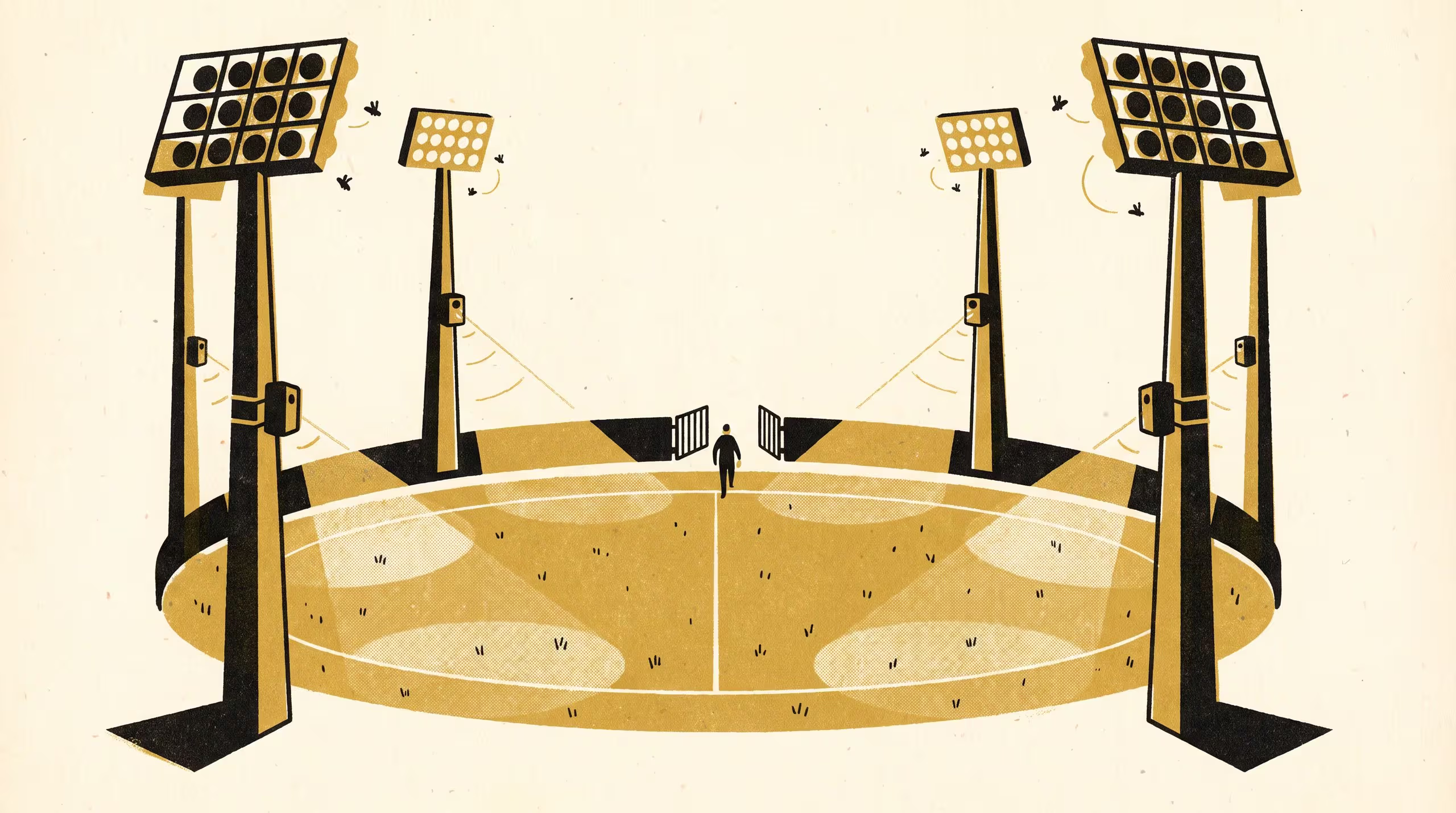
Four floodlight towers over Slop University’s main sports oval no longer switch off the instant a booking’s clock runs out: a motion-sensing extension keeps them lit as long as something moves underneath, on the assumption that whoever it is still needs to see. A new paper from the School of Continuous Improvement asked how often that assumption holds. Less than half the time.
Researchers paired eleven weeks of the floodlight system’s own extension log against a record it never consults: the on-duty grounds supervisor’s nightly closing entry, kept on paper, independent of the sensor loop. Of 132 times the lights stayed on past a booking’s end, a person was confirmed still on the ground in 61. The rest, checked against a maintenance camera already mounted on the towers, traced to mowing and line-marking, an irrigation cycle starting up, wildlife at the verge, and insects circling the lamp housings.
The sensor was never wrong about something moving. It was just answering a much bigger question than is a player still here, and nobody had told it otherwise.
— Dr Osei Vandermeer, Research Fellow and Convenor, Review Cadence Observatory, School of Continuous Improvement
The team also tested a sensitivity adjustment the system’s installer recommended, meant to filter out smaller, non-human movement; it shifted the result by two percentage points either way. “A finer setting doesn’t fix a sensor that was never asked the right question,” said Dr Thandiwe Solberg, Senior Lecturer and Convenor of Demo Quarter.
Facilities has not changed the extension logic. The closing-log comparison, the researchers note, cost nothing extra to run: the paperwork already existed for other reasons.
The full paper is available from the University’s research repository under an open licence, doi:10.5555/slop.hed0q8.