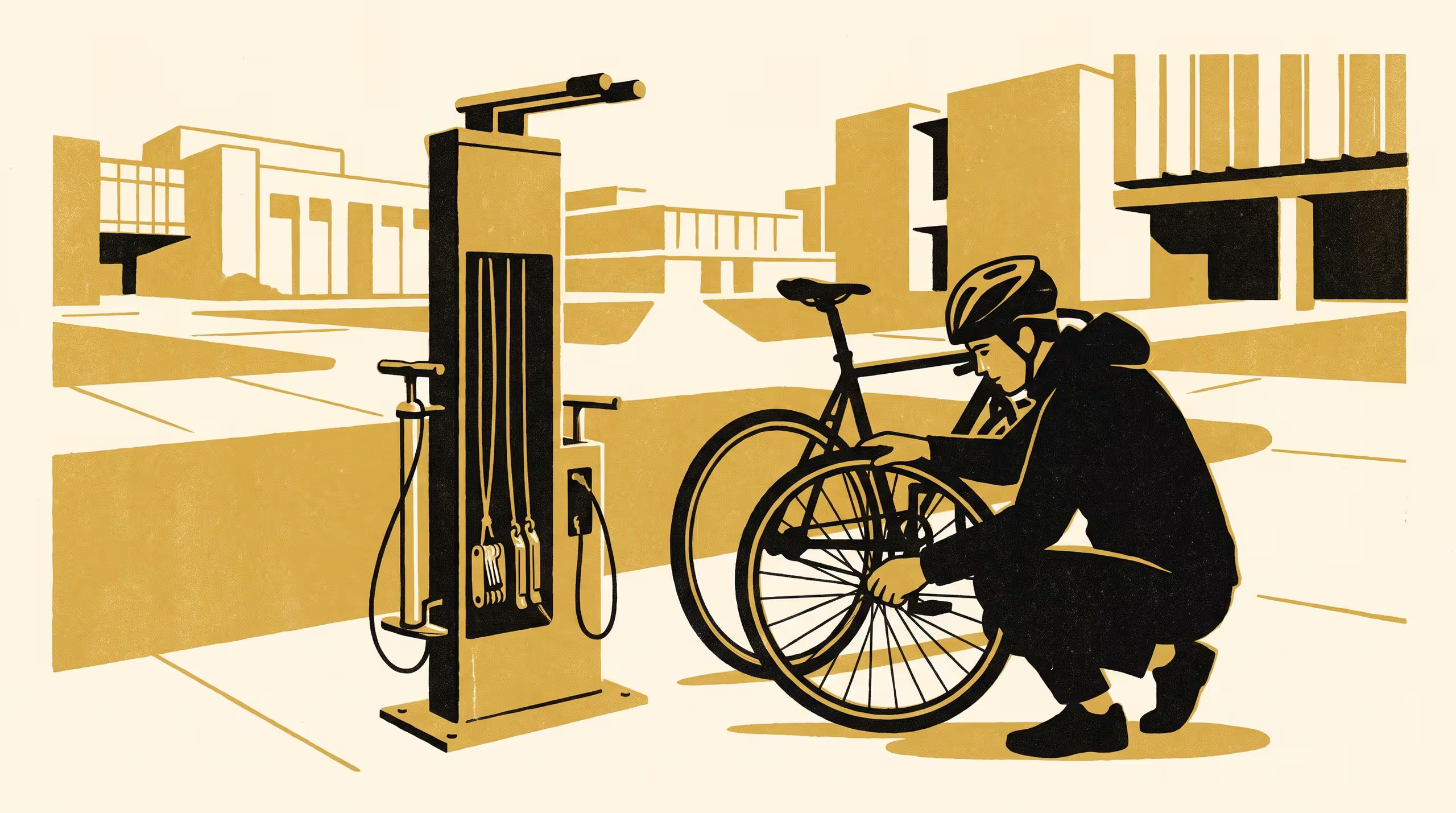
A new paper from the School of Continuous Improvement interviews campus bike users and a contracted technician about locating a working self-service repair station, finding the University's own station directory has listed two removed stations for two years.
Eighteen interviews find campus bike users have quietly worked around a station directory two years out of date
Ask a regular at any of the University’s three working self-service bike-repair stations how they found it, and the University’s own published directory is rarely part of the answer. A new paper from the School of Continuous Improvement interviews eighteen campus bike users and the contracted technician who maintains the network to find out what is.
Two of the network’s five original stations were removed during a 2024 walkway project and never reinstated; the University’s Sustainable Mobility pages have listed all five, unchanged, ever since. Researchers coded eighteen semi-structured interviews into a shared set of five strategies bike users rely on instead of the page, and put the same question to the technician who removes a station’s hardware but has no line to whoever maintains its listing.
A directory is a promise an institution makes about its own accuracy, and this one had gone quietly unkept for two years before anyone needed to notice.
— Dr Osei Vandermeer, Research Fellow and Convenor, Review Cadence Observatory, School of Continuous Improvement
“We study indicators that outlive their own usefulness for a living,” said Dr Renke Sabel, Senior Lecturer and Convenor of the Indicator Commons. “A station directory turned out to be exactly that kind of object, just smaller than what we usually look at.”
Most interviewees described locating a working station from memory or a friend’s tip rather than the page; only two had ever consulted it, and both had been sent to a stretch of fencing. The School has added the directory to its list of instruments worth checking, simply because nobody had gotten around to it first.
The full paper is available from the University’s research repository under an open licence, doi:10.5555/slop.xiq6w4.