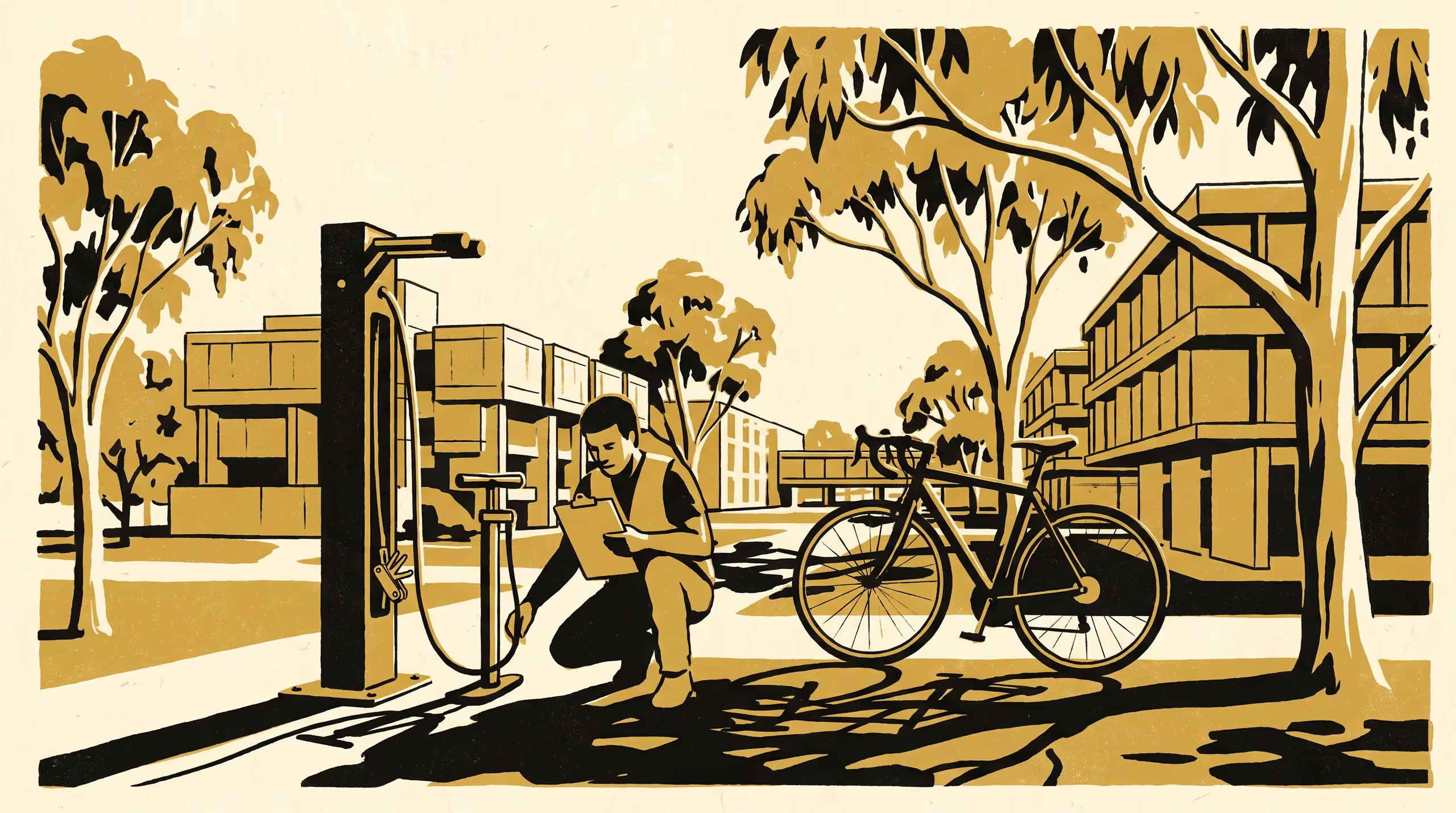
A new paper from the School of Continuous Improvement finds a bike-stand fault checklist silently duplicating every report into two Facilities systems for eight weeks, and that fixing the duplication left the stands' own repair turnaround unchanged.
The leak took days to close once found; the stands' own repair queue held its pace throughout
Thirty-four self-service bike-repair stands across campus each carry a QR code that lets a rider, or a volunteer bike marshal doing the rounds, flag a missing pump head or a stripped multi-tool bit straight into Facilities’ repair queue. A routine billing query from the students’ union turned up something the checklist’s own interface never disclosed: every fault it logged had also been quietly copied, since launch, into an estate-wide asset ledger and an informal student-sentiment feed, neither of which had asked for the data.
A new paper from the School of Continuous Improvement tracked a full teaching term of the checklist’s own logs against an independent weekly walkthrough of all thirty-four stands, finding both uninvited systems absorbing a near-complete copy of every report for eight weeks running. The University reads the quick fix that followed as one more data point in the School’s running audit of what a small tracking tool quietly ends up trusted to do.
A checklist that talks to three systems isn’t obviously broken until you ask which one it was actually built for.
— Dr Joost Nwosu, Postdoctoral Fellow, School of Continuous Improvement
“The interesting number isn’t the one that changed,” said Dr Thandiwe Solberg, Senior Lecturer and Convenor of Demo Quarter. “It’s the one that didn’t.”
Facilities patched the fan-out in the ninth week of the term, and both downstream systems’ own figures fell back to baseline within days. The stands’ own repair turnaround, tracked separately, held at much the same pace either side of the fix — evidence, the authors suggest, that whoever a report gets copied to was never what decided how quickly a technician reached it.
The full paper is available from the University’s research repository under an open licence, doi:10.5555/slop.a1axjp.