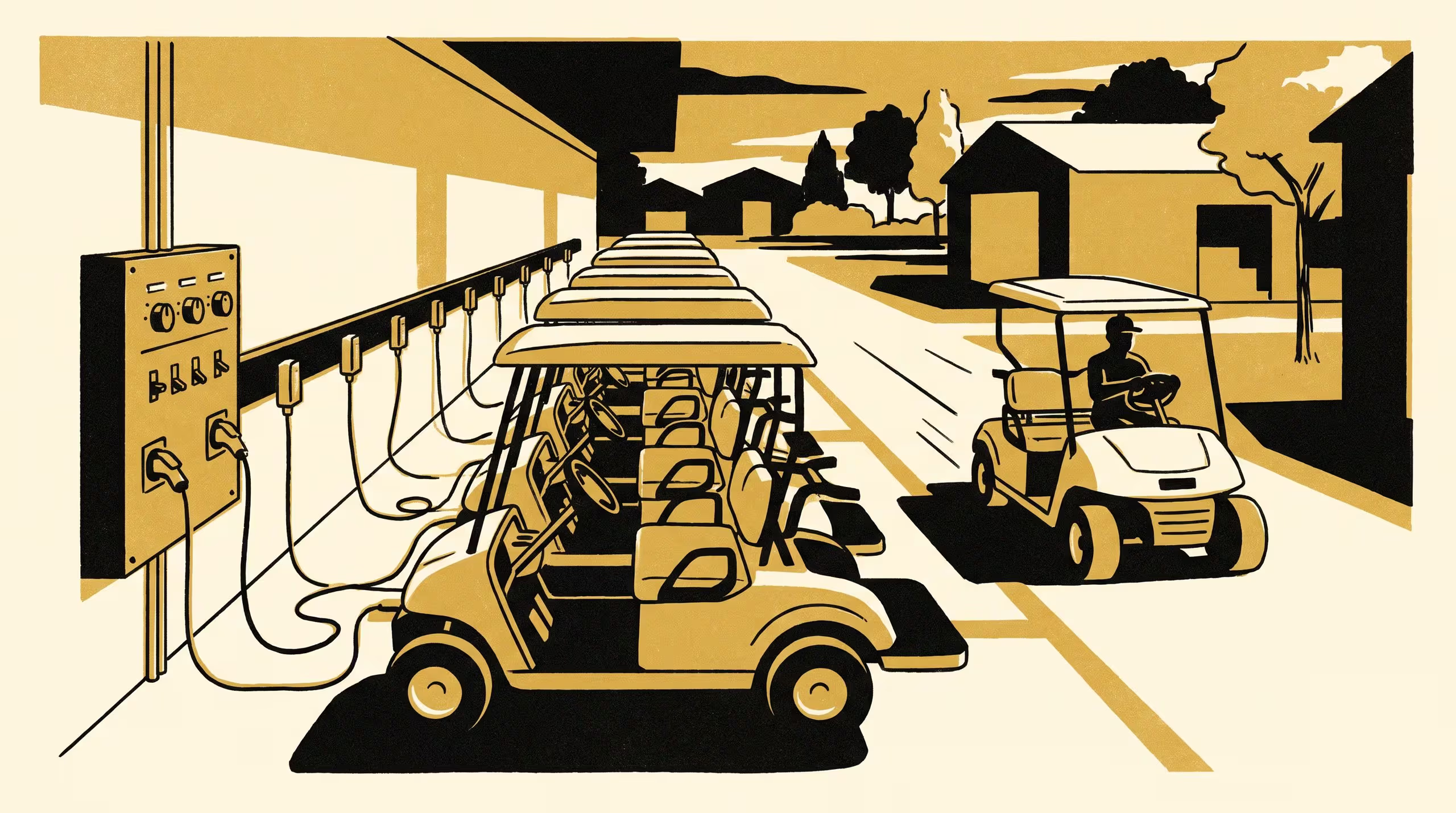
A new paper from the School of Continuous Improvement evaluates a request-and-charge-status tool built for Grounds' shared golf-buggy fleet, finding ten weeks of use left buggy selection unchanged while adding roughly forty-five seconds to every request.
Ten weeks of Grounds' shared golf-buggy requests show a new charge-status tool didn't shift which buggy staff pick, only how long it took them to pick it
Twelve golf buggies work the Grounds depot’s maintenance runs. Until this term, taking one meant writing a name and a departure time on a laminated sheet, with no note of which buggy still had charge in it. A new paper from the School of Continuous Improvement built the fix: a phone panel showing each buggy’s live charge beside a one-tap request button. Ten weeks of before-and-after records suggest the fix mostly changed how long the fix took to use.
We gave people better information and watched what they did with it. Mostly, they read it and took the buggy nearest the door anyway.
— Dr Osei Vandermeer, Research Fellow and Convenor, Review Cadence Observatory
Across 34 staff and twenty weeks of requests, the share choosing the nearest buggy regardless of its charge barely moved: 87% before the tool, 85% after, and charge at departure told the same story. What did move was the clock: median decision-to-departure time rose from nine seconds to nearly a minute once the tool launched. A four-week trial hiding the charge figure left selection unchanged, tracing most of the added time to consulting a screen rather than to anything it showed.
“A shorter walk beat a better number every time we looked,” said Associate Professor Casimir Beng, Lead of the Adaptive Metrics Lab. “The tool earns its keep on the maintenance side; it just isn’t doing the persuading we built it to do.”
Ten weeks of paper sign-out logs were measured against ten weeks of tool-mediated requests from the same staff and fleet, isolating the display’s content from its mere presence. The null result belongs in the record, the School says, rather than a drawer.
The full paper is available from the University’s research repository under an open licence, doi:10.5555/slop.jac264.