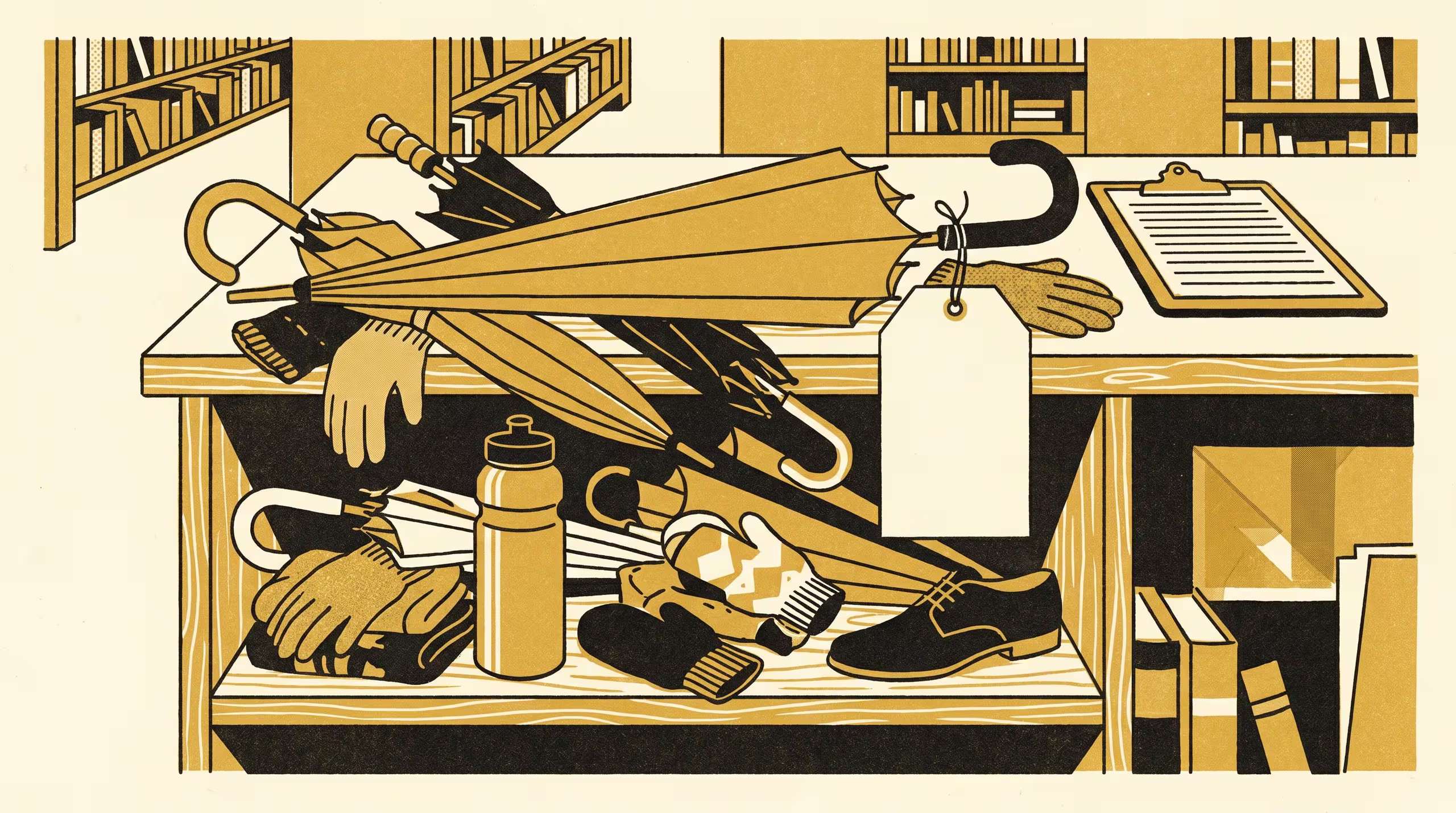
A new paper from the School of Continuous Improvement audits the Library's four-stage Lost & Found disposal register against a physical stock-take of the same items, tracing a persistent gap to a front-desk workaround the register cannot see.
A fourteen-week stock-take against the Library's own disposal register finds released items still in the tub, and traces the gap to a workaround the register can't see
The University Library’s front-desk Lost & Found runs on four published stages, not a shrug and a shelf. A new paper from the School of Continuous Improvement checked whether the register’s own record of those stages matches a physical count of the same tub — and, across six stock-take rounds this term, it mostly doesn’t.
Lecturer and Convenor Dagny Okafor led Senior Lecturer Renke Sabel and Senior Lecturer Thandiwe Solberg through six full inventories of the front-desk tub over fourteen weeks, hand-coding every item against the register’s own published tiers and checking each against what the register had logged for it that same day.
An item doesn’t have to be thrown out to disappear from view. It just has to be logged as arriving yesterday.
— Dr Dagny Okafor, Lecturer and Convenor, Evaluation of Evaluation
By the sixth round the register logged fewer than half of all tracked items as still awaiting action; the same-day physical count found the substantial majority exactly where they had started. Interviews traced the gap to a routine workaround: an item stalled on a supervisor’s sign-off gets a fresh intake date rather than a declined disposal, resetting its clock without leaving a mark the register can see.
“We tested whether trimming the sign-off to one step would move things any faster,” said Dr Renke Sabel, Senior Lecturer. “It didn’t, which we think says something about what the four stages are actually for.”
The finding sits inside the School’s wider case that a well-kept record and a well-run process are separate achievements, and that an institution can reliably deliver one without the other.
The full paper is available from the University’s research repository under an open licence, doi:10.5555/slop.ll5xcj.