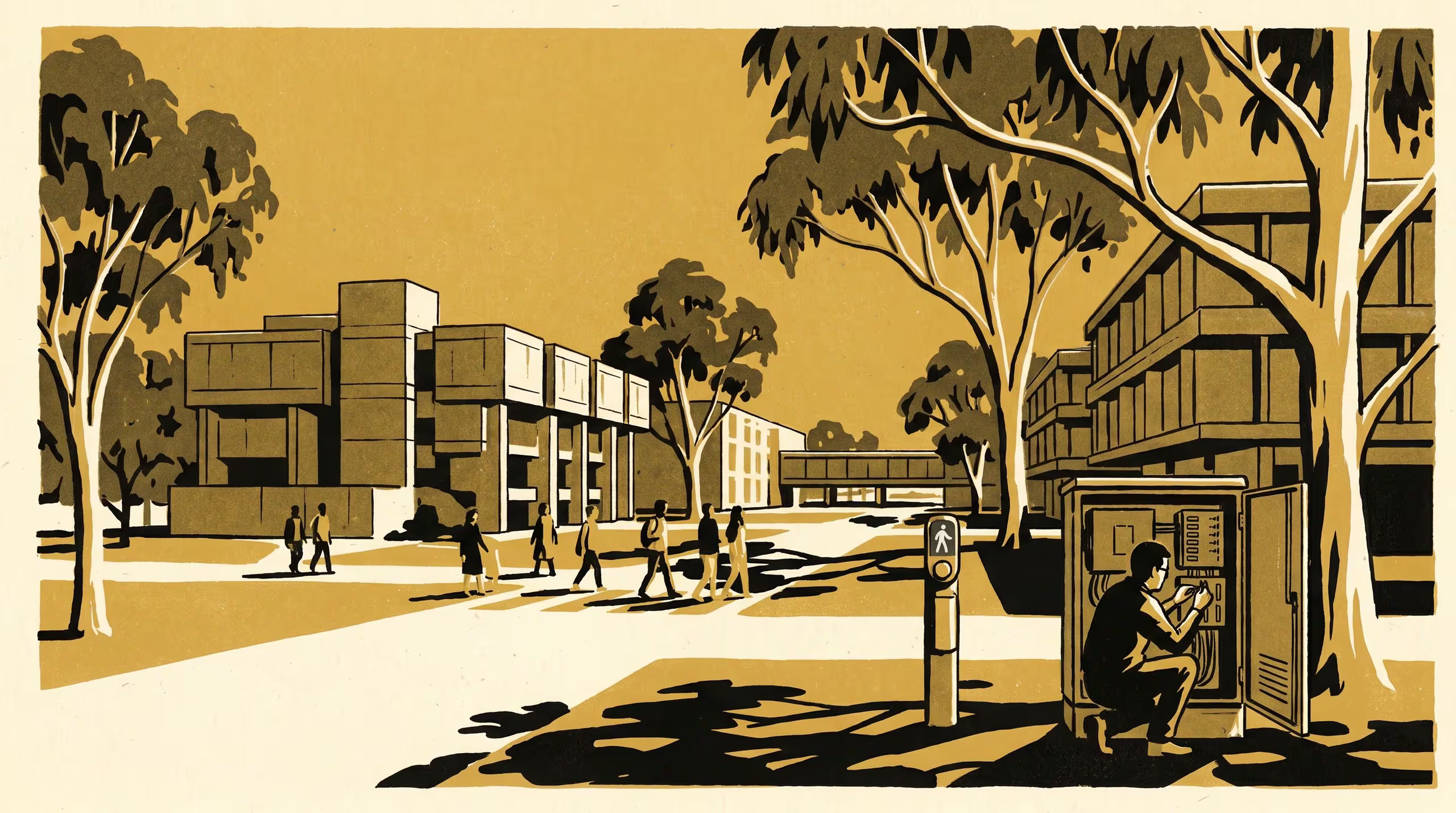
A new poster from the School of Emergent Priorities finds a pedestrian-crossing button's press count moves independently of the signal it is wired to, even as the University's Traffic Advisory Committee keeps citing the tally as pedestrian demand for a second crossing.
A 14-week controller audit finds the crossing button's presses move independently of the signal, while the Traffic Advisory Committee's case for a second crossing still cites the tally as demand
The pedestrian-crossing button outside the Learning Commons gets pressed several thousand times a year, and the University’s Traffic Advisory Committee treats every one of those presses as a measure of unmet demand — the leading figure in its case for a second crossing further down the same road.
Ingrid Vasseur and Renke Sabel installed an independent recorder inside the signal controller’s housing and logged fourteen weeks of button presses against the controller’s own phase-change transitions, matching each press to any signal change inside a ±90-second window. A kerb-mounted infrared counter held pedestrian volume constant as a covariate across the same period.
A committee that wants a number to mean demand will read a button press as demand, whatever the button is actually connected to.
— Dr Ingrid Vasseur, Lecturer and Convenor, Futures in Committee
Only 5.8 per cent of the 6,214 logged presses preceded a phase change inside the matching window, a rate consistent with the intersection’s own cycle length rather than any response to the press; weekly press volume and weekly phase-change counts showed no meaningful association across the full term (r = 0.06).
“The tally was never lying about how many times the button gets pressed,” said Senior Lecturer Renke Sabel, a co-author. “It just never had anything to do with the signal, and nobody had matched the two records before.”
The University places the finding alongside a run of work from across its schools examining what a routinely cited figure actually tracks once it is checked against the apparatus it is assumed to describe. The Traffic Advisory Committee’s business case has not been revised.
The full poster is available from the University’s research repository under an open licence, doi:10.5555/slop.15vtzx.