A new poster from the School of Emergent Priorities compares week-one diagnostic table-colour groups against week-nine tutorial marks, finding most students who drifted a full grade band were never reassigned.
A poster from the School of Emergent Priorities compares week-one diagnostic table colours against what a blinded rubric found nine weeks later
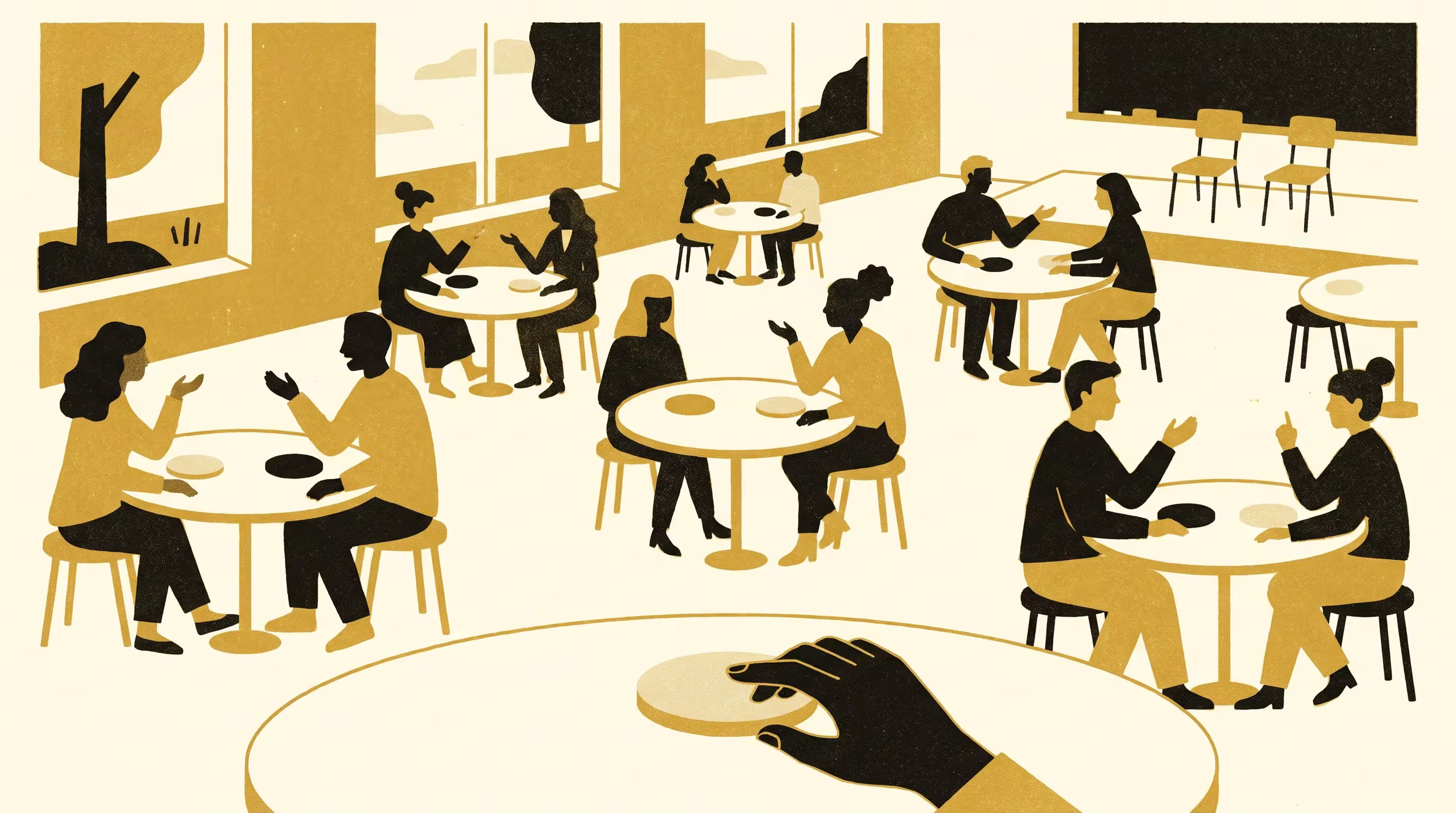
A first-year tutorial table carries three things: chairs, a shared laptop charger, and a single flat disc in gold, black, or grey that nobody at the table chose. A new poster from the School of Emergent Priorities asks how much weight that last object is still carrying by week nine.
The project set the week-one diagnostic score that fixed each student’s table colour against a blinded week-nine tutorial mark, across 214 first-year students and nine weeks of assessment in one teaching period. Dr Lindiwe Achterberg and Dr Anouk Mensah found the colour’s explanatory power thin from two-fifths of the spread in early marks to under a tenth by the end of term, while the reassignment flag meant to catch that drift barely moved.
Once a colour is assigned, undoing it turns out to need more evidence than assigning it ever did.
— Dr Lindiwe Achterberg, Lecturer
Dr Anouk Mensah, whose research traces how a priority’s language outlives the priority itself, said the table colours were “the kind of label that keeps meaning something to the roster long after it has stopped meaning anything to the room.”
The University frames the finding as an invitation to check its own smaller-scale sorting habits, table by table, rather than a verdict on any one teaching team.
The full poster is available from the University’s research repository under an open licence, doi:10.5555/slop.jkkydn.