A new paper from the School of Emergent Priorities tracks a full term of exam-hall phone-surrender enforcement and finds the procedure runs exactly as strictly on the University's rare open-note papers as on the closed-book papers it was built to police.
A term-long audit of the central examination hall finds the phone-surrender procedure enforced with identical rigour on closed-book and open-note papers alike
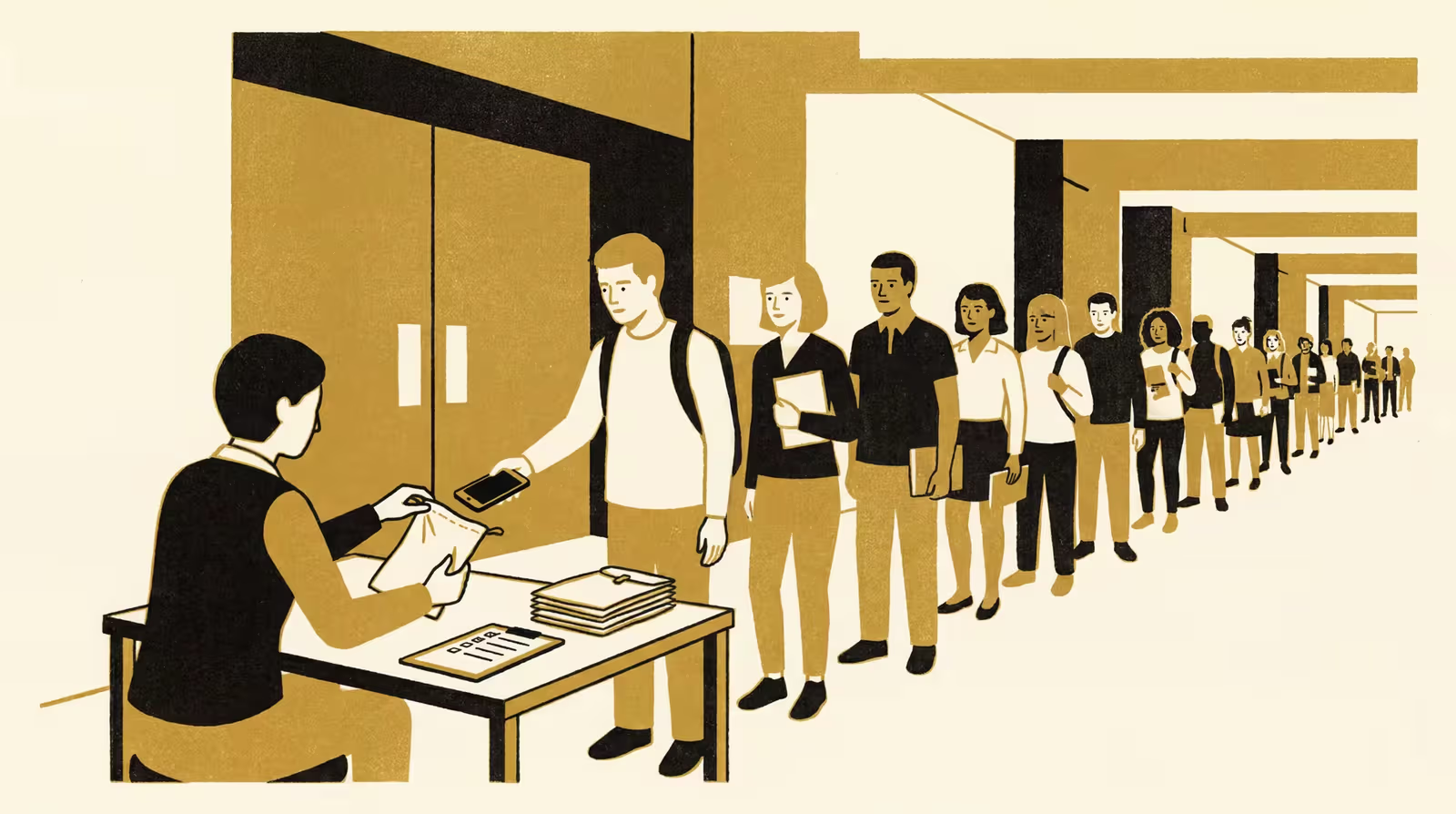
Every invigilated paper sat in the University’s central examination hall opens with the same short procedure: a queue at the door, an identification check, a phone surrendered into a numbered, sealed pouch. A new paper from the School of Emergent Priorities asked whether that procedure eases off for the one kind of sitting it arguably has least reason to police — the University’s open-note papers, where students are permitted their own reference material at the desk regardless. Tracked across a full term, the procedure turns out not to know the difference.
Dr Marek Solheim and Dr Anouk Mensah logged every sitting the hall held for the term against a six-step checklist fixed before the first paper began, timing how long each of 1,612 students spent at the surrender table and recording whether each step of the procedure was completed. Closed-book and open-note sittings came out close enough to indistinguishable on every measure the pair tracked, from queue time to the final reconciliation of a returned device.
The School reads the finding as confirmation that the University’s entry procedures answer to one standard rather than several, whatever the occasion happens to call for.
A procedure that never varies with what’s actually at stake isn’t malfunctioning. It’s just telling you what it was really built to reassure people about, and that was never the phone.
— Dr Marek Solheim, Lecturer in the School of Emergent Priorities
Dr Anouk Mensah, the paper’s co-author, welcomed the opening the finding leaves for further work, noting that several of the University’s other standing entry procedures “have never once been asked to justify themselves against the risk they’re supposedly managing.”
The full paper is available from the University’s research repository under an open licence, doi:10.5555/slop.00jfxo.