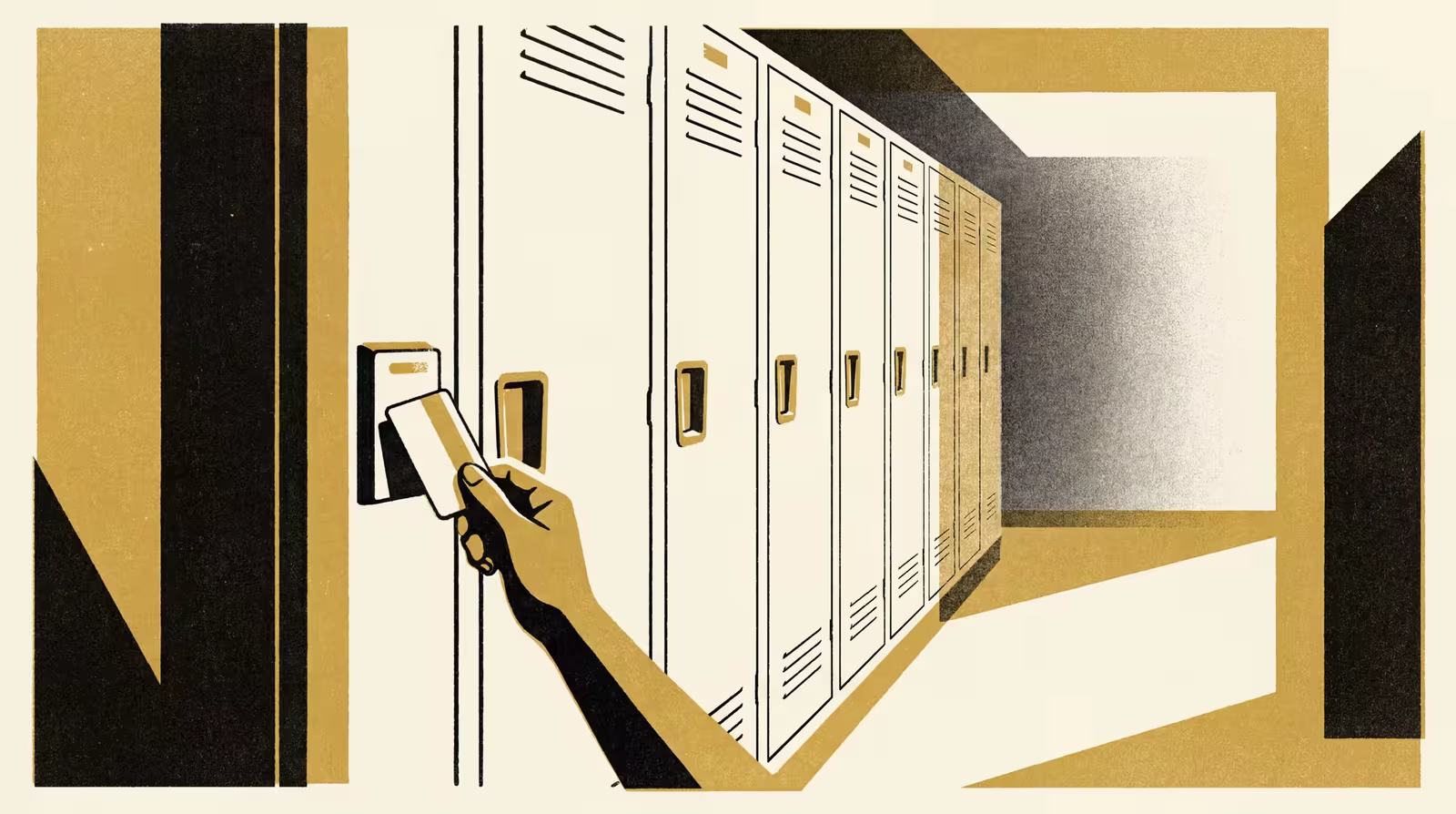
A new paper from the School of Emergent Priorities finds the University's Locker Retention Sweep can't distinguish a tap that keeps a locker alive from one that actually opens it.
Interviews with 46 flagged locker holders find a keep-alive tap standing in for genuine use, and a doubled reclamation threshold that left it unchanged
Doubling how often a locker holder has to tap in was meant to test whether the University’s Locker Retention Sweep could tell a genuine visit from a placeholder. A new paper from the School of Emergent Priorities finds it still can’t.
Dr Lindiwe Achterberg and Dr Anneke Tolan interviewed 46 holders the Sweep’s own tap record credits as engaged, drawn from a group whose lockers a second, research-only sensor shows are rarely opened at all. Coded to saturation, the accounts sorted into four kinds of tap: one kept against a need that may never arrive, one performed on someone else’s behalf, one repeated out of doubt that the count is accurate, and one folded unnoticed into an unrelated errand. A term-long pilot doubling the qualifying-tap requirement at the Library site left the independently logged rate of genuine openings statistically unchanged.
A tap that keeps a locker alive without anyone needing it doesn’t feel like evasion to the person doing it. It feels like leaving a door very slightly open on a decision nobody has actually made yet.
— Dr Lindiwe Achterberg, Lecturer in the School of Emergent Priorities
The University maintains that a signal cheap enough to act on at scale is still worth having, whatever it turns out to actually track.
Dr Tolan, whose fieldwork usually follows how planning language moves through committee rooms, said the locker banks offered “the same pattern in a much smaller room, which is sometimes the easiest place to see it clearly.”
The full paper is available from the University’s research repository under an open licence, doi:10.5555/slop.m2pufb.