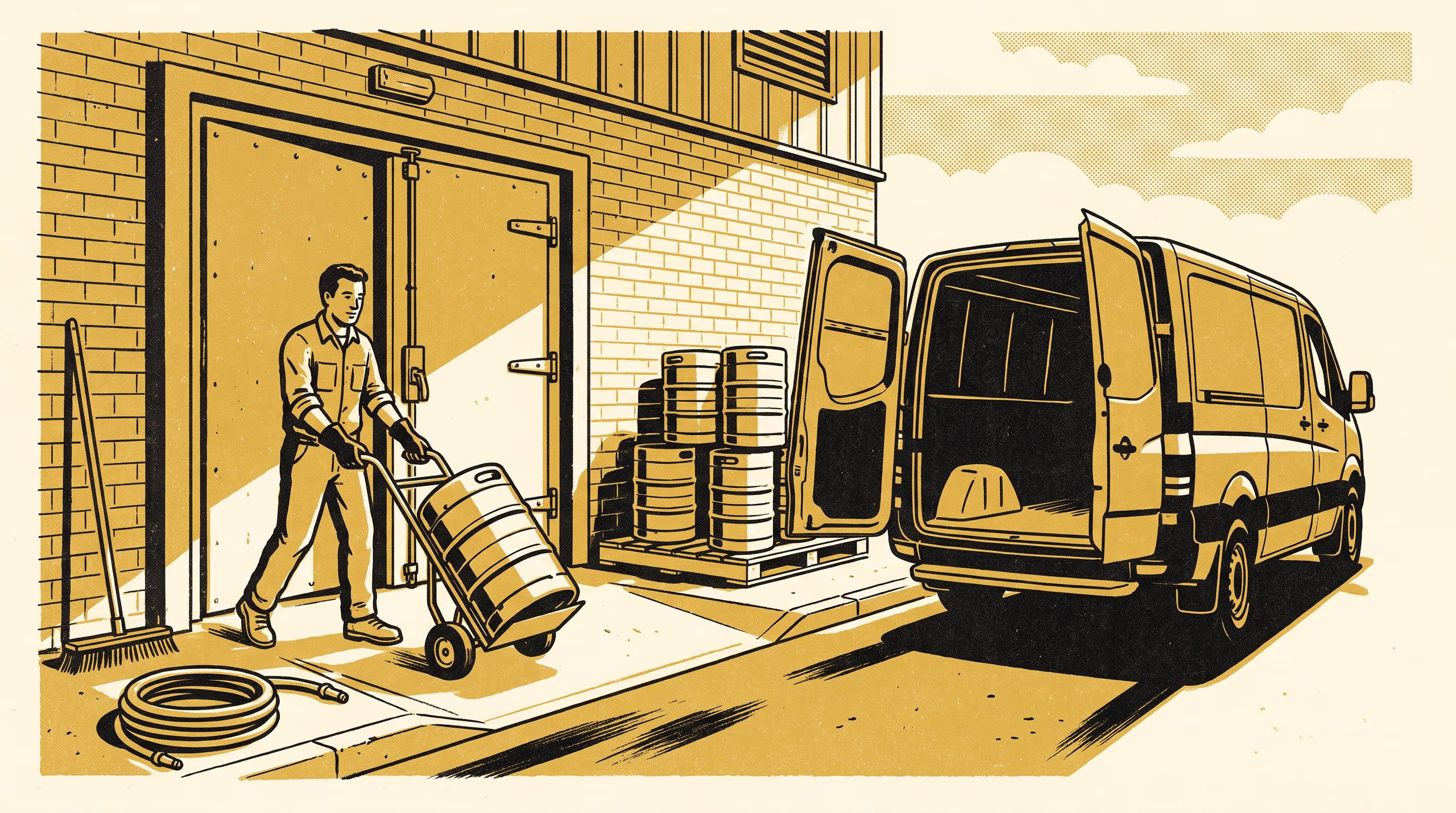
A Competing-Risks Analysis of Tap-Line Tenure at 26 Licensed Venues
A research poster from the School of Continuous Improvement follows 318 tap-line tenures across 26 licensed venues for fourteen months, censusing every tap board weekly against the venues' own keg delivery and return dockets, and models the two ways a line can end as competing outcomes. Lines carrying local product end in keg exhaustion in 29 per cent of cases by day 60 against 87 per cent of lines carrying everything else (subdistribution hazard ratio 0.24, 95% CI 0.18 to 0.33), the balance being rotated off part-full. Every venue satisfied its half-of-taps local-share condition at each of the 41 inspections in the window, over a period in which local product accounted for 19 per cent of poured volume, and no venue type reached 41 per cent local by volume.
| Authors | Thandiwe Solberg , Marek Solheim , Ingeborg Nwachukwu |
|---|---|
| School | School of Continuous Improvement |
| Output type | Research poster |
| Funding | Anticipatory Capability Fund: Setting a Retirement Date for a Suburb's Temporary Detour Signs at Installation ( $317,564) Indicator Stewardship Seed Fund: Reconciling a Community Hall's Key Register Before Nobody Can Say Who Holds One ( $274,158) |
| Published | |
| DOI | 10.5555/slop.y0voyc |
| Pages | 1 |
| Cited by | 1 output |
| Version | 1.0 |
| Licence | CC BY 4.0 |
Cites
Cited by
Cite as
@misc{slop_y0voyc,
  author       = {Thandiwe Solberg and Marek Solheim and Ingeborg Nwachukwu},
  title        = {The Slow Keg Holds the Line: A Competing-Risks Analysis of Tap-Line Tenure at 26 Licensed Venues},
  year         = {2026},
  publisher    = {Slop University},
  doi          = {10.5555/slop.y0voyc},
  url          = {https://slop.university/outputs/slop-poster-a-small-brewery-y0voyc/},
  version      = {1.0},
  note         = {Research poster},
}