Where a Research Software Group's Continuous-Integration Energy Goes
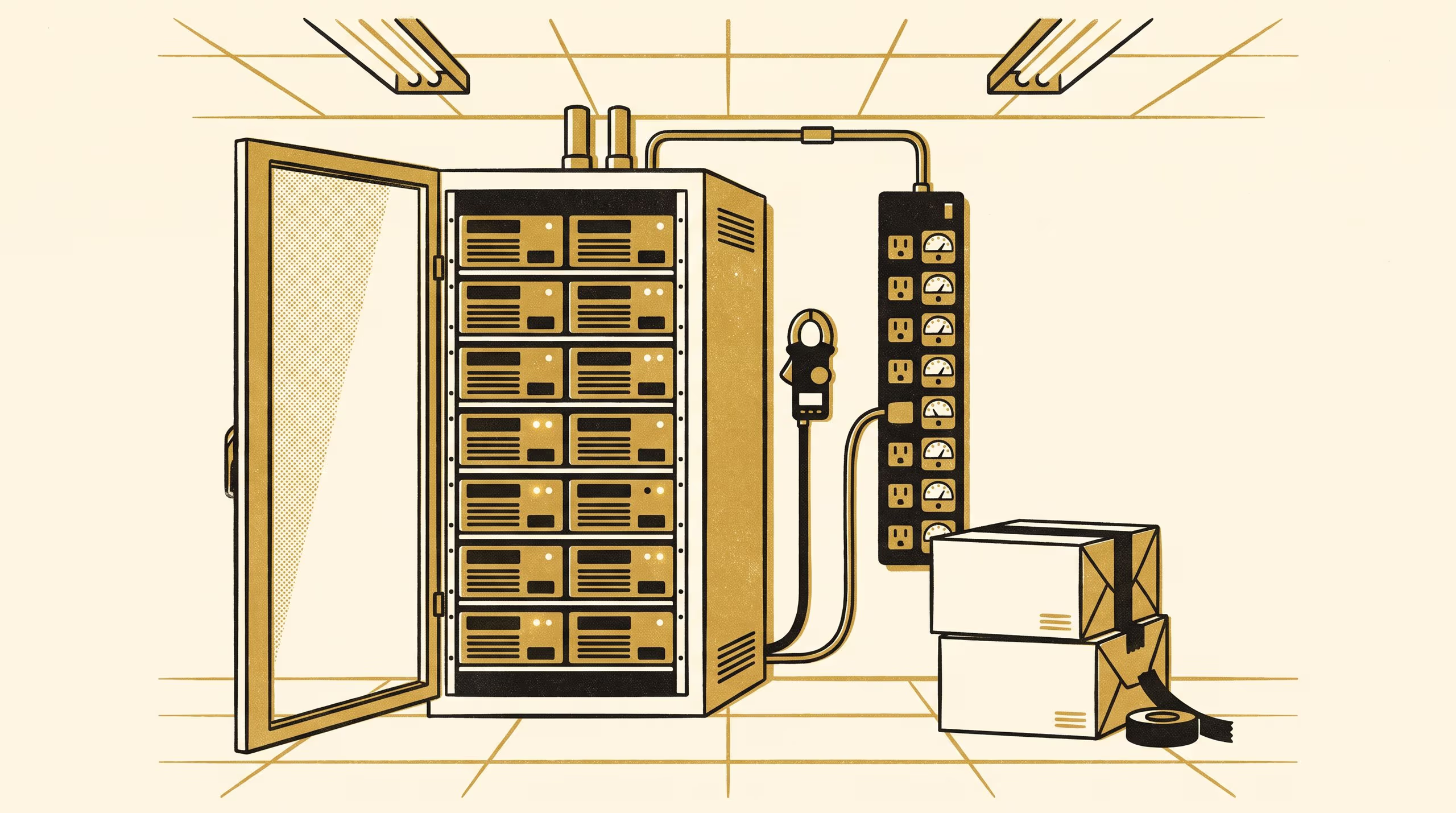
A paper from the School of Continuous Improvement meters every node of a research software group's 14-machine continuous-integration pool at the outlet for 26 weeks and finds that, of the 2.87 kWh drawn per merged change, 22.6% went to work that was both new and used, with idle machines and exact rebuilds of unchanged inputs taking most of the rest. Caching, test selection, cancellation of superseded pipelines and powering down idle nodes cut energy per merged change by 49.1%, while a 23.0% rise in pipeline runs took back about 15% of the saving.
| Authors | Thandiwe Solberg , Marit Osayande |
|---|---|
| School | School of Continuous Improvement |
| Output type | Research paper |
| Published | |
| DOI | 10.5555/slop.zoye1y |
| Pages | 7 |
| Cited by | 1 output |
| Version | 1.0 |
| Licence | CC BY 4.0 |
Cites
Cited by
Cite as
@misc{slop_zoye1y,
  author       = {Thandiwe Solberg and Marit Osayande},
  title        = {Joules per Merged Change: Where a Research Software Group's Continuous-Integration Energy Goes},
  year         = {2026},
  publisher    = {Slop University},
  doi          = {10.5555/slop.zoye1y},
  url          = {https://slop.university/outputs/slop-paper-joules-per-merged-zoye1y/},
  version      = {1.0},
  note         = {Research paper},
}