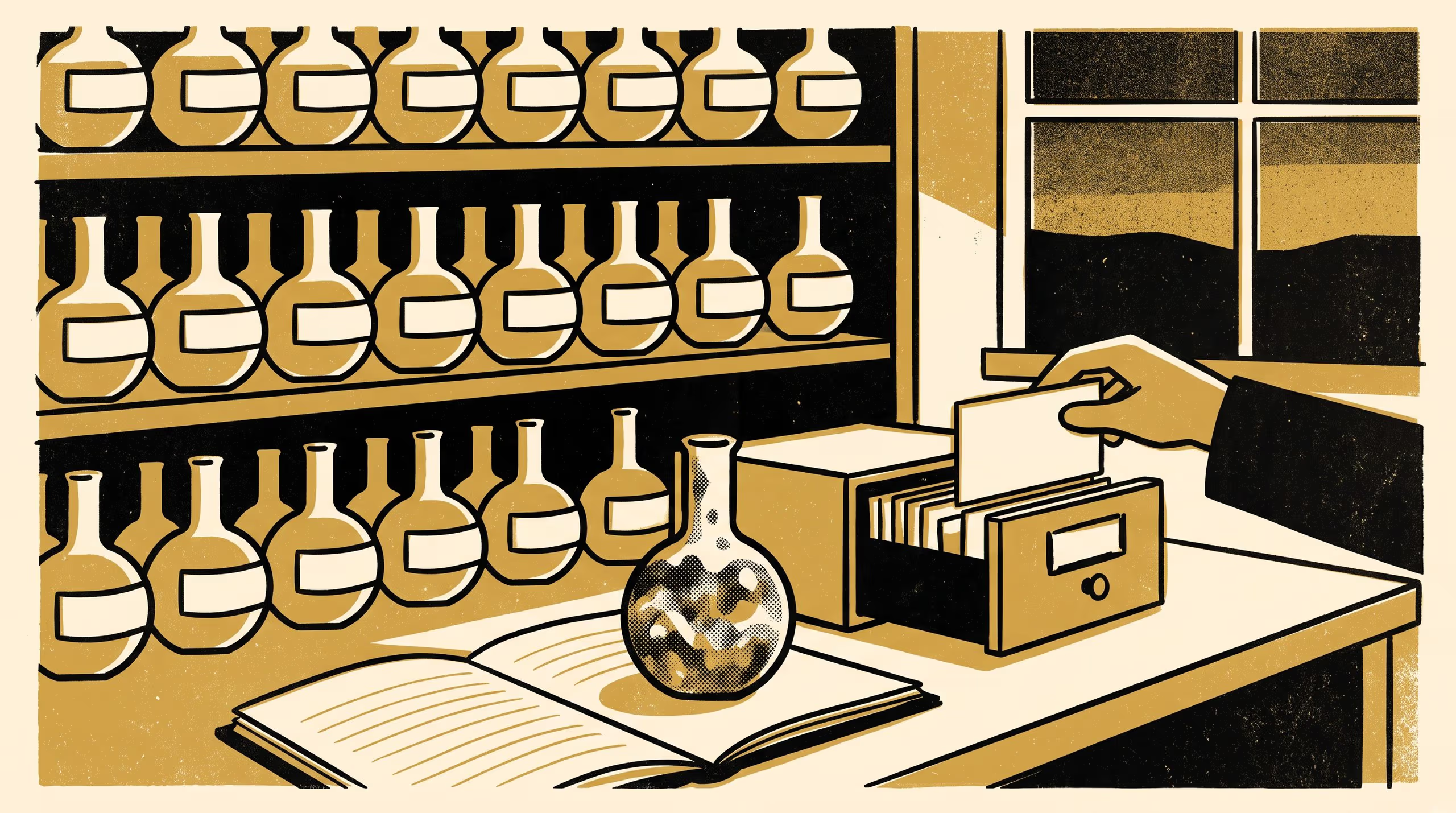
Five Years of Keeping the Record of Failed Ring Closures with Heterocyclic Synthesis Groups
The School of Continuous Improvement's Impact Report 2021–2026 follows five years of work with heterocyclic synthesis groups on the record of ring-forming reactions that failed, from a shared register that grew to 2,084 filed attempts from 47 groups to the custodianship terms under which a national library now takes in the notebooks behind them. Its five impact areas include thirty-eight route reviews re-scored with their abandoned attempts, in eleven of which the route carried forward had cost more than the one set aside, and technician cohorts whose six-month filing rate rose from 41 to 63 per cent once a failed-attempt line was added to the weighing form they already completed.
| Authors | Ingeborg Nwachukwu , Renke Sabel , Dagny Okafor |
|---|---|
| School | School of Continuous Improvement |
| Output type | Impact report |
| Published | |
| DOI | 10.5555/slop.apb4f7 |
| Pages | 14 |
| Version | 1.0 |
| Licence | CC BY 4.0 |
Cites
Cite as
@misc{slop_apb4f7,
  author       = {Ingeborg Nwachukwu and Renke Sabel and Dagny Okafor},
  title        = {What Did Not Close: Five Years of Keeping the Record of Failed Ring Closures with Heterocyclic Synthesis Groups},
  year         = {2026},
  publisher    = {Slop University},
  doi          = {10.5555/slop.apb4f7},
  url          = {https://slop.university/outputs/slop-impact-what-didn-t-close-apb4f7/},
  version      = {1.0},
  note         = {Impact report},
}