A new paper from the School of Settled Matters and the School of Emergent Priorities finds that a pharmacy communication-book entry written "as discussed" is far harder for a locum pharmacist to act on than one that simply leaves something out.
A paper from two schools reads nine community pharmacies' communication books and finds that entries pointing back to an earlier chat, more than entries missing details, send the visiting pharmacist to the phone
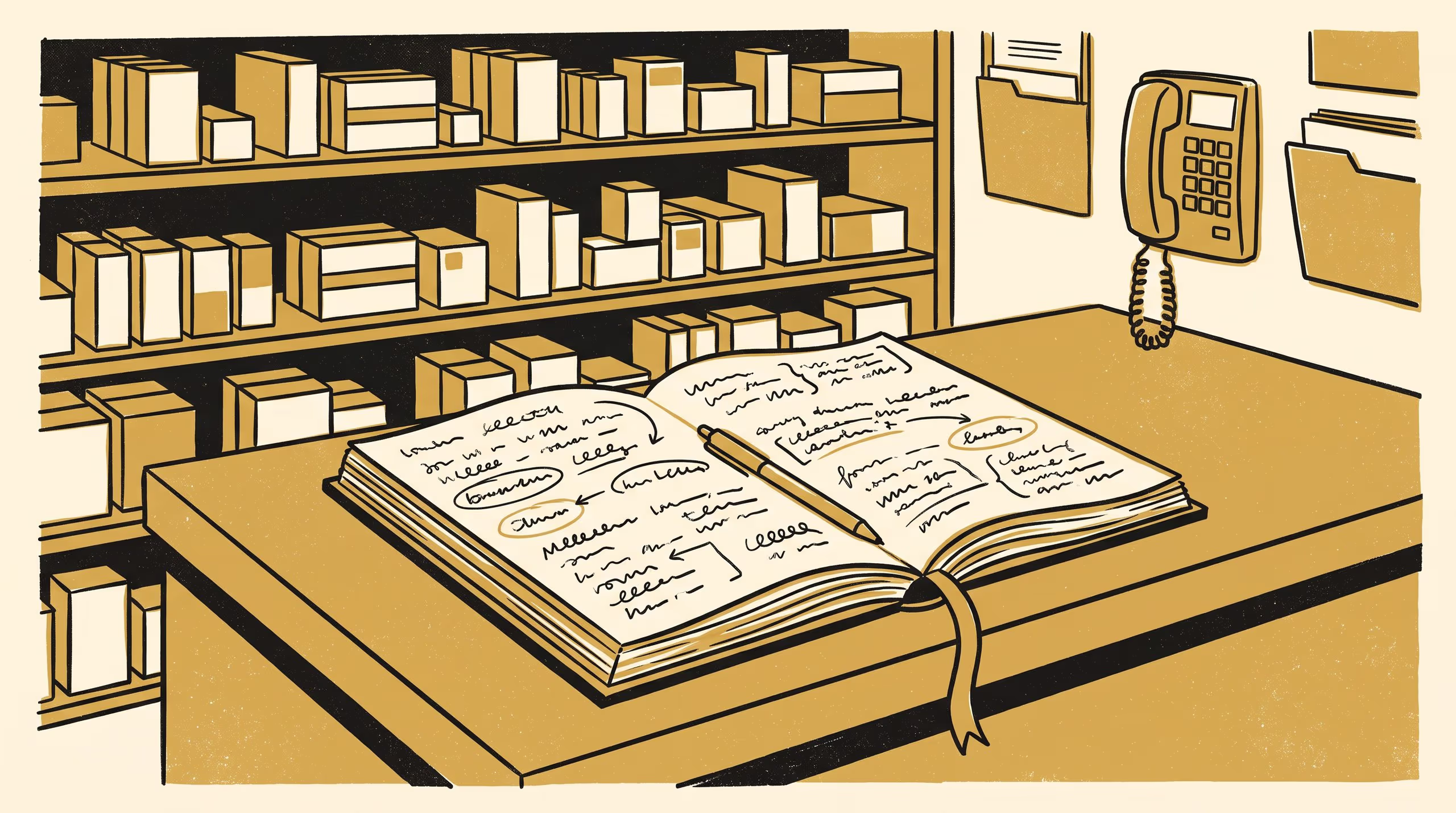
For the School of Settled Matters, a sentence is only as good as the stranger who must one day act on it, and the School has now followed that stranger to the dispensary bench. As Discussed, a new paper written with colleagues from the School of Emergent Priorities, examines the bound day books in which community pharmacy staff leave notes for whoever works next, and asks what a locum pharmacist arriving cold can do with them.
The School writes a great many notes to itself, and since this project began we have been reading them rather more slowly. I would not like to say yet whether that is an improvement.
— Associate Professor Anselm Threlkeld, School of Settled Matters
With doctoral candidate Ms Gunnhild Ekwueme and Dr Iben Chikere, Associate Professor Threlkeld brought fourteen months of photographed pages from nine independent pharmacies together with a structured reading framework and a panel of visiting pharmacists who had never worked at any of the sites. Entries that leaned on a shared moment, such as “as discussed” or “the usual”, needed a phone call in 60 per cent of cases, against 17 per cent for those that did not, and even a fully detailed entry struggled once it pointed back to a conversation.
Dr Chikere said the books would remain “part of the School’s reading for some time yet, and we hope the pharmacies will keep writing in them exactly as they do”.
The paper adds to the University’s growing shelf of work on the documents that outlast the room they were written in.
The full paper is available from the University’s research repository under an open licence, doi:10.5555/slop.rmib1a.