The School of Continuous Improvement's new impact report recounts five years of consent-based recording in review meetings, spoken field reports and operations rooms, and the held pause, first-sentence convention and room-tone protocol that came out of them.
The School's Impact Report 2021 to 2026 follows its recorders into review panels, field crews' spoken reports and the overnight operations room
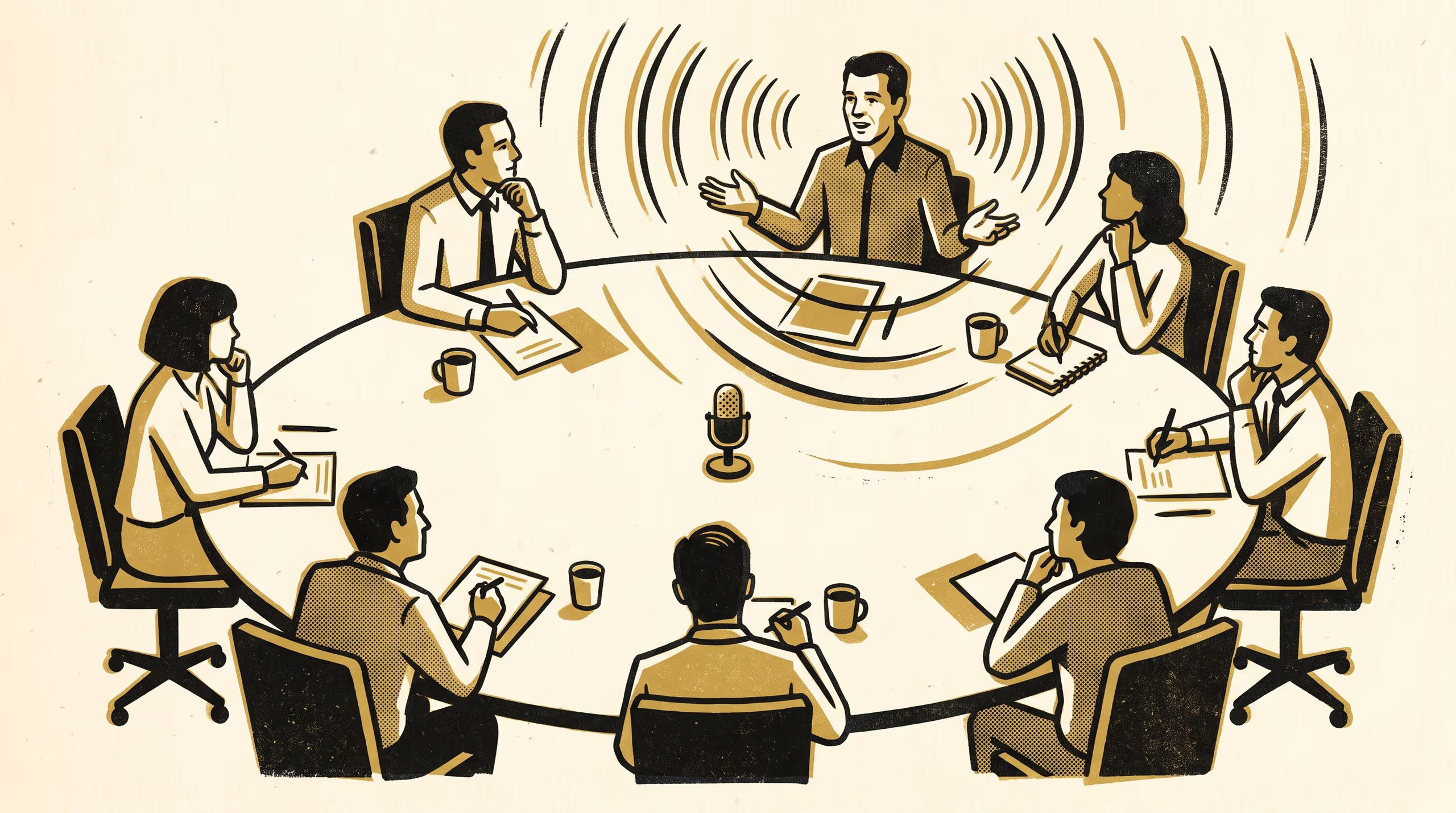
A chair asks whether there is anything else, and in a monthly performance review the room has, on median, 1.6 seconds to answer. That pause is the starting point of The Held Pause, the School of Continuous Improvement’s Impact Report 2021–2026, prepared by Dr Solveig Adeyemi, Dr Osei Vandermeer and Dr Marit Osayande.
The School began this work believing it already knew how to listen. Five years on, what it has mostly learned is how to wait, and it intends to keep practising.
— Dr Solveig Adeyemi, Lecturer and Deputy Convenor, Review Cadence Observatory, School of Continuous Improvement
The report brings the School’s measurement practice into conversation with speech and audio processing, mobilising voice-activity detection, speaker diarisation and automatic transcription across 1,412 review meetings recorded with the consent of everyone at the table. It traces how that capability travelled from the review panel to the end-of-shift report spoken into a handheld recorder, and on to the sound of an operations room in which most alerts are heard before they are seen.
The release takes its place in the University’s long and patient attention to how its collaborators hear themselves, and the School is pleased to set three working instruments on the record: a held pause after the closing question, a first-sentence convention for spoken reports, and a room-tone protocol any operations team can run over a fortnight. Dr Osayande said the report was “for anyone who works in a room that makes noises at them”, and that the School would be glad to hear from them.
The full report is available from the University’s research repository under an open licence, doi:10.5555/slop.q5vowa.