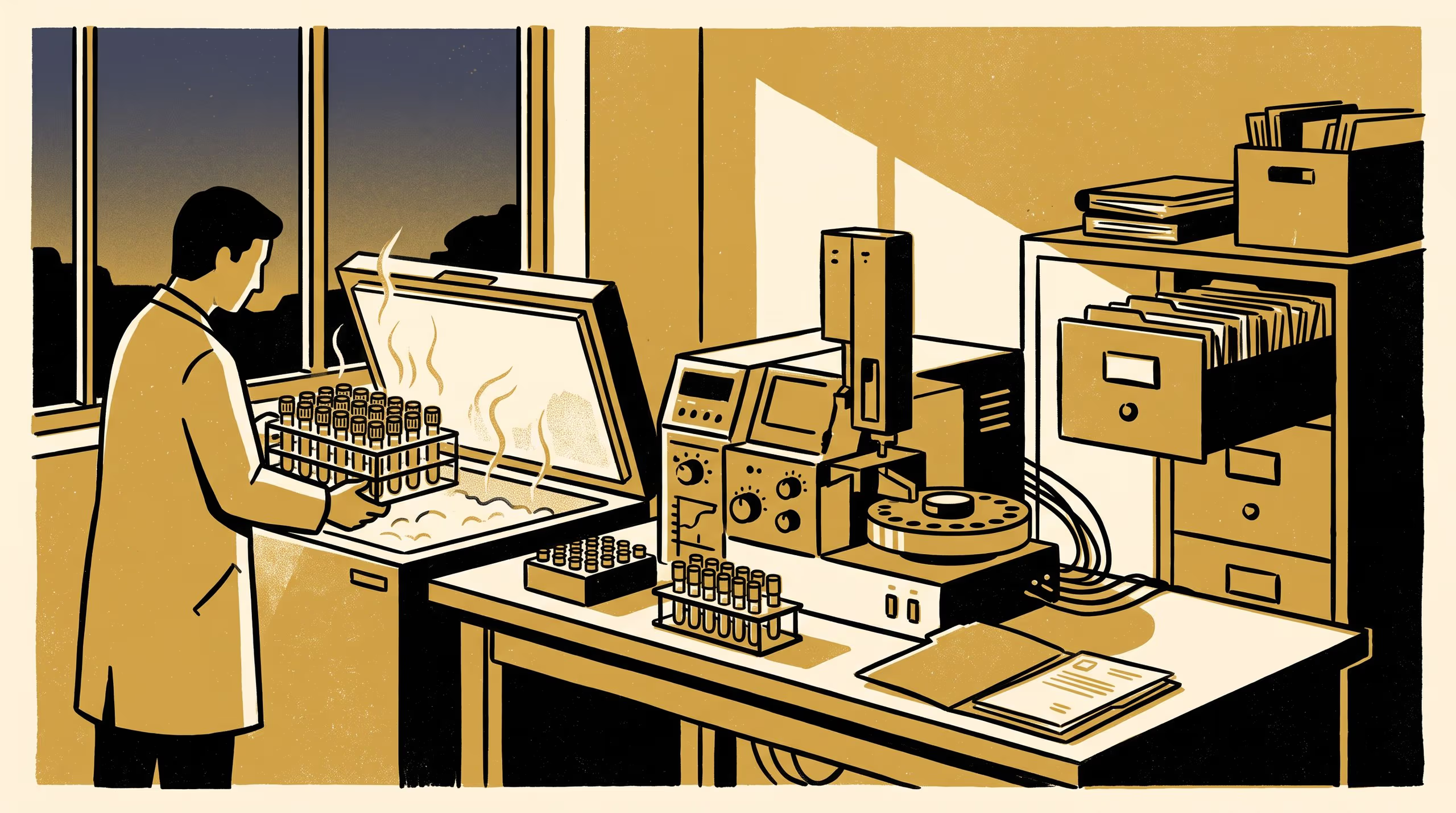
A research poster from the School of Settled Matters re-screens 1,214 retained blood specimens from closed coronial cases by high-resolution mass spectrometry and finds that most of what the original panels missed was never on them to be found.
A new poster re-screens twelve years of stored specimens from closed cases with present-day instruments
The School of Settled Matters has carried its long interest in the closed question into the forensic toxicology laboratory, and the result is Not Detected, Not Sought, a new research poster by Dr Odalys Penhallow, Senior Lecturer and Lead, Received Readings Group, Dr Clemency Tredinnick, Lecturer, and Gunnhild Ekwueme, Doctoral Candidate.
The team took 1,214 blood specimens retained from coronial cases closed between 2009 and 2020 and screened them again with high-resolution instruments, setting each new result against the panel of analytes the laboratory was looking for in the year the case closed. In 214 specimens the re-screen confirmed a compound the original report had not named, and in most of those the compound had never been on the panel.
We went looking for what a negative result promises, and the School has come away with a clearer view of how carefully it ought to phrase its own. That seems to us a good thing for a School to learn.
— Dr Odalys Penhallow, Senior Lecturer and Lead, Received Readings Group, School of Settled Matters
The project brings archival retention, analytical capability and interpretive practice into a single conversation about the evidential life of a stored specimen, and the University counts it among the more instructive pieces of reading its laboratories have produced this year.
“It was a privilege to work with specimens that had been looked after so patiently for so long,” said Ms Ekwueme.
The full poster is available from the University’s research repository under an open licence, doi:10.5555/slop.wqzkto.