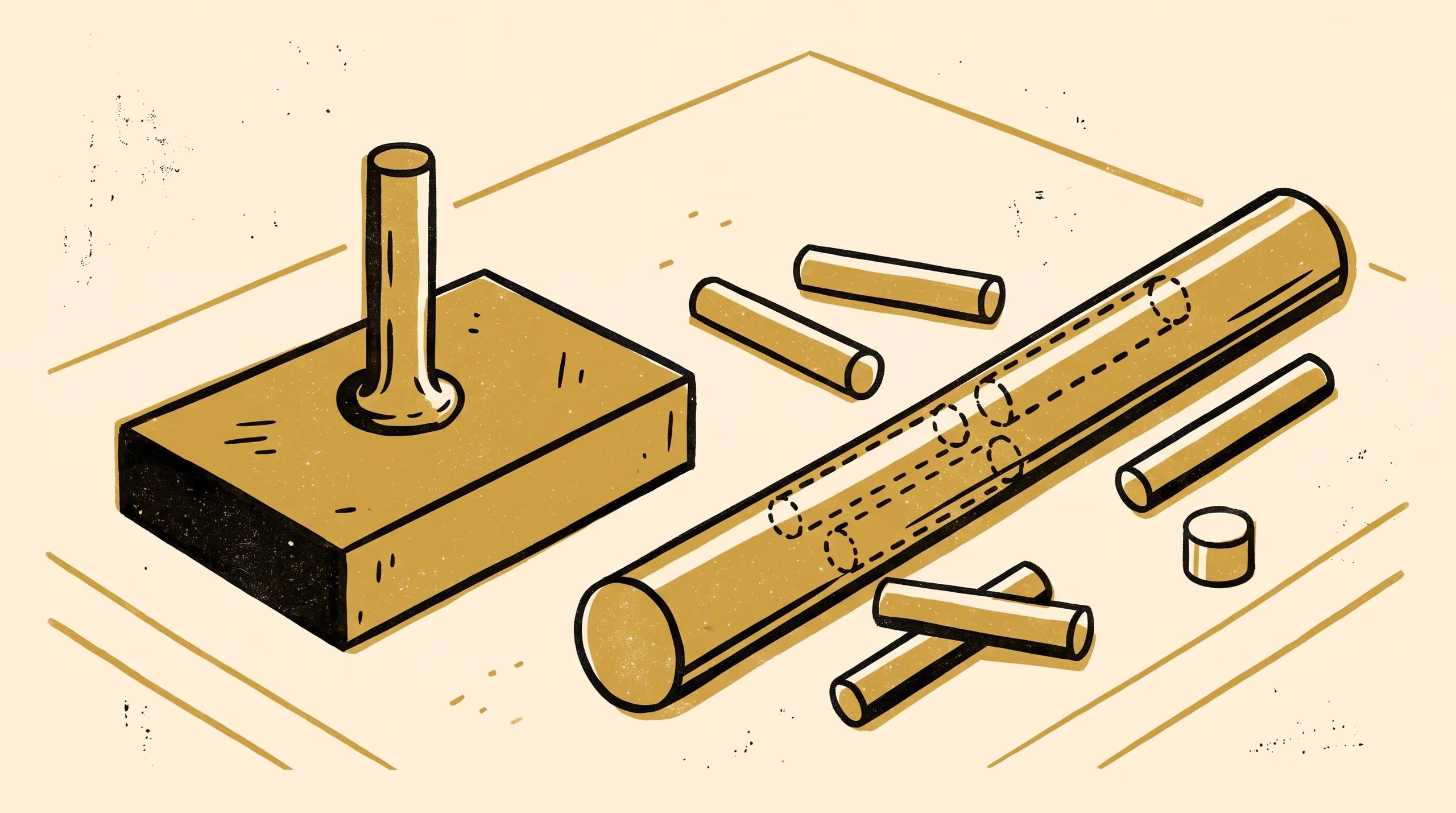
A paper from the School of Settled Matters fires copper rods cut along and across one drawn bar at a steel anvil and finds that constants identified from the first kind do not carry the shape of the second.
Rods cut across one cold-drawn bar land with oval footprints that a model set from rods cut along it cannot draw
Anyone who borrows a set of material constants should be told which way the metal was facing when those constants were fixed, according to Across the Draw, a new paper from the School of Settled Matters by Associate Professor Anselm Threlkeld and Dr Odalys Penhallow.
We came to these rods as readers of other people’s records, and the School has learned something about itself along the way. It turns out we are most at ease once a record says which way things were facing when it was made.
— Associate Professor Anselm Threlkeld, School of Settled Matters
The study brings the School’s long engagement with what a fixed text can be asked to cover into the high-rate behaviour of metals. Short copper rods, cut both along and across a single drawn bar, were launched at a hardened block and their flattened ends compared against a widely used material model. The model, tuned on the rods cut along the bar, matched their shortening closely. The rods cut across it spread into ovals, up to 1.15 times as wide one way as the other, a shape the model could not reproduce until its account of direction was revised.
The paper sits within a growing body of University work on materials that remember how they were made, and marks a confident step for the School into the laboratory. Dr Penhallow said the School expected to be “returning to the question of what a settled result can be asked to cover for some time yet.”
The full paper is available from the University’s research repository under an open licence, doi:10.5555/slop.kglikm.