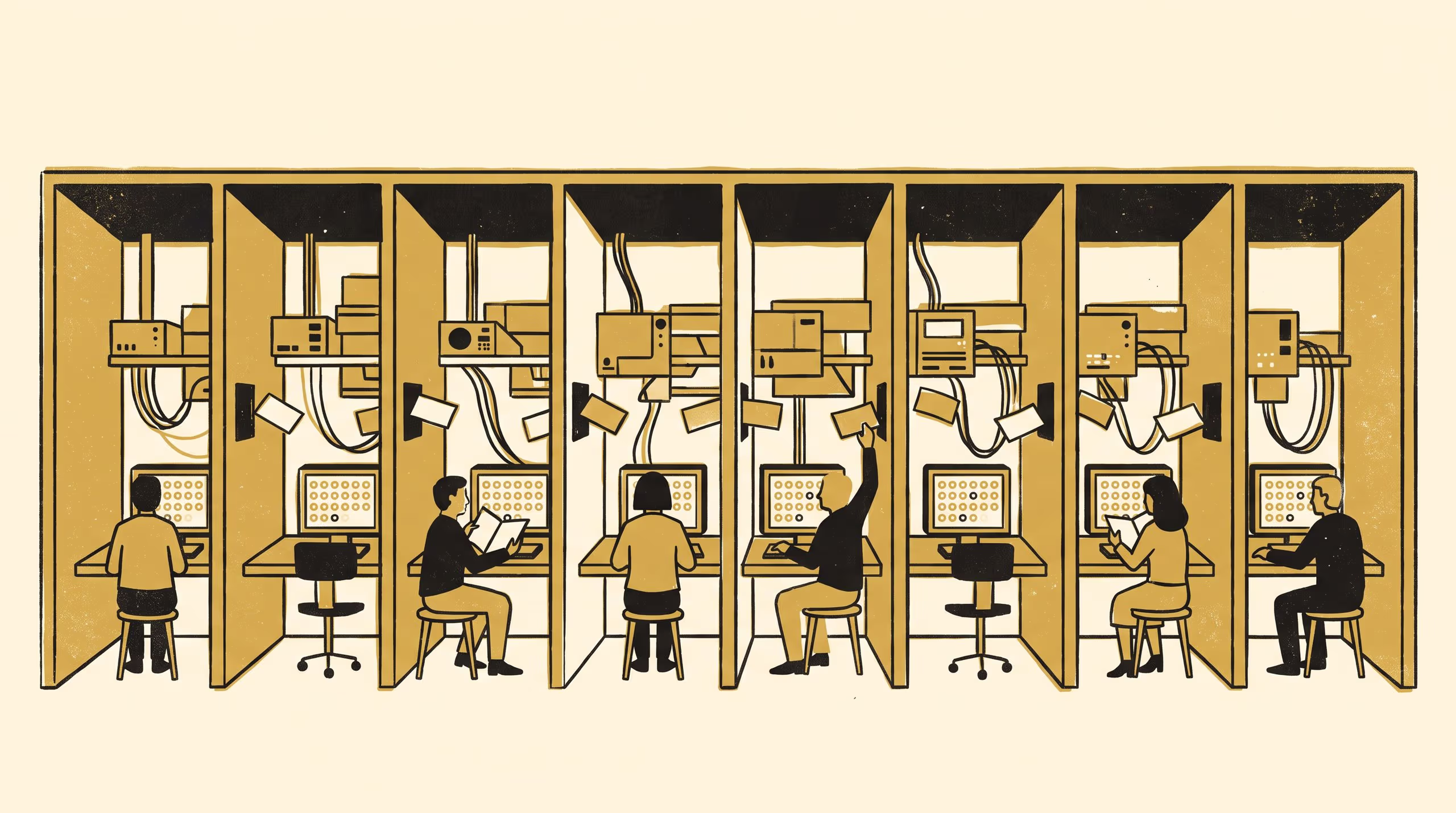
A new research poster from the School of Settled Matters follows category labels on synthetic blood-cell images through chains of eight observers, and measures how much contrary evidence a kept label needs before someone overturns it.
A research poster passes synthetic blood-cell images down chains of eight observers and finds a label shown as kept asks for more evidence each time it is passed on
Passing a gallery of cell images down a line of eight volunteers, each one inheriting the calls of the last, turns out to be a dependable way to watch a decision settle into place.
That is the premise of What the Label Carries, a new research poster from Dr Clemency Tredinnick, Dr Odalys Penhallow and Associate Professor Anselm Threlkeld of the School of Settled Matters.
A title is read for what it still carries, and so, it seems, is a label on a cell. The School expects to be carrying that habit into a good many more rooms before it is finished with it.
— Dr Clemency Tredinnick, Lecturer, School of Settled Matters
The team brought the experimental tradition of the transmission chain to bear on the evolving landscape of digital image review, assembling twenty chains of observers and a library of synthetic cells to surface the conditions under which an inherited judgement is confirmed, revisited or let stand. Where the record of earlier confirmations was in view, the poster reports, kept labels asked noticeably more of the evidence before they gave way.
Dr Penhallow described the work as one more stage in the School’s steady passage from the registry to the laboratory, “a passage on which nobody has yet asked us to turn back”.
The University sees in the poster a fitting instance of its readiness to let any discipline borrow another’s instruments, and to keep the results.
The full poster is available from the University’s research repository under an open licence, doi:10.5555/slop.75a26t.