A new landscape signage campaign invites teachers and parents to open sessions of the School of Settled Matters' Received Readings Group on how a mathematics class comes to treat a method as settled.
A landscape signage campaign from the School of Settled Matters asks how a classroom decides which method still stands
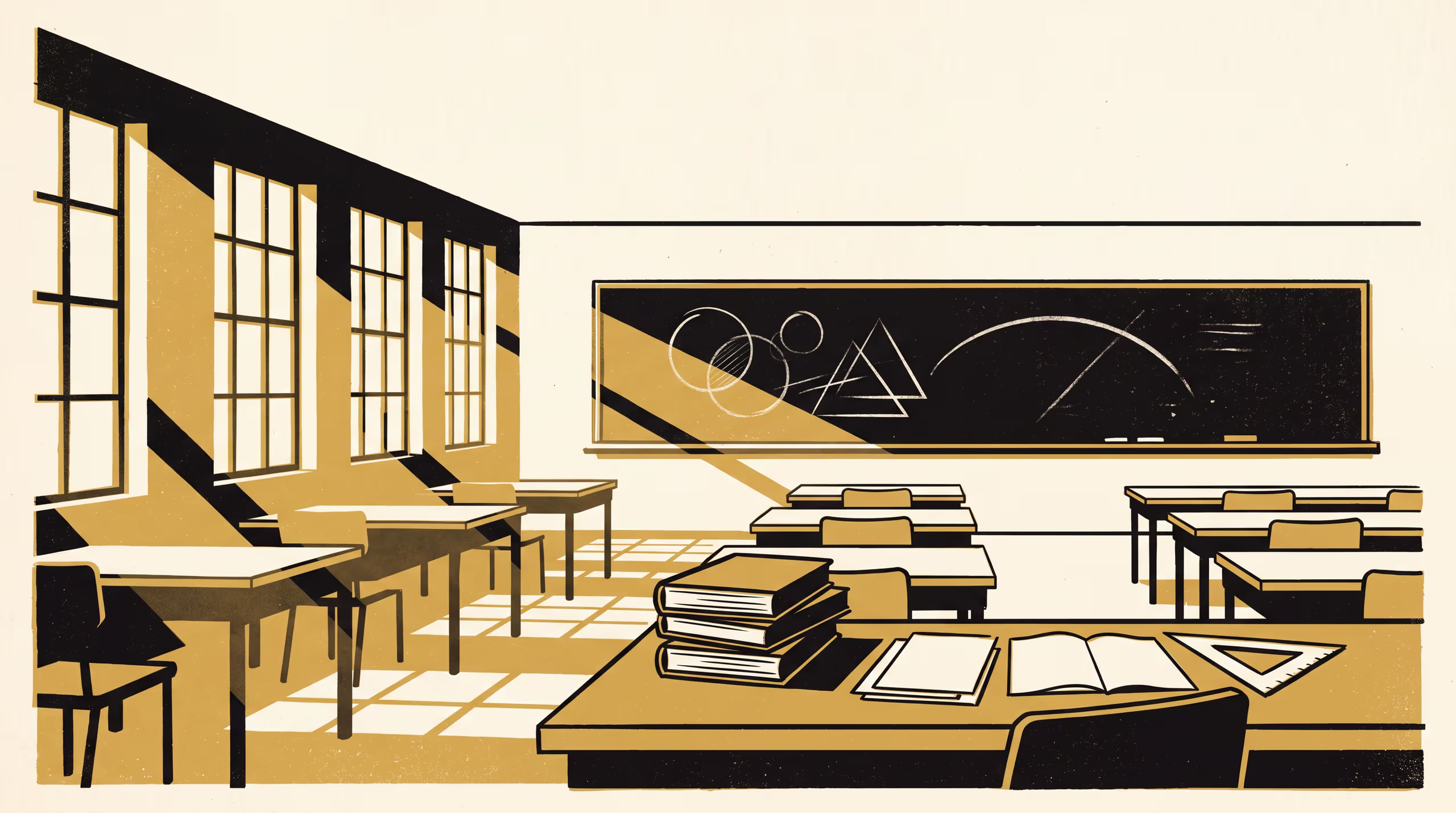
Teachers and parents are the audience for the newest campaign on the University’s landscape signage panels. Every Worked Example Is a Precedent, prepared by Dr Odalys Penhallow of the School of Settled Matters, sets an empty mathematics classroom after the last bell, a stack of bound law reports on the teacher’s desk, and invites anyone who has explained long division at a kitchen table to the Received Readings Group’s open sessions this summer.
In the registry, the questions that reached the counter were seldom about what a judgment said. They were about whether it still stood. A parent at the kitchen table asks the same of a method their child brings home, and the Group would very much like to hear how they decide.
— Dr Odalys Penhallow, Senior Lecturer, School of Settled Matters
The sessions carry the School’s work on the settled point into the classroom, where, the School suggests, the first method a class is shown tends to become the one it defends. The poster points readers to three of the University’s published studies: Opposing Zealots and the Frozen Split, on how first-instance readings of a statutory provision come to settle; Precedent at the Call Site, on how the earliest callers of an ambiguously documented function fix what it is taken to mean; and Bring the Mathematics You Have, the School of Underlying Conditions’ invitation to learn mathematics starting from whatever a student already has.
The University counts the invitation among the plainest expressions yet of its view that close reading belongs wherever a rule is handed on.
The full poster is available from the University’s research repository under an open licence, doi:10.5555/slop.40mj1x.