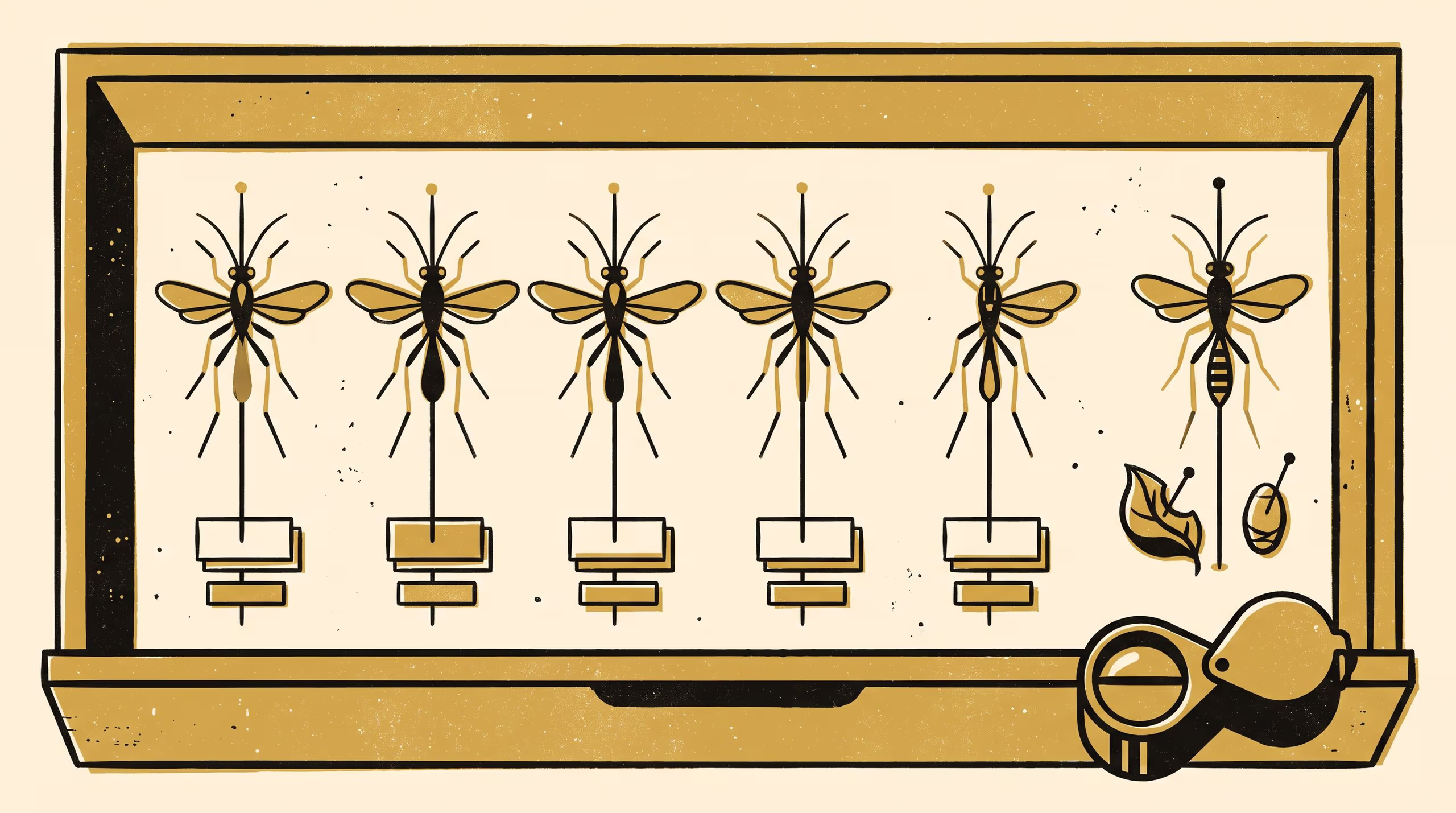
A new paper from the School of Settled Matters sequences the type specimens of a parasitoid wasp named in 1897 and finds that the record on which its name rests belongs to a newly described relative.
A re-reading of a six-specimen type series finds that its one reared example was a second species all along
The School of Settled Matters has long been interested in what an old record still binds, and for whom. Its latest paper puts that interest to work among six pinned wasps.
The Host on the Label, by Dr Clemency Tredinnick, Lecturer in the School, revisits a small parasitoid wasp first described in 1897 and named for the caterpillar from which one of its six original specimens was bred. Short genetic sequences recovered from the century-old specimens, read alongside a careful transcription of their labels, show that the bred example belongs to a different species from the other five. That second species is described in the paper for the first time, and the caterpillar record now goes with it. The original name stays where it was.
The study brings heritage collection practice, contemporary molecular approaches and two summers of patient field rearing into a single integrated workflow, and the University regards it as a model of what becomes possible when a discipline’s most durable instruments are given a second reading.
Taxonomy makes its promises slowly and keeps them for a long time. I have enjoyed being, for a season, one of the people trusted to keep this one.
— Dr Clemency Tredinnick, Lecturer, School of Settled Matters
The full paper is available from the University’s research repository under an open licence, doi:10.5555/slop.g6r3sa.